By Friday of the Third Week of Lent, we have reached that delicate point in the season where the themes are no longer abstract.
The fig tree has been inspected.
The temple has been rearranged.
The well has revealed our thirst.
Patience has been requested.
And now — quite unfairly — forgiveness appears.
Forgiveness, you will agree, is a splendid theological concept. It sounds magnificent in hymns. It is admirable in sermons. It is almost heroic when applied to other people.
It becomes considerably more complicated when it involves someone who has annoyed us on purpose.
Friday in Lent has a way of tightening the focus. It asks not merely whether we believe in mercy, but whether we are prepared to practice it.
And here is where we begin negotiating.
We are quite willing to forgive, provided the other party demonstrates adequate remorse, a measurable improvement in character, and perhaps submits a written apology for our review.
Jesus, inconveniently, does not appear to require such documentation.
The Gospel rhythms around this week often lean toward repentance, mercy, and the extraordinary generosity of God. But divine generosity has a way of spilling over into our lives. We are invited not merely to receive forgiveness, but to extend it.
Which feels far less tidy.
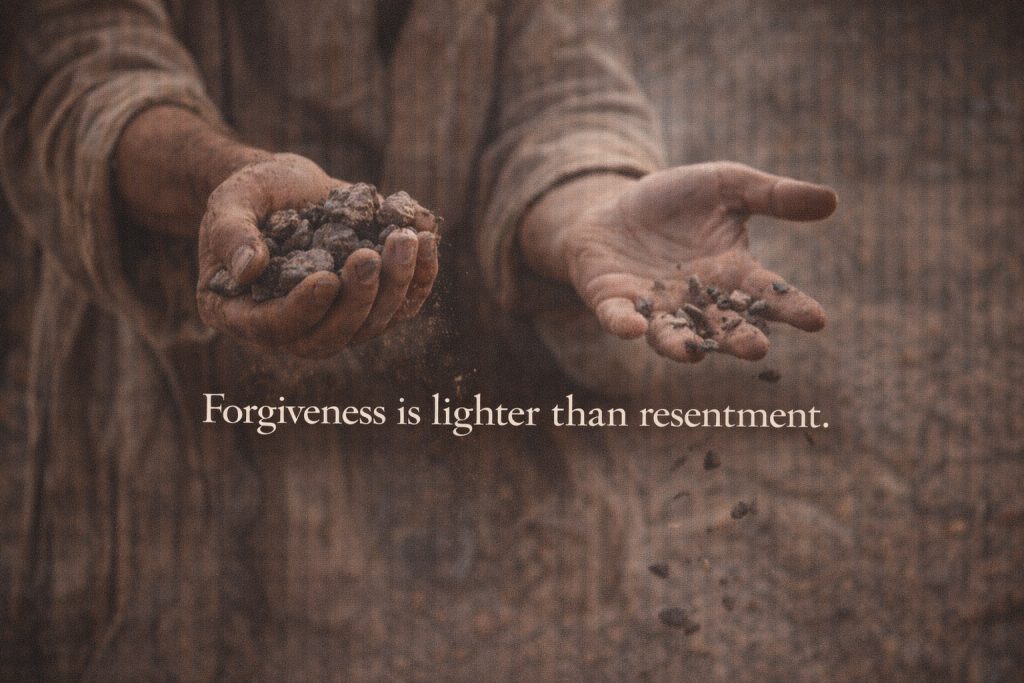
Forgiveness is not forgetfulness. It is not pretending nothing happened. It is not approving what harmed us. It is releasing the right to keep collecting interest on the debt.
And that, if we are honest, can feel like surrender.
Friday reminds us that the cross is not only about God forgiving us; it is about God reshaping how we forgive one another. It is about loosening our grip on resentment — not because it was insignificant, but because it no longer needs to control us.
The irony is that unforgiveness is far more exhausting than mercy.
Resentment requires maintenance. It must be revisited. Rehearsed. Polished for future reference. It demands careful storage.
Forgiveness, though costly, is lighter.
By the third week of Lent, we may begin to notice where we are carrying weight we no longer need. Old injuries. Old narratives. Old disappointments.
This is not an invitation to deny pain. It is an invitation to place it somewhere safer than our own clenched hands.
God’s mercy toward us is not theoretical. It is lived. Practiced. Repeated.
And if we are to walk toward Jerusalem, we cannot carry everything with us.
Friday asks gently: what would it mean to forgive — not dramatically, not publicly, but honestly?
It may not look impressive. It may look like a quiet decision not to rehearse the grievance again. It may look like a prayer for someone we would rather avoid.
It may look like grace practiced awkwardly.
Which, if we are being entirely Anglican about it, is often how holiness begins.
Companion Prayer
Merciful Lord,
You forgive us more fully
than we understand.
Where resentment has taken root,
soften us.
Where we cling to old injuries,
loosen our grip.
Teach us mercy
that is honest,
courageous,
and freeing.
Help us to release
what no longer gives life,
and to walk lightly
toward your cross.
Amen.