Learning to Sit Around the Fire Together

Healing often begins not with speaking first… but with learning to sit, listen, and share stories around the fire together. Alleluia.

There is something profoundly human about sitting around a fire.

Long before there were parish halls, committee meetings, or coffee hours featuring ambitious quantities of squares and muffins, human beings gathered around firelight.

Stories were shared there.
Wisdom was passed down there.
People learned how to belong to one another there.

And perhaps that is why campfires still feel strangely holy.

Now, I should admit that I have never entirely mastered the practical art of campfire management.

There are people who can light a fire with astonishing competence using little more than two twigs and what appears to be positive thinking.

I am not one of those people.

My own approach generally involves a certain amount of trial and error, mild embarrassment, and eventually seeking assistance from someone who “just happens to have done this before.”

Grace abounds.

But once the fire is finally going, something beautiful begins to happen.

People slow down.

Conversation deepens.
Silence becomes comfortable.
The endless hurry of ordinary life softens slightly around the edges.

And sitting there around the fire, listening and sharing stories together, one remembers something important:

Healing often begins not with speaking first…

…but with listening.

Now, as the Church continues walking the long and necessary road of healing and reconciliation with Indigenous peoples, I think this lesson matters enormously.

Because reconciliation is not something we accomplish quickly through statements alone.

It begins through relationship.

A few weeks ago, our parish was deeply blessed to welcome The Most Rev. Chris Harper, National Indigenous Archbishop, for a Sunday morning forum discussion.

Archbishop Chris shared many powerful insights that morning — so many, in fact, that weeks later I still find myself quietly unpacking things he said.

But one particular story has remained especially with me.

He spoke about visiting a congregation where someone asked a parishioner why he was coming.

When the person explained that Archbishop Chris would be speaking about healing and reconciliation, the response came quite casually:

“Oh. We did that in our church two weeks ago.”

And there was something deeply revealing in that response.

It carried the strange assumption that healing and reconciliation might somehow be completed in a single gathering.
A program attended.
A discussion held.
A box checked.
As though relationships wounded over generations could somehow be restored between coffee hour and lunch.

And as the day went on, I found myself thinking about a conversation I had only recently shared with my niece Alice.

She had gotten herself into rather significant trouble with her mother.

Words had been spoken.
Feelings had been hurt.
And, as so often happens in families, things had reached the point where no one could simply pretend nothing had happened.

Later, when I had some quiet time alone with her, we spoke honestly together.

And I remember saying to her:

“Alice, when relationships are damaged, no matter how much people love one another, rebuilding trust takes time. Healing takes work. It takes listening. It takes patience. Trust has to be rebuilt slowly, from the ground up.”

And afterward I realized how deeply that same truth applies to the work of reconciliation between Indigenous and non-Indigenous communities.

Because reconciliation is not a moment.

It is relationship.

And relationships wounded deeply over long periods of history are not restored quickly simply because we wish them to be.

Healing requires truth.
Humility.
Listening.
Presence.

It requires learning how to remain in conversation even when the work becomes uncomfortable or slow.

Which, perhaps, brings us once again back to the image of sitting around the fire.

Because healing rarely happens through hurried declarations.

More often, it begins slowly:
through stories shared,
silence honoured,
trust patiently rebuilt,
and people willing to remain together long enough for relationships to begin healing again.

Through humility.
Through learning.
Through the willingness to sit together long enough to truly hear one another’s stories.

And stories matter.

They carry pain.
Memory.
Identity.

They teach us where people have been wounded and where hope still remains alive.

Now, for many years, the Church has not always listened well.

That truth must be spoken honestly.

There have been deep harms inflicted upon Indigenous communities, particularly through the history of residential schools and the destructive assumption that one culture could somehow erase another in the name of God.

No amount of discomfort in acknowledging that truth changes the necessity of facing it faithfully.

And yet, alongside repentance, there must also be relationship.

Real relationship.

Not merely programs or statements, but friendships, shared conversations, and the patient work of learning how to walk together differently.

Which brings us back, perhaps unexpectedly, to the campfire.

Because around a fire, people do not usually shout over one another.

They listen.

They tell stories.
They laugh.
They grow quiet.

And somewhere in that shared space, community slowly begins to form.

Now, I have been deeply blessed over the years by Indigenous friends and colleagues whose wisdom, spirituality, humour, and generosity have shaped my own faith in ways I can scarcely measure.

One of the things I have learned most clearly from many Indigenous communities is the sacred importance of attentiveness.

To the land.
To elders.
To story.
To silence.

Modern culture often rushes past these things.

But reconciliation requires us to slow down enough to listen again.

And perhaps that is part of the Gospel work before the Church in this season.

Not simply speaking reconciliation…

…but practicing it.

Around tables.
In conversations.
In worship.
In friendships.

Learning again how to sit together with humility and grace.

Because the Kingdom of God has always been about restoring relationships.

Between humanity and God.
Between neighbours.
Between peoples long divided by fear, injustice, or misunderstanding.

And perhaps the Spirit is still teaching us how to gather around the fire together once more.

Listening.
Learning.
Healing.

One story at a time.

Alleluia.

Follow along on Instagram @renewablespiritual

Companion Prayer

God of truth and healing,
Teach us to listen with humility and compassion.

Give us courage to face painful histories honestly,
wisdom to seek reconciliation faithfully,
and hearts willing to walk together in peace.

Help your Church become a place
where healing, justice, and friendship may grow.

And as we share stories, silence, and sacred space together,
draw us closer to one another
and closer to you.

Amen.

The Gospel According to the Backyard Bird Feeder

Creation has a remarkable way of slowing us down long enough to notice grace… even when the squirrel is clearly running the operation. Alleluia.

There are few things more capable of turning otherwise rational adults into deeply invested observers of creation than a backyard bird feeder.

Now, at first glance, this may seem like a relatively modest pastime.

One fills the feeder.
Birds arrive.
Everyone continues peacefully with their lives.

But this is not what actually happens.

What actually happens is that one gradually becomes emotionally involved.

Very involved.

Soon you are standing at the kitchen window offering commentary with the seriousness of a wildlife documentary narrator.

“The cardinals are back.”

“Oh, that greedy blue jay again.”

“Well now… that squirrel has developed techniques.”

And speaking of the squirrel, I should confess that I happen to have the largest squirrel I have ever encountered living almost permanently in my backyard.

My nephew Owen becomes quite upset when I describe the squirrel this way.

He insists — repeatedly — that I should not “fat shame” the squirrel.

Which is probably fair.

Still, in all my years, I have rarely witnessed a squirrel of such astonishing physical presence.

And yet that corpulent little rascal continues to display remarkable agility in launching elaborate operations against the bird feeder in pursuit of the modest offerings intended for the birds.

His ingenuity is, if anything, even more impressive than his weight.

At this point I no longer regard our interactions as conflict so much as an ongoing theological discussion about stewardship, persistence, and organized wildlife crime.

Apparently certain birds prefer black oil sunflower seed.

Others enjoy nyjer.

And somewhere during all this, one suddenly realizes one has become the sort of person who discusses finches with startling intensity.

Grace abounds.

Now, I should confess that I understand this transformation completely.

Because there is something deeply peaceful about sitting quietly and watching creation simply carry on being itself.

The chickadees arrive with cheerful confidence.
Mourning doves wander beneath the feeder conducting what appears to be a highly organized cleanup operation.
Woodpeckers descend like determined contractors evaluating structural integrity.

And overhead, somewhere in the trees, a squirrel plots its next assault with strategic brilliance.

Creation is endlessly fascinating.

And perhaps that is because the natural world quietly invites us into attentiveness.

It slows us down.

You cannot truly watch birds while remaining entirely preoccupied with deadlines and anxieties.

Sooner or later, the rhythm of creation begins gently interrupting the frantic pace of the human mind.

And perhaps that interruption is holy.

Because Ordinary Time teaches us to notice things again.

The movement of light through trees.
The sound of wind before rain arrives.
The astonishing variety of life unfolding quietly around us every single day whether we pause to observe it or not.

Jesus Himself seemed remarkably attentive to creation.

Birds.
Seeds.
Fields.

He trusted that the natural world could teach human beings something about the character of God.

And perhaps it still can.

Now, bird feeders also teach humility.

Particularly when squirrels are involved.

There comes a point in every bird-feeding journey when one enters into direct competition with wildlife.

At first, solutions appear simple.

Then the squirrel adapts.

One purchases “squirrel-proof” equipment.

The squirrel interprets this merely as an interesting new engineering challenge.

Eventually an uneasy truce develops in which everyone acknowledges that the squirrel is probably winning.

And honestly, there may be spiritual wisdom even there.

Creation was never given to us merely for control.

It was given for relationship.

Wonder.
Delight.
Stewardship.

And perhaps one of the greatest losses in modern life is how rarely we stop long enough simply to behold the world around us with gratitude.

Because creation is not background scenery.

It is alive with the generosity of God.

And perhaps one of the greatest losses in modern life is how rarely we stop long enough simply to behold the world around us with gratitude.

Because creation is not background scenery.

It is alive with the generosity of God.

Most of creation accomplishes its work quietly.

Trees grow slowly.
Birds sing without urgency.
Seasons unfold patiently.

And perhaps souls heal the same way.

So perhaps this Saturday, the invitation is wonderfully simple.

Sit outside for a while.

Fill the feeder.
Watch the birds.
Listen to the wind moving through the trees.

And allow yourself the quiet joy of remembering that the world is still filled with beauty, surprise, and life beyond your schedules and worries.

Even if the squirrel continues behaving with criminal levels of confidence.

Alleluia.

Follow along on Instagram @renewablespiritual

Companion Prayer

Creator God,
Open our eyes to the beauty around us.

Teach us to slow down,
to notice creation with wonder,
and to receive the world as your gift.

Thank you for birdsong,
summer breezes,
and the quiet joy of ordinary days.

And in all the living beauty that surrounds us,
draw our hearts closer to you.

Amen.

The Spiritual Importance of Changing Into Comfortable Clothes

Sometimes grace looks remarkably like a comfortable sweater, a quiet evening, and permission to finally rest. Alleluia.

There is a particular moment on Friday evening that feels very close to sacramental grace.

It is the moment one changes out of “day clothes” and into something considerably less ambitious.

Now, I realize this may not sound especially theological.

But stay with me.

Because there is something deeply human — and perhaps deeply holy — about arriving at the end of a long week and finally admitting:

“I do not need to continue wearing hard pants.”

This realization alone has brought comfort to untold numbers of people.

Now, I should clarify that I am not speaking against dignity or proper attire.

The Church has survived many centuries partly because at least some people continued ironing things.

But Friday evening introduces a different spiritual atmosphere altogether.

The week begins to loosen its grip.

Shoes are abandoned near the door with varying degrees of accuracy.
The posture softens.
And somewhere in the house there appears the ancient and honoured garment known universally as “the comfortable golf shirt.”

Not the fashionable shirt.

The comfortable one.

The one that has remained loyal through countless summers and now carries enough history to qualify as a pastoral relationship.

Now, for me, there are actually several such garments in rotation.

Most notably, a collection of golf shirts dating back to when golf itself was still a relatively new and optimistic sport in my life.

These shirts are, by any objective standard, extremely well worn.

In fact, they have reached that stage where one says reassuring things like:

“Well, if I ruin this one while cutting the lawn or barbecuing something particularly messy, it really won’t matter.”

This is technically untrue.

The secret reality is that if something actually happened to one of those shirts, I would be utterly devastated.

I love those old things.

They are impossibly comfortable.

And while they likely already look rather terrible—even without assistance from lawnmowers or barbecue sauce—they have acquired the sort of emotional significance that entirely transcends fashion.

These shirts have walked through years of ordinary life with me.

Summer evenings.
Vacations.
Quiet Saturdays.
Countless barbecues and ordinary moments of rest.

At some point, they stopped being merely clothing and became trusted companions for the weekend.

Now, I realize this may sound slightly ridiculous.

And perhaps it is.

But I suspect most of us possess certain familiar things that quietly carry comfort because they have accompanied us faithfully through life.

A favourite chair.
An old sweater.
A well-used mug.

Objects that remind us, in their own humble way, that rest is not only necessary…

…it is deeply human.

Now, modern culture tends to treat rest as though it must be earned through sufficient productivity.

But the biblical vision of Sabbath is different.

Rest is not a reward for finally becoming efficient enough.

It is part of being human.

God Himself rests in the creation story — not because God is tired, but because creation is meant to include rhythms of delight and restoration.

And perhaps Friday evenings quietly remind us of this truth.

We are allowed to stop striving for a little while.

Now, I admit that this is not always easy for people like me.

There is always one more email.
One more project.
One more thing that could probably be organized slightly better if one applied enough determination and perhaps labelled folders correctly.

But over time, ministry has slowly taught me something important:

Exhaustion is not a spiritual gift.

There is no prize awarded at the Pearly Gates for “Most Completely Worn Out Clergy Person.”

Grace abounds.

And perhaps one of the reasons Friday evenings feel so restorative is because they invite us back into ordinary humanity.

Simple things.

Comfortable clothes.
A quiet meal.
A slower pace.

The deep satisfaction of sitting down without any immediate intention of standing up again unnecessarily.

Now, I realize that for some people Friday nights involve exciting social plans and energetic adventures.

I bless and admire such people tremendously.

Personally, I have increasingly discovered the spiritual beauty of very low expectations.

A peaceful evening.
A good cup of tea.
Possibly sitting outside while the light fades slowly toward dusk and the world itself seems to exhale after the week.

And perhaps this too is part of faithful living.

Not every moment must be productive.
Not every evening must accomplish something measurable.

Sometimes the soul simply needs rest.

Because Ordinary Time teaches us that holiness is not found only in great achievements.

It is also found in receiving ordinary life gratefully.

Even the quiet grace of becoming wonderfully comfortable at the end of a long week.

So perhaps this Friday evening, God’s invitation is beautifully simple:

Change into the comfortable sweater.

Put the week down for a little while.

Rest.

And remember that you are loved not because of what you accomplished this week…

…but simply because you belong to God.

Alleluia.

Follow along on Instagram @renewablespiritual

Companion Prayer

God of rest and renewal,
Thank you for the gift of slowing down.

Teach us to release the burdens of the week,
to rest without guilt,
and to receive ordinary joys with gratitude.

Refresh weary hearts,
quiet anxious minds,
and remind us that your love does not depend upon our productivity.

And in the quiet peace of this evening,
draw us gently into your rest.

Amen.

The Theology of the Shared Zucchini

Some blessings arrive in perfectly manageable portions. Others arrive as a zucchini large enough to test both theology and cookware. Alleluia.

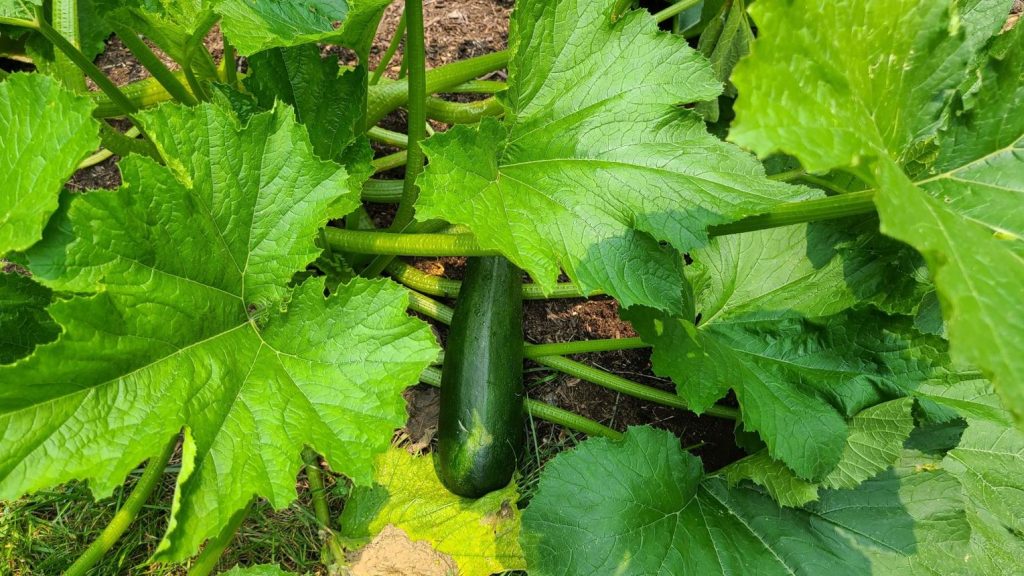
There comes a point every summer when zucchini ceases to be merely a vegetable and becomes instead a test of Christian character.

Now, those who do not garden may not fully appreciate the seriousness of this situation.

At planting time, zucchini appears entirely innocent.

One purchases a small seedling with optimism and modest expectations.

“How lovely,” one thinks.
“A few fresh vegetables through the summer.”

And then, sometime in July, the thing awakens.

Suddenly there are zucchinis everywhere.

Large ones.
Small ones.
Zucchinis appearing overnight with the unsettling speed of biblical multiplication miracles.

One begins giving them away with increasing urgency.

Neighbours are approached carefully.

“Would you happen to like zucchini?”

This question is rarely answered with the enthusiasm one hopes for.

Because experienced gardeners already know what is happening.

They themselves are currently attempting to distribute seventeen zucchinis to unsuspecting friends and relatives.

Now, I realize this may sound like an unusual doorway into theology.

But stay with me.

Because somewhere beneath all this vegetable-related confusion lies something deeply beautiful about ordinary life, neighbourliness, and gratitude.

Gardens, after all, teach us that abundance is meant to be shared.

No one grows zucchini solely for personal achievement.

At a certain point, generosity becomes unavoidable.

And I learned this very clearly when I lived in Camden East.

We had a neighbour there named Audrey who maintained a particularly magnificent vegetable garden.

Now, when I say “garden,” I do not mean a few polite tomato plants arranged with modest suburban optimism.

I mean a serious garden.

The sort of garden that suggested the woman could likely have fed several nearby townships if circumstances required it.

She planted everything imaginable and was wonderfully generous with the abundance it produced.

This worked out very well for me because my own gardens were entirely devoted to flowers.

Beauty, yes.

Food security, less so.

And so throughout the summer, Audrey regularly shared the bounty of her garden with those of us in the neighbourhood.

And I was always grateful.

Well… almost always.

Because one afternoon she arrived carrying what remains, to this day, the largest zucchini I have ever encountered.

It was less a vegetable and more a theological challenge.

Honestly, I believe it could probably have fed the entirety of Camden East with leftovers remaining for neighbouring villages.

Now, not being someone who likes to waste food, I immediately set about researching ways to use a vegetable that, truthfully, I did not regularly cook or eat.

As a celiac, the obvious solution appeared to be zucchini pizza crust.

So I set to work.

Before long there was an impressive pizza baking in the oven, and I stood back feeling rather pleased with both my culinary resourcefulness and my commitment to neighbourly gratitude.

Then I looked over at the counter.

The vast majority of the zucchini was still there.

Apparently one does not significantly diminish a vegetable of that magnitude through pizza alone.

Well then came gluten-free zucchini bread.

And several other increasingly creative recipes developed under mounting pressure.

But in the end—and I say this with honesty—a rather substantial portion of Audrey’s zucchini eventually found its way into the composter.

Which, truthfully, felt entirely appropriate.

Because even there, the gift continued.

The leftover abundance would return to nourish the flowers in years to come.

And perhaps that is part of the quiet wisdom creation keeps teaching us.

Nothing is meant to be hoarded.

Blessings circulate.
Life feeds life.
Generosity keeps moving outward in ways we often do not even notice.

And perhaps that is true of much of life.

Love multiplies when shared.
Kindness grows through giving.
Communities flourish when people stop treating blessings as private possessions and begin seeing them as gifts meant to circulate outward.

Now, I have long suspected that some of the strongest neighbourhood relationships in Canadian history have been built quietly over backyard fences during conversations involving tomatoes, rhubarb, and slightly excessive quantities of zucchini.

Because gardens naturally lead people toward thankfulness.

You cannot spend time watching things grow without becoming aware that much of life remains gift.

Rain arrives.
Sunlight appears.
Tiny seeds become astonishingly alive.

And slowly, if we are paying attention, gratitude begins reshaping the way we see the world.

Not entitlement.

Thankfulness.

Now, this does not mean gardens are always peaceful spiritual experiences.

There are weeds.
And rabbits.
And mysterious plant conditions that prompt otherwise reasonable adults to stand staring thoughtfully at leaves while offering entirely speculative diagnoses.

Grace abounds.

But even there, creation teaches patience.

And humility.

And perhaps most importantly, it reminds us that growth itself is usually slow and shared.

No garden thrives alone.

Neighbours exchange advice.
Tools are borrowed.
Extra vegetables migrate mysteriously across property lines.

People care for one another in wonderfully ordinary ways.

And perhaps that is one of the quiet invitations of Ordinary Time.

To stop rushing long enough to notice abundance.

To receive life gratefully.
To share generously.
To approach even ordinary days with the awareness that grace is already growing quietly around us.

Possibly in the form of zucchini.

So perhaps this week, if someone appears at your door carrying vegetables with slightly desperate enthusiasm…

Receive them kindly.

You may be participating in something deeply theological.

Because the Kingdom of God often grows in ordinary places.

Gardens.
Neighbourhoods.
Backyards filled with gratitude and generosity and the occasional oversized squash.

Alleluia.

Follow along on Instagram @renewablespiritual

Companion Prayer

Generous God,
You fill creation with abundance
and teach us to live thankfully.

Open our eyes to the gifts around us,
our hearts to the needs of our neighbours,
and our hands to joyful generosity.

Help us to share freely,
to live gratefully,
and to delight in the beauty of ordinary life.

And in all the small acts of kindness
that nourish community,
may your love continue to grow.

Amen.

The Spirituality of the Morning Coffee

Many people know that I am an early morning person.

Though I have now lived more years away from the farm than I ever lived on it, those rhythms of rising early remain deeply ingrained within me.

There is something about the quiet of early morning that still feels entirely natural.

Now, with that said, I should probably clarify something.

Being an early riser does not necessarily mean being immediately productive.

I may be awake before six o’clock…

…but I have also developed a deeply established pattern of dawdling over coffee.

I take my time with it.

Very seriously.

There is something profoundly beautiful about those early moments before the demands of the day begin arriving in earnest.

Before emails.
Before schedules.
Before the increasingly ambitious expectations of the to-do list begin introducing themselves.

The house is quiet.
The world itself still seems to be waking slowly.

And there, with coffee in hand, one is given a few precious moments simply to exist.

I love the morning.

But truthfully, I love it largely because of that quiet time where the coffee itself becomes the focus.

Now, I realize that from the outside this may appear remarkably unproductive.

And perhaps that is part of its holiness.

Because there are few moments in human experience more filled with hope than the first cup of coffee in the morning.

There are few moments in human experience more filled with hope than the first cup of coffee in the morning.

Now, I realize that theologians may debate this point.

But I remain convinced that somewhere in the history of Christian spirituality there should have been at least one monastic order devoted entirely to the contemplative appreciation of properly brewed coffee.

There is something deeply restorative about it.

The quiet of the kitchen.
The familiar sound of the kettle or coffee maker beginning its sacred morning labour.
The first warm cup held carefully in both hands while the rest of the house—and indeed much of one’s own personality—slowly comes awake.

Now, I should probably confess that before coffee, my spiritual gifts are somewhat limited.

I remain technically Christian, certainly.

But conversational clarity and advanced theological reflection may require approximately fifteen additional minutes.

Grace abounds.

And perhaps that is why I have increasingly come to value the quiet rhythm of morning prayer attached to that first cup of coffee.

Not because the prayers themselves are always profound.

Sometimes they are little more than:

“Lord, help me today.”

Which, truthfully, may already be enough.

Because prayer, at its heart, is not performance.

It is presence.

The simple decision to begin the day aware that we do not walk through life alone.

Now, Ordinary Time is particularly good for learning this.

The great festivals have passed.
There are no dramatic liturgical fireworks at the moment.

Instead, the Church gently teaches us how to live faithfully within ordinary rhythms.

And perhaps one of the holiest of those rhythms is simply beginning the day with stillness before it becomes noisy.

Not checking the news immediately.
Not rushing headlong into schedules and anxieties.

Just stopping.

Breathing.
Praying.
Listening quietly while sunlight begins to gather at the windows and coffee slowly performs its ministry of restoration.

Now, I realize that not everyone’s mornings unfold peacefully.

Some households begin the day with a level of activity usually associated with airport logistics.

Children.
Lost shoes.
Mysteriously vanished lunches.

There are seasons in life when silence itself becomes largely theoretical.

But even then, prayer does not need to be elaborate.

A brief pause.
A whispered thanksgiving.
A moment of remembering that God is already present before the day properly begins.

These small rhythms matter.

Because over time, prayer slowly reshapes the soul.

Not dramatically.

Gently.

Like water smoothing stone over many years.

We become a little more patient.
A little more attentive.
A little less convinced that we alone are responsible for holding the entire world together before breakfast.

And perhaps this is one of the quiet miracles of daily prayer.

It reminds us that grace arrives early.

Before the emails.
Before the worries.
Before the demands of the day begin assembling themselves with determination.

God is already there.

Waiting quietly beside the morning coffee.

So perhaps this Wednesday, before the world fully claims your attention…

Pause for a moment.

Sit quietly.
Pray simply.
Drink your coffee gratefully.

And remember that ordinary mornings may contain far more holiness than we often realize.

Even if coherent thought is still arriving gradually.

Alleluia.

Follow along on Instagram @renewablespiritual

Companion Prayer

Gracious God,
Meet us in the quiet beginnings of the day.

In the stillness of morning,
draw near to us with your peace.
Teach us to pause,
to pray simply,
and to rest for a moment in your presence.

Shape our hearts through small daily rhythms
of prayer, gratitude, and attentiveness.

And as each new day begins,
remind us that your grace arrives before all else.

Amen.

The Ministry of Holding the Door

Today was one of those days filled almost entirely with rushing.

Appointments.
Errands.
Meetings.

I seemed to spend the whole day racing from one thing to another, and looking back now, I am quite certain the stress of it all was written very plainly across my face.

By late afternoon, there was only one appointment remaining—the one I had been looking forward to all day:

Massage therapy.

Now, there are moments in life when one clings to hope rather desperately.

And at that stage of the day, I was fairly convinced that if I could simply arrive at that appointment, it might somehow erase the accumulated stress of the previous twelve hours and possibly restore me to basic human functionality.

So I parked the car and headed toward the door.

And just as I approached it, a young woman stopped and held the door open for me.

Now, under ordinary circumstances, my upbringing would have immediately compelled me to step back, take hold of the door myself, and insist that she pass through first.

There are deeply embedded reflexes involved in these matters.

But as I approached, I could see something on her face.

She simply wanted to offer a kindness to another human being.

Nothing dramatic.
Nothing performative.

Just kindness.

And so, for once, I swallowed my pride, smiled, and accepted the small gift she was offering.

And somehow, in that tiny moment, what she gave me felt strangely like grace.

Not because it solved the day.

But because it reminded me that human kindness still quietly exists in the world.

That experience got me thinking not only about holding doors…

…but about Christian servanthood more generally.

Because perhaps the life of service is built less upon grand gestures and more upon small acts of attentiveness offered faithfully in ordinary moments.

There are certain forms of Christian servanthood that rarely receive formal recognition.

No one is usually commissioned into them liturgically.

There is no parish banquet celebrating excellence in door-holding.

And yet, I remain convinced that some of the holiest people in the Church are those who instinctively pause, step back, and hold the door open for someone else.

Now, this may not sound especially profound.

But then, much of the Gospel does not sound especially dramatic at first either.

Until you realize what is actually happening.

Because holding the door is not really about doors.

It is about attentiveness.

The willingness to notice another person and quietly make room for them.

And in a world increasingly shaped by hurry and distraction, that small act begins to matter more than we realize.

Now, I should confess that I have always admired people who do this naturally.

They move through life with an almost sacramental awareness of others.

They notice the parent struggling with groceries.
The senior moving slowly toward the entrance.
The exhausted person carrying far too many things and pretending otherwise.

And without hesitation, they hold the door.

Not dramatically.
Not performatively.

Simply kindly.

Now, I wish I could say I always embody this level of gracious attentiveness myself.

But there have certainly been moments when I have walked confidently toward a door only to discover, a few steps later, that the person behind me was considerably closer than I had realized.

There is no recovery from this.

One immediately experiences the uniquely Canadian spiritual crisis of wondering whether one has now appeared irredeemably rude.

At this point the options are limited.

One may pretend not to notice and continue forward carrying the burden of social guilt indefinitely.

Or one may attempt the awkward half-turn combined with a deeply apologetic smile and an overly enthusiastic reopening of the door.

Grace abounds.

But perhaps these little moments matter precisely because they reveal something true about the Christian life.

Servanthood is often less about large heroic gestures…

…and more about cultivating habits of kindness.

Small choices repeated consistently over time.

A door held open.
A chair offered.
A conversation patiently listened to when one is already tired.

This is how Christlike love quietly enters ordinary life.

Jesus Himself seemed endlessly attentive to people.

Not only to crowds.

To individuals.

The overlooked.
The interrupted.
The person standing quietly at the edge of the room hoping not to be a burden.

And over and over again, He made space for them.

Perhaps that is what Christian servanthood really is.

Making space.

Not merely physically.

But emotionally.
Spiritually.

Creating moments where people feel seen, welcomed, and valued.

Now, the beautiful thing about this kind of servanthood is that almost anyone can practice it.

You do not need advanced theological training.

You simply need the willingness to notice another person and respond with gentleness.

Which means the Kingdom of God is probably carried forward every day by people doing remarkably ordinary things.

Holding doors.
Helping with groceries.
Letting someone speak without interruption.

Quiet acts of grace that rarely make headlines…

…but may very well change someone’s day.

So perhaps this Tuesday, the invitation is wonderfully simple.

Slow down a little.

Notice people.

Hold the door.

And remember that love often enters the world very quietly indeed.

Alleluia.

Follow along on Instagram @renewablespiritual

Companion Prayer

Servant Christ,
You always made room for others.

Teach us to notice people with compassion,
to serve with gentleness,
and to practice kindness in ordinary moments.

Give us attentive hearts,
patient spirits,
and generous hands.

And through all the small acts of care
that shape our daily lives,
help us reflect your love to the world.

Amen.

The Quiet Spirituality of Watering the Plants

Most gardens — and most souls — grow through steady care rather than perfection. Alleluia.

There is a particular moment in every summer when one notices that the plants have begun to look… expressive.

Not dead, certainly.

But dramatic.

Leaves droop with theatrical intensity.
Hanging baskets communicate disappointment without saying a word.
And somewhere near the garden, a tomato plant appears to be reconsidering all its life choices.

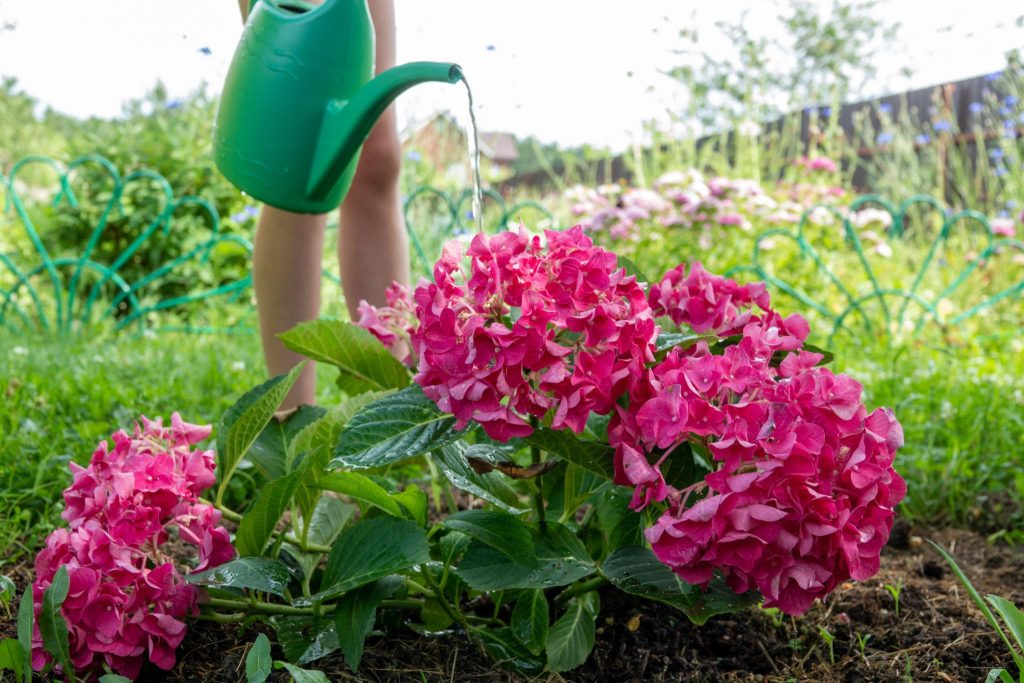
At this point, one realizes that watering must occur immediately.

Now, watering plants is not generally considered one of the more glamorous dimensions of Christian discipleship.

There are no major conferences devoted to advanced hose techniques.

No one says, “Tell us about your deeply transformative experience with petunias.”

And yet, I suspect there is something quietly holy about the whole thing.

Because watering plants requires attentiveness.

One must notice what is drying out.

What needs care.
What cannot simply be left indefinitely untended while we assume everything will somehow work itself out.

Which, now that I think about it, describes a surprisingly large portion of ordinary Christian living.

Now, I should confess that while I love having a backyard garden, I have never been especially blessed with what one might call a green thumb.

Apart from cacti — which thrive for me largely because they flourish under conditions most accurately described as “benign neglect” — my gardening efforts seldom produce the lush and glorious beauty that originally existed in my imagination at planting time.

In my head, the garden always resembles something from an English country estate.

In reality, it often develops into what might best be described as “hopeful with isolated successes.”

Nonetheless, every spring I head back out into the yard to try again.

There is something deeply hopeful about gardening.

One plants things with optimism entirely disproportionate to past evidence.

One stands in the garden centre holding tiny seedlings and somehow imagines that this year discipline, weather, wildlife, soil conditions, and human competency will all align harmoniously.

This has not always occurred.

Grace abounds.

But over the years I have learned something important from these annual attempts at gardening:

Living things require attention.

Not perfection.

Not brilliance.

Just care.

Steady, patient care over time.

And perhaps that is why gardening remains such a powerful spiritual metaphor.

Because the Christian life is not about producing immediate perfection.

It is about returning faithfully to the work of tending the soul.

Again and again.

Even after disappointing seasons.
Even after mistakes.
Even when the results do not quite resemble the picture we originally carried in our minds.

Because much of faith is not dramatic.

It is the steady work of tending.

Tending relationships.
Tending prayer.
Tending our own souls before they become spiritually dehydrated and mildly irritable.

Now, I should confess that I am not naturally gifted in the horticultural arts.

There are people who move through gardens with an almost mystical intuition.

They know names of plants.
They understand soil conditions.
They discuss perennials with the seriousness of medieval theologians debating the nature of grace.

I admire these people tremendously.

I myself operate largely on encouragement and hope.

And occasionally Google.

But even I have learned that healthy things require regular care.

You cannot water thoroughly once in May and assume the garden will simply persevere heroically until Thanksgiving.

Life does not work that way.

Neither do people.

Which may be why Ordinary Time matters so much spiritually.

This long green season teaches us that growth is usually quiet.

Slow.
Repeated.
Built through small acts of faithfulness that do not appear especially dramatic in the moment.

Prayer.
Rest.
Kindness.
Showing up again and again for the people and responsibilities entrusted to us.

It is watering the soul consistently rather than waiting for collapse and then attempting emergency intervention.

Now, modern life encourages precisely the opposite approach.

We hurry.
We postpone rest.
We neglect stillness until exhaustion finally forces negotiations.

And then we wonder why everything feels dry.

But Jesus consistently invited people into a different rhythm.

Abide.
Remain.
Stay connected to the source of life.

Not frantically.

Faithfully.

And perhaps that is why watering plants can feel strangely peaceful on a summer evening.

The hose moves gently across the garden.
The air cools slightly.
Birds settle into the trees.

And for a few quiet moments, we participate in the simple work of nurturing life.

No applause.
No urgency.

Just care.

Which may be one of the most deeply Christian things we ever do.

So perhaps this Monday, as you move through the ordinary responsibilities of life, take a moment to ask:

What in my life needs watering?

What relationships need attention?
What part of my soul has been running dry?
Where is God quietly inviting me back into rhythms that give life rather than merely consume it?

Because grace rarely arrives only in dramatic moments.

More often, it comes quietly.

Like water soaking slowly into thirsty ground.

Alleluia.

Follow along on Instagram @renewablespiritual

Companion Prayer

Life-giving God,
You refresh weary souls
and nourish all creation.

Teach us to tend carefully
the lives you have entrusted to us.

Give us wisdom to notice what is drying out,
patience to care faithfully,
and grace to remain rooted in you.

Water our hearts with your peace,
renew our spirits,
and help us grow steadily in love.

Amen.

The Beautiful Familiarity of the Church Basement

The Church becomes home when love and belonging are woven through a lifetime of faith. Alleluia.

There are certain places in life that become holy not because they are impressive…

…but because they are familiar.

The Church basement is one of those places.

Now, I realize this may not immediately sound inspiring.

Church basements are rarely featured in architectural magazines.
They tend to smell faintly of coffee, hymn books, and thirty years of parish suppers.

The chairs are almost always stackable.
The lighting is optimistic rather than flattering.
And somewhere nearby there is invariably a cupboard containing mysterious cords no one feels brave enough to untangle.

And yet…

For many of us, these rooms feel strangely like home.

Not because they are elegant.

But because life has happened there.

Conversations.
Laughter.
Funerals.
Bible studies.
Children running joyfully in circles while exhausted adults pretend this level of energy is entirely manageable.

And after enough years, one realizes something important:

Home is not primarily about appearance.

It is about belonging.

And I certainly know that feeling of being at home in a worshipping community.

From very early in life, family and faith were so closely connected for me that going to church simply seemed to be an extension of home itself.

Sunday mornings, parish life, familiar prayers, familiar people—it all became woven into the fabric of what “belonging” meant.

But nowhere have I seen that connection more beautifully than in the life of Margaret.

Margaret was a parishioner at the Cathedral where I served as Dean.

She once told me about her very first Sunday there.

She had been four years old, carried across the muddy dirt road that was then King Street in Kingston so she could attend church with her family.

Now, when I met her, Margaret was already 105 years old.

And she was still attending the Cathedral faithfully every single week.

Think about that for a moment.

Entire nations had changed.
Wars had come and gone.
Automobiles, televisions, computers, and cell phones had all appeared during the course of her lifetime.

And through it all, week after week, she came home to her Cathedral.

Margaret eventually lived to be 110 years old.

Toward the end of her life, she was living in a nursing home, though her family still lovingly made certain she could attend worship at the Cathedral whenever possible.

I also celebrated regular Eucharists at the nursing home where she lived.

And one particular day remains one of my favourite memories in all of ministry.

Margaret was being wheeled toward the chapel by a very kind attendant.

The difficulty was that they were taking her to the Roman Catholic chapel.

Now, Margaret’s eyesight was very poor by this point, but her Anglican instincts remained absolutely razor sharp.

She was becoming increasingly upset with the poor attendant.

“I’m Anglican!” she kept insisting.

Seeing the situation unfold, I went over to reassure her.

I leaned in close so she could recognize me and said gently:

“It’s alright, Margaret. It’s me — the Dean.”

She looked directly at me and replied:

“I don’t care who the heck you are… I’m still gonna kiss you.”

And she did.

Now honestly, if that is not feeling at home in the family of faith, I do not know what is.

Because that is what the Church becomes at its best.

Not merely an institution.

Not merely a building.

But a place where relationships endure across generations.
A place where people belong deeply enough that love becomes instinctive.

And perhaps that is why Sunday worship matters so much.

We are not simply attending services.

We are coming home.

Now, summer Sundays in Ordinary Time have a particular way of reminding us of this.

The pace softens slightly.
People linger longer after worship.
Coffee conversations stretch comfortably into the afternoon because no one feels entirely rushed back indoors while the weather is beautiful.

And in those moments, church begins to feel less like an institution…

…and more like family.

Not perfect family, certainly.

The Church has always contained eccentric uncles, enthusiastic committee organizers, and at least one person deeply concerned about the thermostat in every season of the year.

Grace abounds.

But beneath all the ordinary peculiarities lies something deeply beautiful:

People who have chosen to belong to one another in Christ.

Now, I think this matters more than we sometimes realize.

Because the modern world is full of spaces where people gather…

…but very few places where people are truly known.

We live increasingly connected lives and yet often profoundly disconnected hearts.

And then Sunday arrives.

We enter familiar doors.
Hear familiar voices.
Sit in pews where generations before us have prayed and sung and quietly worried about whether they remembered to turn off the stove before leaving home.

And somehow, through all of this ordinary familiarity, God meets us.

Not only in the grandeur of liturgy.

Though certainly there.

But also in the deeply comforting rhythm of home.

The familiar creak of the floorboards.
The warmth of shared prayer.
The person who always saves you a seat at coffee hour without ever formally discussing it.

Now, I suspect this is part of why worship refreshes us so deeply.

Not because Sunday removes us from ordinary life…

…but because it reminds us we do not live that life alone.

We come home again.

To prayer.
To friendship.
To grace.

And perhaps this is one of the quiet miracles of the Church:

Week after week, imperfect people gather together and somehow become a community where weary souls can rest.

Not because everything is polished.

But because love lives there.

So this summer Sunday, as sunlight filters through stained glass and laughter echoes faintly downstairs over coffee and baked goods of uncertain nutritional classification…

Take a moment to give thanks.

For familiar places.
For familiar people.
For the astonishing gift of belonging.

And for the God who keeps welcoming us home again and again.

Even if the church basement still contains cords from 1987 that no one fully understands.

Alleluia.

Follow along on Instagram @renewablespiritual

Companion Prayer

Welcoming God,
You gather us into your household
and call us your people.

Thank you for the gift of community,
for familiar faces,
shared prayers,
and places where we feel at home.

Refresh us through worship,
renew us through friendship,
and help us to welcome others
with the same grace we have received.

And in all our gathering together,
may your love dwell richly among us.

Amen.

The Spiritual Wisdom of Sitting on the Dock

Sit quietly long enough, and creation itself begins to preach. Alleluia.

There are few places more conducive to theological reflection than a dock in June.

Now, I realize that seminaries rarely emphasize this.

There are entire libraries devoted to systematic theology, but remarkably little scholarly attention has been given to the spiritual significance of sitting quietly near water with absolutely no urgent plans whatsoever.

This is an oversight.

Because docks possess a kind of holy wisdom.

First of all, they slow people down.

No one rushes dramatically onto a dock.

One arrives differently there.

More slowly.
More thoughtfully.

And eventually one sits.

Preferably with a coffee.
Or a fishing rod.
Or simply the vague but entirely satisfying intention of “watching the lake for a while.”

Now, from a purely practical perspective, this accomplishes very little.

And perhaps that is precisely why it matters so much.

Because summer days in Ordinary Time invite us into a different rhythm.

Not productivity.
Presence.

The water moves gently against the shoreline.
The breeze stirs the trees.
Somewhere in the distance a loon calls with that haunting sound that immediately convinces Canadians they are participating in something deeply spiritual, even if they were previously discussing hotdog buns five minutes earlier.

Creation has a remarkable ability to gather scattered souls back together.

Now, I have long suspected that one of the great tragedies of modern life is that we have forgotten how to simply behold things.

We photograph sunsets instead of watching them.
We narrate experiences instead of inhabiting them.

Even rest now comes with subtle pressure to optimize the experience somehow.

But creation stubbornly resists efficiency.

The lake does not hurry.
The trees are in no rush whatsoever.
The clouds drift overhead without once consulting a schedule.

And slowly—if we remain there long enough—we begin to remember something important.

We are creatures.

Not machines.

We belong to the created world, not merely to calendars and obligations.

This, I think, is why Jesus spent so much time outdoors.

Mountains.
Boats.
Fields.

He taught people to notice things.

Birds.
Seeds.
Lilies.

He seemed entirely confident that creation itself could teach the human heart how to trust God again.

And perhaps it still can.

My sister’s family owns what I consider to be a little piece of paradise.

Years ago, they purchased a woodland property outside the city of Cambridge with a twelve-acre lake at its centre. They built their home there, tucked into the trees beside the water, and I have always loved visiting that place.

In every season there is something to watch there as life quietly unfolds around the lake and through the woods.

But summer may be my favourite.

Often the greatest joy is simply taking a chair down onto the dock—or sitting quietly on the deck beside the house — and observing.

Not accomplishing.
Not planning.
Simply noticing.

There are egrets moving gracefully through the shallows.
Ducks and geese crossing the lake with quiet determination.
And occasionally, if one is lucky, even a swan gliding across the water with the sort of effortless dignity that only swans seem able to achieve.

The woods themselves are alive.

Foxes and coyotes appear unexpectedly along the tree line.
Raccoons conduct their mysterious evening business with considerable seriousness.
White-tailed deer emerge silently from the forest as though stepping directly out of creation itself.

And overhead — if the timing is right — you may catch sight of the resident bald eagle circling above the lake.

There is never a moment there when, if you sit quietly long enough, you will not see something absolutely astonishing.

Something beautiful.

Something that reminds you that creation is still filled with wonder whether we are paying attention to it or not.

And on that dock — or on that deck — I have encountered God many times.

Not in dramatic visions or great revelations.

But in stillness.

In beauty.
In the quiet awareness that the world is overflowing with life and grace and goodness entirely apart from my own effort.

Creation has a way of preaching gently to the soul.

It reminds us that we are not separate from the goodness of the world God has made.

We are part of it.

And perhaps that is why places like this feel so holy.

Because when we finally become still enough to notice creation…

We also become still enough to notice God.

Now, I realize not everyone has access to a dock in June.

Some people must settle for patios.
Or porches.
Or sitting quietly beside an aggressively overachieving tomato plant.

Grace works there too.

The point is not the location.

The point is attentiveness.

The willingness to pause long enough for creation to remind us that the world is still full of beauty that does not depend upon our effort.

And perhaps that is one of the hidden gifts of Ordinary Time.

It teaches us that holiness is often found not in dramatic moments…

…but in quiet awareness.

The sunlight on the water.
The warmth of the air.
The astonishing peace that arrives when we stop trying to accomplish something every moment of the day.

So perhaps this Saturday, God’s invitation is wonderfully simple.

Sit for a while.

Watch the water.
Listen to the birds.
Let creation speak.

And remember that before you were ever productive, successful, efficient, or busy…

You were loved.

The lake already knows this.

The trees have apparently known it all along.

And if you stay long enough on the dock, breathing in the beauty of an ordinary summer day…

You may begin to remember it too.

Alleluia.

Follow along on Instagram @renewablespiritual

Companion Prayer

Creator God,
You speak through water, wind, trees, and sky.

Slow our hurried hearts
until we can hear your voice again
in the beauty of creation.

Teach us to rest,
to notice,
and to delight in the world you have made.

And in the quiet moments of summer,
draw us back to the simple truth
that we are deeply loved by you.

Amen.

The Gospel According to the Unfinished To-Do List

“Thank God it’s Friday.”
And thanks be to God for grace in unfinished things.

There is a particular moment that arrives late every Friday afternoon.

It usually begins with optimism.

One looks at the to-do list and thinks:

“Well now. I believe I may actually finish everything this week.”

Now, this is a deeply admirable thought.

It is also, in most cases, entirely fictional.

Because the moment this optimism appears, three emails arrive simultaneously, the phone rings, and someone says the words every parish priest both loves and fears:

“While I’ve got you here…”

And suddenly the list begins reproducing faster than it can be completed.

Tasks multiply.
Sticky notes migrate mysteriously across the desk.
And somewhere beneath a pile of papers lies the original plan for the week, quietly wondering how events took such a dramatic turn.

Now, I used to find this deeply frustrating.

And if I am being honest, part of me still does.

Because I am, by nature, a consummate list maker.

I love a good plan.

There are few earthly satisfactions greater for me than reaching the end of a week and looking down at a carefully prepared list covered with lines drawn triumphantly through completed tasks.

It is deeply satisfying.

Almost liturgical.

A properly crossed-off list possesses a kind of sacramental beauty all its own.

Now, I suspect that will always be part of the person God created me to be.

And there is nothing wrong with that.

The world needs planners.
The Church certainly does.

But ministry has slowly taught me that God is also calling me to become more than merely a highly organized person with excellent stationery.

Because parish ministry has a remarkable way of interrupting plans.

You begin the week with a beautifully prepared agenda and entirely reasonable expectations.

And then someone walks into the office carrying grief.

Or fear.
Or loneliness.
Or a need far more important than whatever happened to be written in slot number four on Tuesday afternoon.

And suddenly the list matters a little less.

Not because the work itself is unimportant.

But because people always matter more.

Ministry has also taught me another lesson — and perhaps this one has been harder.

It has taught me to be gentler with myself.

To recognize that sometimes the plan created at the beginning of the week may have been just slightly… ambitious.

There are weeks when the wisest and holiest thing we can do is quietly allow some things to move onto next week’s list.

Without guilt.
Without self-reproach.

Simply acknowledging that we are human beings, not productivity machines disguised as clergy.

Now, this is not always easy for those of us who enjoy efficiency.

We secretly believe that if we just work slightly harder, organize slightly better, and perhaps acquire the correct notebook, we may finally achieve complete mastery over time itself.

This has not yet occurred.

Grace abounds.

But slowly, Ordinary Time teaches us a different wisdom.

Faithfulness is not the same thing as finishing everything.

Sometimes faithfulness looks like stopping to care for a person.

Sometimes it looks like resting.

And sometimes it looks like closing the notebook on Friday afternoon while several uncrossed items still remain on the page…

…and trusting that God’s grace will still be waiting there on Monday morning.

Because Ordinary Time teaches us something very important:

Life is not lived in finished form.

Most of our days are gloriously unfinished.

Laundry remains unfolded.
Gardens continue growing with startling enthusiasm.
Emails wait patiently for replies that may or may not arrive before Pentecost of the following year.

And somehow, grace continues to abound right in the middle of all that incompleteness.

Now, this does not mean responsibility disappears.

One should still attempt to answer emails before they become historical documents.

But it does mean we begin to understand that our worth is not measured by our productivity.

This is difficult for many of us.

Especially those of us who secretly believe that with enough determination, colour-coded organization, and possibly a better filing system, we could finally achieve Complete Competence.

But Friday arrives each week like a gentle pastoral intervention.

It reminds us that we are finite creatures.

There will always be more to do than can fully be done.

And perhaps one of the holiest things we can learn is how to stop anyway.

Now, this is not resignation.

It is trust.

Trust that God remains Lord of the universe even while our desk remains slightly alarming.

Trust that unfinished work is not the same thing as failure.

Trust that rest itself is part of faithful living.

After all, the Sabbath commandment was never given because God thought humanity needed more efficient scheduling techniques.

It was given because human beings forget they are not machines.

We push.
We hurry.
We carry too much.

And then Friday quietly whispers:

“You may stop now.”

What a profoundly gracious invitation.

So perhaps this evening, before immediately launching into the next project or worrying about the unfinished things waiting for Monday…

Pause.

Sit outside for a while.
Watch the light soften toward evening.
Have supper slowly.
Call a friend.
Pray.

And let the unfinished list remain unfinished for one blessed evening.

Because the world does not rest upon our shoulders.

Thanks be to God.

And that, I think, may be one of the best reasons of all to say:

“Thank God it’s Friday.”

Alleluia.

Follow along on Instagram @renewablespiritual

Companion Prayer

God of grace and rest,
You know the work we carry
and the burdens we place upon ourselves.

Teach us to trust you enough to pause,
to rest without guilt,
and to leave unfinished things in your hands.

Refresh our weary hearts,
quiet our anxious minds,
and remind us that your love
does not depend upon our productivity.

And as this week comes to a close,
grant us peace, joy, and holy rest.

Amen.