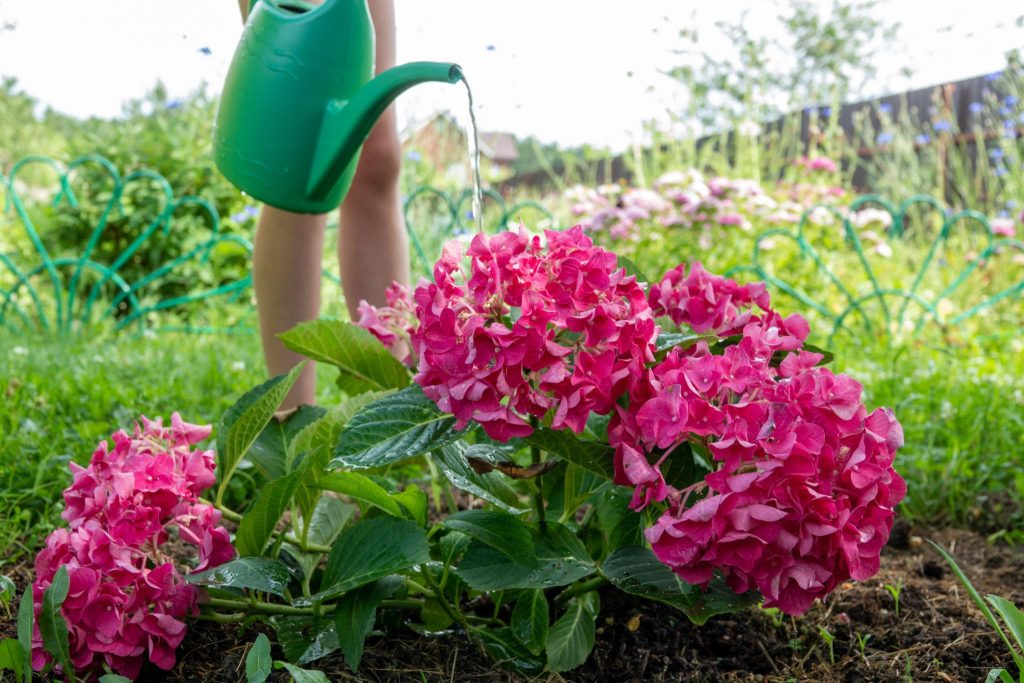
There is a particular moment in every summer when one notices that the plants have begun to look… expressive.
Not dead, certainly.
But dramatic.
Leaves droop with theatrical intensity.
Hanging baskets communicate disappointment without saying a word.
And somewhere near the garden, a tomato plant appears to be reconsidering all its life choices.
At this point, one realizes that watering must occur immediately.
Now, watering plants is not generally considered one of the more glamorous dimensions of Christian discipleship.
There are no major conferences devoted to advanced hose techniques.
No one says, “Tell us about your deeply transformative experience with petunias.”
And yet, I suspect there is something quietly holy about the whole thing.
Because watering plants requires attentiveness.
One must notice what is drying out.
What needs care.
What cannot simply be left indefinitely untended while we assume everything will somehow work itself out.
Which, now that I think about it, describes a surprisingly large portion of ordinary Christian living.
Now, I should confess that while I love having a backyard garden, I have never been especially blessed with what one might call a green thumb.
Apart from cacti — which thrive for me largely because they flourish under conditions most accurately described as “benign neglect” — my gardening efforts seldom produce the lush and glorious beauty that originally existed in my imagination at planting time.
In my head, the garden always resembles something from an English country estate.
In reality, it often develops into what might best be described as “hopeful with isolated successes.”
Nonetheless, every spring I head back out into the yard to try again.
There is something deeply hopeful about gardening.
One plants things with optimism entirely disproportionate to past evidence.
One stands in the garden centre holding tiny seedlings and somehow imagines that this year discipline, weather, wildlife, soil conditions, and human competency will all align harmoniously.
This has not always occurred.
Grace abounds.
But over the years I have learned something important from these annual attempts at gardening:
Living things require attention.
Not perfection.
Not brilliance.
Just care.
Steady, patient care over time.
And perhaps that is why gardening remains such a powerful spiritual metaphor.
Because the Christian life is not about producing immediate perfection.
It is about returning faithfully to the work of tending the soul.
Again and again.
Even after disappointing seasons.
Even after mistakes.
Even when the results do not quite resemble the picture we originally carried in our minds.
Because much of faith is not dramatic.
It is the steady work of tending.
Tending relationships.
Tending prayer.
Tending our own souls before they become spiritually dehydrated and mildly irritable.
Now, I should confess that I am not naturally gifted in the horticultural arts.
There are people who move through gardens with an almost mystical intuition.
They know names of plants.
They understand soil conditions.
They discuss perennials with the seriousness of medieval theologians debating the nature of grace.
I admire these people tremendously.
I myself operate largely on encouragement and hope.
And occasionally Google.
But even I have learned that healthy things require regular care.
You cannot water thoroughly once in May and assume the garden will simply persevere heroically until Thanksgiving.
Life does not work that way.
Neither do people.
Which may be why Ordinary Time matters so much spiritually.
This long green season teaches us that growth is usually quiet.
Slow.
Repeated.
Built through small acts of faithfulness that do not appear especially dramatic in the moment.
Prayer.
Rest.
Kindness.
Showing up again and again for the people and responsibilities entrusted to us.
It is watering the soul consistently rather than waiting for collapse and then attempting emergency intervention.
Now, modern life encourages precisely the opposite approach.
We hurry.
We postpone rest.
We neglect stillness until exhaustion finally forces negotiations.
And then we wonder why everything feels dry.
But Jesus consistently invited people into a different rhythm.
Abide.
Remain.
Stay connected to the source of life.
Not frantically.
Faithfully.
And perhaps that is why watering plants can feel strangely peaceful on a summer evening.
The hose moves gently across the garden.
The air cools slightly.
Birds settle into the trees.
And for a few quiet moments, we participate in the simple work of nurturing life.
No applause.
No urgency.
Just care.
Which may be one of the most deeply Christian things we ever do.
So perhaps this Monday, as you move through the ordinary responsibilities of life, take a moment to ask:
What in my life needs watering?
What relationships need attention?
What part of my soul has been running dry?
Where is God quietly inviting me back into rhythms that give life rather than merely consume it?
Because grace rarely arrives only in dramatic moments.
More often, it comes quietly.
Like water soaking slowly into thirsty ground.
Alleluia.
Follow along on Instagram @renewablespiritual
Companion Prayer
Life-giving God,
You refresh weary souls
and nourish all creation.
Teach us to tend carefully
the lives you have entrusted to us.
Give us wisdom to notice what is drying out,
patience to care faithfully,
and grace to remain rooted in you.
Water our hearts with your peace,
renew our spirits,
and help us grow steadily in love.
Amen.