The Gospel According to the Overpacked Car

There are few rituals more distinctly Canadian than preparing for a summer vacation.

Now, I realize that technically the vacation begins when one arrives at the cottage, campground, lakeside cabin, or scenic destination.

This is not true.

The vacation begins when someone attempts to fit an impossible quantity of belongings into a vehicle that has remained stubbornly the same size throughout the entire packing process.

This is where faith enters the picture.

Because every family eventually reaches the point where someone stands beside the car and says, “I don’t think it’s all going to fit.”

And then someone else says, “Let’s just try one more thing.”

Miraculously, it usually does fit.

Not comfortably.

Not safely in the sense envisioned by automotive engineers.

But it fits.

Grace abounds.

Now, July has a way of stirring the wanderlust in us.

The schools have emptied.

The days are long.

The weather, at least theoretically, is cooperating.

And suddenly Canadians begin migrating in all directions.

North to cottages.

East to the ocean.

West to the mountains.

Or simply down the road to visit family and friends.

It is as though an entire nation collectively decides that sitting beside water is a spiritual discipline.

And honestly, I am not entirely convinced we are wrong.

Because there is something deeply restorative about stepping away from ordinary routines.

Not escaping life.

Simply seeing it differently.

Now, one of the curious things about vacations is that they rarely proceed exactly according to plan.

The weather changes.

The fish refuse to cooperate.

The campground neighbour decides that midnight is the perfect time to test the volume capacity of both music and conversation.

The GPS develops theological objections to your chosen route.

And somehow, despite all this, wonderful memories are still made.

Perhaps because the best moments are usually not the ones we planned.

They arrive unexpectedly.

A sunset.

A conversation.

A loon calling across the lake.

A grandchild laughing from the end of the dock.

A campfire where stories become progressively better with each retelling.

Now, I suspect there is a spiritual lesson hidden somewhere in all of this.

Because much of the Christian life is spent making plans.

We prepare.

Organize.

Schedule.

Pack.

Then God gently reminds us that life is not primarily about our plans.

It is about our willingness to encounter grace wherever we happen to find ourselves.

And grace has a habit of appearing in unexpected places.

Beside lakes.

Along highways.

Around picnic tables.

In family gatherings.

In quiet moments when the distractions of ordinary life finally begin to fall away.

Now, Ordinary Time is the Church’s season of growth.

The green season.

The season that reminds us that much of life unfolds not through dramatic moments but through steady living.

And perhaps vacations contribute to that growth more than we realize.

Because they give us space to notice things again.

The beauty of creation.

The gift of friendship.

The blessing of family.

The simple joy of an unhurried morning with coffee and nowhere in particular to be.

These are not small gifts.

They are holy gifts.

Now, I should confess that I have always loved travel, though I have also learned that there are two distinct stages to every vacation.

The first is the excitement of going away.

The second is the profound appreciation one feels upon returning to one’s own bed.

Both experiences deserve thanksgiving.

Because home itself is one of God’s great gifts.

Perhaps that is why vacations matter.

Not because they help us escape our lives.

But because they help us return to our lives with fresh eyes.

We see beauty again.

We notice blessings again.

We remember what truly matters.

So if you find yourself packing the car this July, heading toward a lake, a cottage, a campground, or some new adventure, go with gratitude.

Pay attention.

Notice the beauty around you.

Leave room for wonder.

And remember that the God who meets us in church pews also travels country roads, sits beside campfires, and walks quietly along lakeshores.

The vacation may begin with an overpacked car.

But with any luck, it will also become a pilgrimage of gratitude.

Alleluia.

Companion Prayer

Gracious God,

Thank you for the gift of summer.

For lakes and forests,
campfires and sunsets,
family and friendship.

As we travel and explore,
help us to notice your presence in creation and in one another.

Grant us safe journeys,
restful days,
and grateful hearts.

And wherever these summer adventures may take us,
draw us ever closer to you.

Through Christ our Lord.

Amen.

The Theology of the Red-and-White Lawn Chair: Canada Day Reflections for Ordinary Time

There are certain objects that immediately communicate that summer has truly arrived in Canada.

The barbecue is one.

The canoe resting beside a lake is another.

And somewhere near the top of the list sits the humble lawn chair.

Particularly if it is one of those red-and-white striped models that appears to have attended Canada Days continuously since Confederation.

Now, I should confess that I have a deep affection for lawn chairs.

Not because they are especially elegant.

No one has ever described a lawn chair as a masterpiece of engineering.

Most of them seem to have been designed with equal concern for comfort and the possibility of sudden collapse.

Grace abounds.

But there is something wonderfully Canadian about them.

They appear at family reunions.

Community picnics.

Church barbecues.

Fireworks displays.

They emerge from garages and sheds every summer like migratory birds returning from warmer climates.

And once unfolded, they invite us to do something that modern life often discourages:

Sit still.

Notice.

Give thanks.

Now, as Canada Day arrives once again, I find myself thinking about gratitude.

Not the shallow sort that pretends everything is perfect.

Canada, like every nation, has its struggles.

Its unfinished work.

Its failures and its hopes.

The road of reconciliation remains before us.

Justice remains a calling rather than an accomplishment.

And yet gratitude remains entirely appropriate.

Because gratitude is not the denial of imperfection.

It is the recognition of gift.

And we have been given many gifts indeed.

Now, I have been blessed to travel through much of this country over the years.

I have stood beside the Atlantic Ocean and watched the sun rise.

I have gazed across Prairie fields that seemed to stretch all the way to eternity.

I have paddled northern lakes where the water reflected the sky so perfectly that one could scarcely tell where one ended and the other began.

And before I am througI intend to watch mountains rise from the earth with a grandeur that leaves even clergy temporarily speechless.

Which, I assure you, is no small miracle.

And every time I encounter these places, I find myself returning to the same conclusion:

What an astonishing country God has entrusted to our care.

Now, the beauty of Canada is not found only in its landscapes.

It is found in people.

In neighbours who appear with snow shovels after storms.

In volunteers who quietly give their time.

In communities that gather around those who are grieving.

In friendships formed across differences.

In kindnesses offered without expectation of reward.

And perhaps this is one of the greatest blessings of all.

Because nations are not ultimately defined by geography.

They are defined by people learning how to live together.

Now, I realize that Canada Day occasionally inspires debates about national identity.

What does it mean to be Canadian?

What values matter most?

These are worthwhile questions.

But perhaps one answer lies in the ordinary virtues that have shaped so much of our common life:

Kindness.

Generosity.

Humility.

The willingness to help.

The ability to laugh at ourselves.

Particularly when mosquitoes are winning.

Again.

Now, from a Christian perspective, gratitude for country must always lead us back to gratitude for God.

Because every good gift ultimately comes from Him.

Life.

Health.

Freedom.

Friendship.

The beauty of creation.

The opportunity to live, work, worship, and serve in this place and time.

These are not things we have earned.

They are gifts.

And gifts are best received with thanksgiving.

So perhaps this Canada Day, whether you find yourself beside a lake, at a barbecue, watching fireworks, or simply sitting quietly in a well-worn lawn chair…

Pause for a moment.

Take in the beauty around you.

Offer a prayer of gratitude.

And remember that the God who made this vast and beautiful land continues to bless us beyond measure.

Not because we are perfect.

But because God is generous.

And for that, on this Canada Day, we give thanks.

Alleluia.

Companion Prayer

Gracious God,

We thank you for this land we call home.

For its lakes and forests,
its mountains and Prairies,
its cities and small towns.

We thank you for the gift of life,
for health, freedom, friendship, and community.

Help us to be faithful stewards of all that you have entrusted to us.

Guide us in the work of justice, reconciliation, and peace.

And on this Canada Day, fill our hearts with gratitude for your many blessings.

Through Jesus Christ our Lord.

Amen.

The Gospel According to the Walking Trail

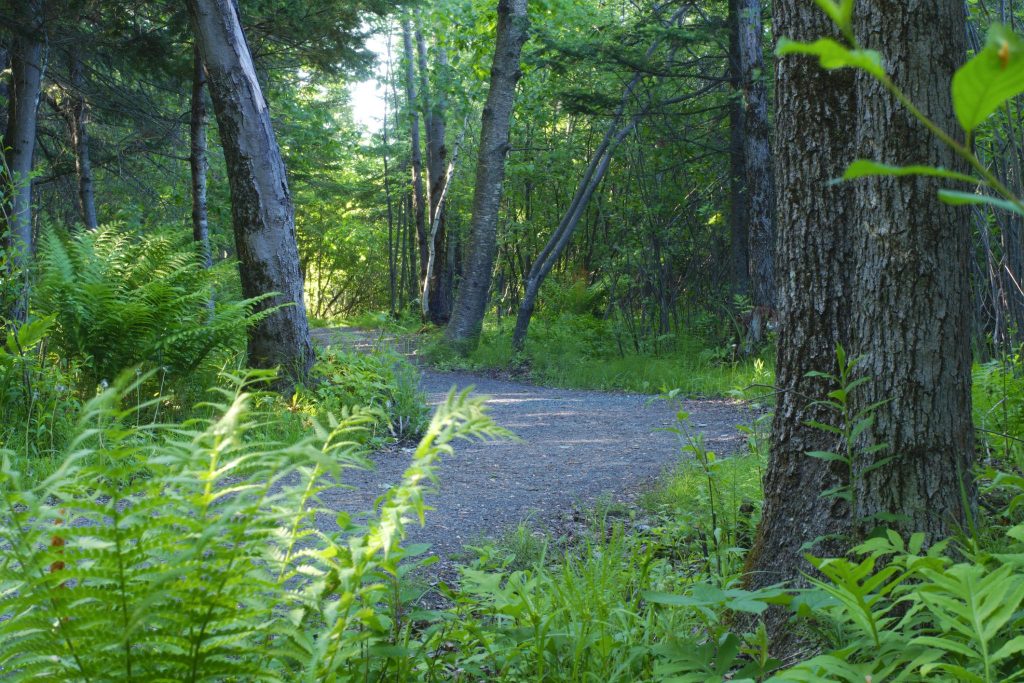
The trail does not ask us to hurry. It simply invites us to notice. In the birdsong, the breeze, and the beauty of creation, God is still meeting people along the way. Alleluia.

There is a curious thing that happens when a person sets out for a walk.

The original intention is often quite practical.

A little exercise.
Some fresh air.
Perhaps an earnest commitment to healthier living after a regrettable encounter with pie.

And then something entirely unexpected happens.

The walk itself begins to work upon the soul.

Now, I should confess that I have always enjoyed walking.

Not in the competitive sense.

I have never once looked at a woodland trail and thought, “I wonder if I could complete this in record time.”

That sort of thinking strikes me as contrary to the entire purpose of the exercise.

The point of a walk is not to arrive.

It is to notice.

And creation rewards those who notice.

A cardinal flashes through the trees like a flying piece of stained glass.

A chipmunk emerges from nowhere, regards you with deep suspicion, and then disappears again before any meaningful diplomatic relationship can be established.

The breeze shifts.

The scent of pine needles rises from the forest floor.

And suddenly one realizes that God has been busy creating beauty all around us whether we happened to be paying attention or not.

Now, I suspect this is one reason Jesus spent so much time walking.

The Gospels are full of journeys.

Roads.
Hillsides.
Paths beside lakes.

Jesus seems almost constantly on the move.

And it is while walking that conversations happen.

Lessons are taught.

Lives are changed.

One begins to suspect that God is quite fond of meeting people on the road.

Now, in our own day, we spend a remarkable amount of time indoors.

We move from house to car.

Car to office.

Office back to car.

All while carefully avoiding direct exposure to the natural world except through strategically placed windows.

Grace abounds.

But perhaps Ordinary Time invites us to something different.

The green season of the Church is a season of growth.

And growth requires us to reconnect with the living world God has made.

Not merely to admire it.

To inhabit it.

To walk through it.

To allow creation to preach its quiet sermon once again.

Because creation is endlessly patient.

It never rushes.

Trees do not spend their mornings worrying about quarterly performance reviews.

The robin does not appear burdened by the need to answer email.

The clouds drift overhead with a calm confidence that most human beings can only admire from a distance.

And somewhere in all of this, creation gently reminds us that life is more gift than achievement.

Now, I realize there are people who approach walking with considerable seriousness.

They track distances.

Monitor heart rates.

Possess footwear engineered with the sophistication of modern spacecraft.

I admire such people.

Personally, I have increasingly come to see walking as a form of prayer.

A chance to slow down.

To notice.

To give thanks.

To remember that God is present not only in churches and cathedrals but also in forests, fields, trails, and quiet country roads.

And perhaps that is the invitation for these summer days.

Not simply to look at creation.

But to enter it.

To walk slowly enough that wonder has time to catch up with us.

So perhaps sometime this week, put down the phone.

Step outside.

Find a trail, a park, a country road, or even a quiet neighbourhood sidewalk.

Walk without urgency.

Pay attention.

And allow yourself to encounter once again the beauty of the world God has made and continues to inhabit.

Because sometimes the most profound sermons are preached not from pulpits…

…but from the walking trail.

Alleluia.

Companion Prayer

Creator God,

Thank you for the beauty that surrounds us.

Open our eyes to wonder,
our ears to birdsong,
and our hearts to your presence in creation.

Teach us to slow down,
to walk attentively,
and to receive each day as a gift.

And as we journey through these green and growing days of Ordinary Time,
help us to encounter you anew in every path we travel.

Amen.

The Gospel According to the Farmers’ Market

There are few places more filled with hope than a farmers’ market on a summer morning.

Now, I realize this may sound like a rather bold theological statement.

But I am prepared to defend it.

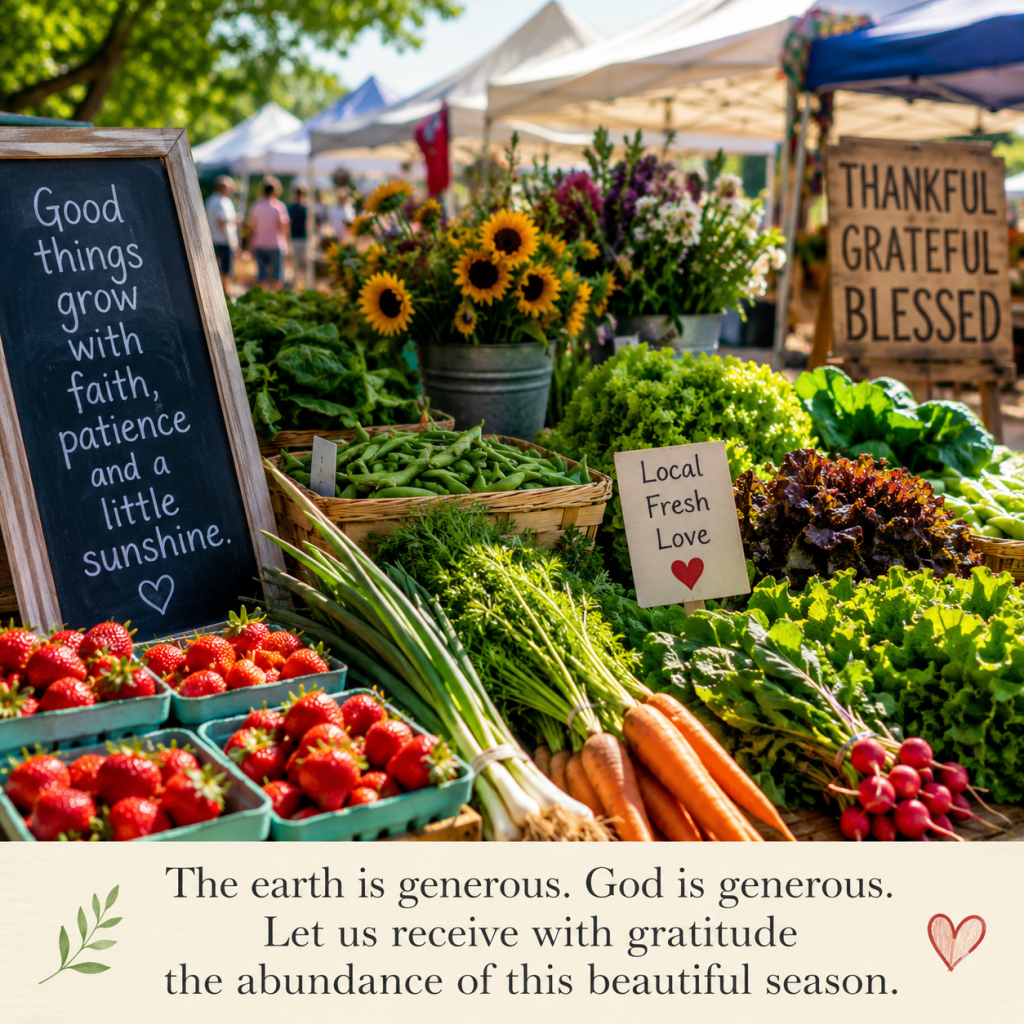
Because there is something deeply joyful about arriving at a market in late June and discovering that creation has once again decided to be extravagantly generous.

Tables overflow with colour.

Fresh lettuce.
Strawberries.
Peas.
Radishes.

And if one is fortunate enough to arrive at the correct moment, the first local sweet corn of the season begins making its annual appearance and causing widespread excitement among otherwise sensible adults.

Now, I should confess that I love this time of year.

Winter has its own beauty.

Spring carries its own promise.

But late June and early July possess a particular kind of abundance that is hard to resist.

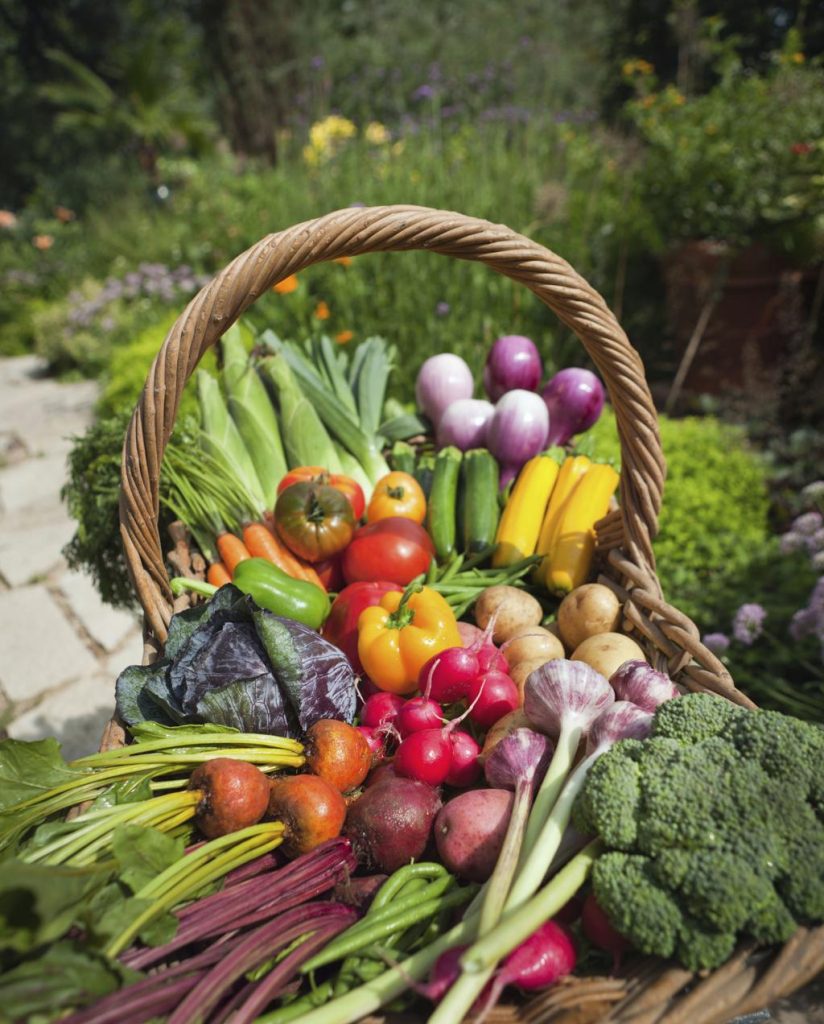
The gardens are producing.

The fields are growing.

And every week seems to bring some new gift to the table.

Literally.

When I lived in Waterloo Region, one of the great joys of this time of year was gettring up really early and making my way to the St. Jacob’s Farmer’s Market. It was always buzzing with life no matter how early I arrived, and the produce was just beyond belief.

Now, one of the things that has always fascinated me about farmers is their remarkable optimism.

Every spring they put seeds into the ground with astonishing confidence.

Weather remains unpredictable.

Rain may cooperate.

Or not.

Yet year after year they plant.

And somehow, most years, abundance follows.

Now, perhaps that is why the Scriptures are filled with agricultural imagery.

Jesus constantly talked about seeds.

Harvests.

Fields.

Growth.

Because these things reveal something important about the nature of God’s Kingdom.

Growth usually happens quietly.

One does not hear the corn growing.

The tomatoes make no announcement.

The strawberries do not issue press releases.

They simply grow.

Steadily.

Patiently.

Day after day.

And perhaps much of the Christian life works exactly the same way.

Now, modern culture tends to prefer immediate results.

We like measurable progress.

Visible outcomes.

Instant transformation.

But the soul rarely develops that way.

Faith grows slowly.

Character grows slowly.

Wisdom grows slowly.

Usually through ordinary days filled with ordinary acts of faithfulness.

Prayer.

Kindness.

Patience.

Showing up.

And eventually, after enough seasons have passed, one discovers that growth has happened after all.

Now, I should also admit that farmers’ markets possess one additional spiritual lesson.

Humility.

Because there comes a point during every visit when one purchases far more produce than any rational household could reasonably consume.

The strawberries looked too good.

The peas seemed irresistible.

The lettuce appeared somehow essential.

And suddenly one returns home carrying enough vegetables to sustain a modest monastery.

Grace abounds.

But perhaps even that points toward something beautiful.

Creation is generous.

God is generous.

And summer reminds us of this every year.

The earth does not merely provide enough.

It often provides abundance.

Colour.

Flavour.

Beauty.

Joy.

And perhaps one of the invitations of Ordinary Time is simply to notice these gifts more intentionally.

To stop rushing long enough to savour them.

To bite into a fresh strawberry and remember that creation remains one of God’s ongoing love letters to humanity.

Now, I realize that a theological reflection built partly around sweet corn and strawberries may not be found in every seminary textbook.

But I remain convinced that God is quite present in these things.

In gardens.

In markets.

In meals shared with gratitude.

And in all those ordinary summer moments when we remember that life itself is gift.

So perhaps this Monday, find your way to a market stand, a roadside table, or a backyard garden.

Take in the colours.

Enjoy the abundance.

Give thanks.

And remember that the God who causes seeds to grow is still quietly at work in the world—and in us.

Alleluia.

Companion Prayer

Generous God,

Thank you for the abundance of summer.

For gardens and fields,
for strawberries and sweet corn,
for the beauty and nourishment of your creation.

Teach us to notice your gifts with gratitude,
to receive them with joy,
and to grow patiently in faith as all living things grow.

And in these green and fruitful days of Ordinary Time,
help us remember that all good things come from you.

Amen.

The Theology of Chasing Fireflies

Sometimes God’s most beautiful sermons arrive quietly… flickering across an ordinary summer evening. Alleluia.

There are few things more capable of transporting an adult human being directly back into childhood than the sudden appearance of fireflies on a summer evening.

Now, I realize that scientifically speaking they are “lightning bugs.”

But I have always preferred the term fireflies because it sounds considerably more magical and significantly less like something requiring pest control.

And magical is precisely what they seem.

One moment the yard is settling quietly into dusk.

Then suddenly:

Tiny lights.

Drifting through the darkness like little floating sparks of wonder.

Now, I should confess that I have never entirely outgrown my affection for them.

There remains something deeply joyful about standing outside on a warm June evening watching tiny lights flicker over the grass while the air smells faintly of cut lawns and summer itself.

And somewhere deep inside, the soul remembers what wonder feels like.

Now, children generally respond to fireflies with tremendous enthusiasm and highly questionable coordination.

They run across the lawn attempting capture operations that involve equal parts excitement, optimism, and absolutely no strategic planning whatsoever.

I remember those evenings well.

Jars with holes punched in the lids.
Bare feet in the grass.
Entirely unrealistic confidence regarding one’s ability to catch things that can fly.

Grace abounds.

But what fascinates me now is how rarely adults stop to notice them at all.

We become busy.

Distracted.

Concerned with practical matters and entirely sensible responsibilities.

And gradually, without meaning to, we lose the habit of standing still long enough to marvel at small beautiful things.

Which is unfortunate.

Because creation remains full of tiny sermons.

And fireflies preach one of the loveliest of them all:

Light matters most when darkness begins to fall.

Now, Ordinary Time may actually be the perfect season for rediscovering this.

The Church’s long green season teaches us to notice grace not only in dramatic mountaintop moments, but in ordinary evenings and quiet beauty.

The little things.

Birdsong.
Summer breezes.
Fireflies drifting through twilight.

And perhaps this matters spiritually because much of life is lived precisely there—in ordinary moments we are tempted to rush past.

Jesus Himself seemed remarkably attentive to small things.

Seeds.
Birds.
Lilies.

Tiny living reminders that God’s presence saturates creation far more thoroughly than we usually notice.

And perhaps fireflies belong somewhere on that list as well.

Because every flicker of light against the darkening sky feels strangely hopeful.

Quietly defiant.

A tiny proclamation that beauty still exists.

Now, I realize this may seem an excessive amount of theology to attach to insects.

But honestly, the Gospel itself repeatedly insists that small things matter enormously.

Small kindnesses.
Small acts of faithfulness.
Small lights shining steadily in difficult times.

The Kingdom of God, after all, often arrives quietly.

Not always through spectacle.

Sometimes through flickering grace scattered gently across an ordinary summer evening.

And perhaps the soul needs such moments now more than ever.

Moments of wonder.
Moments of beauty without agenda or productivity.

Moments when we stop long enough simply to delight in creation again.

So perhaps this Saturday evening, if darkness falls softly and the weather is warm enough…

Step outside.

Watch the yard carefully.
Wait for the first tiny flicker of light.

And remember that God continues filling the world with beauty meant not merely to be analyzed…

…but enjoyed.

Even if somewhere nearby an enthusiastic child is still attempting highly unsuccessful firefly capture operations.

Alleluia.

Companion Prayer

Creator God,
Thank you for the quiet beauty of summer evenings.

Open our eyes to wonder again.
Teach us to notice the small gifts
that fill creation with light and joy.

In moments of darkness,
help us remember that even tiny lights matter.

And through all the beauty of this ordinary world,
draw our hearts toward gratitude, peace, and delight.

Amen.

The Deep Spirituality of Sitting on the Dock

The world invites us to hurry. The dock invites us to sit still. Somewhere between the water, the wind, and the evening sky, the soul remembers how to rest. Alleluia.

There are certain places in life where the soul naturally exhales.

For many Canadians, the dock is one of them.

Now, I realize that not everyone possesses access to a cottage, lakefront property, or even what real estate agents optimistically describe as “water adjacency.”

But there is something almost universally recognizable about the image itself:

A wooden dock stretching quietly out over still water.
A lawn chair positioned with deep intentionality.
The soft rhythmic sound of waves against weathered boards.

And somewhere nearby, inevitably, a loon calling with the sort of haunting beauty that makes one immediately feel both peaceful and slightly more Canadian.

Now, I should confess that I have always loved docks.

Not because anything particularly productive happens there.

Quite the opposite.

Docks exist largely for the sacred purpose of not accomplishing very much at all.

One sits.
One watches the water.
One contemplates whether one should perhaps eventually move slightly farther into the shade.

And honestly, this may be one of the healthiest spiritual practices available to modern humanity.

Because the world trains us relentlessly toward productivity.

Everything must achieve something.
Optimize something.
Improve something.

Even recreation now occasionally arrives with goals, performance metrics, and suspiciously athletic equipment.

But the dock quietly resists all of this.

The dock simply invites presence.

Now, I suspect this is why places near water have always carried spiritual significance.

Throughout Scripture, water repeatedly becomes a place of encounter.

Rivers.
Seas.
Lakeshores.

Again and again, people meet God near water because water slows human beings down enough to notice things.

The movement of light.
The stillness between sounds.
The astonishing beauty of creation carrying on quite peacefully without our supervision.

And perhaps that realization itself is healing.

Now, I should also admit that docks possess their own entirely unique theology of balance and humility.

No one has ever walked confidently onto a dock without at least some awareness that one poorly considered step could result in a deeply memorable and extremely public aquatic event.

This keeps a person grounded spiritually.

Grace abounds.

But perhaps that too is part of the beauty.

Creation reminds us that we are not in control of everything.

And oddly enough, that can become tremendously freeing.

Because once one stops trying to master every moment of life, one becomes far more capable of simply receiving life gratefully.

Now, summer Saturdays in Ordinary Time are particularly suited to this sort of spiritual rediscovery.

The Church’s long green season quietly invites us to notice growth, beauty, and rest again.

Not dramatic mountaintop experiences.

Just ordinary wonder.

The dragonfly hovering over the lake.
The warmth of sun on weathered wood.
The smell of pine trees drifting through the evening air.

And somewhere in all of this, God remains wonderfully present.

Not hidden away from creation.

Alive within it.

Speaking gently through beauty, stillness, and the quiet invitation to stop hurrying for a little while.

Now, I realize many of us struggle with this.

We sit down physically while remaining mentally engaged in seventeen unfinished tasks and at least three entirely hypothetical future problems.

I know this experience well.

But eventually, if we stay on the dock long enough, creation itself begins softening the noise inside us.

The water keeps moving quietly.
The wind continues through the trees.
The sky slowly changes colour toward evening.

And little by little, the soul remembers how to rest again.

So perhaps this Saturday, if the opportunity presents itself, find your way outdoors for a while.

Sit by the water.
Listen carefully.
Let creation preach its gentle sermon.

And remember that God often meets us not only in great cathedrals…

…but also on weathered docks beneath summer skies.

Alleluia.

Companion Prayer

Creator God,
Thank you for the beauty of water, sky, and summer stillness.

Teach us to slow down,
to rest deeply,
and to notice your presence in creation.

Quiet the noise within us.
Restore weary hearts through beauty and peace.

And in these green and growing days of Ordinary Time,
help us encounter you again
in the simple wonder of the world you have made.

Amen.

The Sacred Joy of Not Setting an Alarm

Sometimes the soul simply needs the grace of an unhurried evening, a quiet cup of tea, and the glorious knowledge that no alarm has been set. Alleluia.

There are few sounds more beautiful on a Friday night than realizing you do not need to set an alarm for the next morning.

Now, I understand that this experience may vary depending on one’s stage of life.

Some people have children.
Others have dogs.
Still others possess internal body clocks so deeply ingrained that they continue waking at 5:43 a.m. regardless of all conscious intentions.

Grace abounds.

But even then, there remains something deeply comforting about the simple knowledge that tomorrow morning does not immediately belong to schedules and obligations.

Now, I should confess that I remain very much an early morning person.

Farm life trained that into me long ago, and apparently the soul never entirely forgets such rhythms.

Even now, if left entirely undisturbed, I tend to wake early enough to make the sunrise feel slightly unprepared.

But there is a tremendous spiritual difference between waking up early…

…and waking up because one must.

Saturday mornings possess a completely different atmosphere.

The urgency disappears.

Coffee becomes less functional and more celebratory.

One sits longer.
Reads more slowly.
Looks out the window without immediately calculating how quickly the day must begin moving.

And perhaps this is one of the hidden gifts of Friday evenings.

They gently return us to ourselves.

Because during the week, life can begin to feel remarkably transactional.

Tasks completed.
Appointments kept.
Responsibilities managed.

One moves steadily from obligation to obligation until eventually the soul itself begins quietly longing for rest.

Not laziness.

Rest.

There is a difference.

Now, modern culture has become remarkably suspicious of rest.

We admire busyness.
Celebrate exhaustion.
And occasionally treat overwork as though it were evidence of moral superiority.

But the Gospel consistently points in another direction.

Jesus Himself regularly withdrew from crowds and demands.

He rested.
Prayed.
Shared meals leisurely enough that they repeatedly became theological events.

Honestly, much of the New Testament appears to unfold around tables.

And perhaps that is because God never intended human beings to exist as permanently accelerated creatures.

We were made for rhythm.

Work and rest.
Prayer and laughter.
Responsibility and delight.

Which may be why Friday evenings feel so restorative.

They remind us that life is not merely something to survive efficiently.

It is something to inhabit gratefully.

Now, I should admit there is also a particular Friday-evening optimism that arrives regarding weekend plans.

One imagines all sorts of ambitious possibilities.

Projects.
Errands.
Perhaps even personal organization of previously unimaginable sophistication.

Then Saturday actually arrives.

And suddenly sitting quietly with coffee while contemplating whether one truly needs to move at all becomes spiritually persuasive.

This too may be grace.

Because perhaps the soul occasionally needs permission simply to breathe again.

To stop measuring worth through productivity.

To remember that we are beloved by God even while wearing old golf shirts and accomplishing absolutely nothing of measurable significance for several consecutive hours.

Honestly, there is tremendous freedom in this realization.

So perhaps this Friday evening, before rushing immediately into the next obligation or filling every available moment with activity…

Pause.

Put the kettle on.
Sit outside for a while.
Watch the light soften toward dusk.

And give thanks for the holy gift of rest.

Because sometimes the most faithful thing we can do is simply stop striving long enough to remember that the world continues turning quite beautifully without our constant supervision.

Alleluia.

Follow along on Instagram @renewablespiritual

Companion Prayer

God of Sabbath rest,
Thank you for the gift of slowing down.

Teach us to rest without guilt,
to receive quiet moments with gratitude,
and to trust that your grace sustains the world even when we pause.

Refresh our weary hearts,
restore our spirits,
and help us delight once more in ordinary joys.

And as this week comes to a close,
draw us gently into your peace.

Amen.

The Gospel According to the Borrowed Tomato

Sometimes the Kingdom of God arrives quietly at the front door carrying tomatoes from the garden. Alleluia.

There is a particular kind of conversation that occurs regularly in neighbourhoods during the summer.

It usually begins with someone standing at the front door holding vegetables.

Now, this is already one of the great signs that Ordinary Time has fully arrived.

Because in winter, people appear at your door carrying things like snow shovels or casseroles.

But in summer?

It is tomatoes.

Or cucumbers.
Or beans.
Or zucchini of deeply concerning proportions.

And the exchange is always conducted with a kind of humble casualness.

“Oh, we just had extra.”

Now, everyone involved understands this is not entirely true.

No one accidentally grows twenty-seven tomatoes more than required.

What is actually happening is something much deeper and far more beautiful:

People are sharing abundance.

And perhaps that is one of the simplest and most profound expressions of loving our neighbour.

Now, I should confess that I have always loved these little summer exchanges.

There is something wonderfully human about them.

A knock at the door.
A conversation over the garden fence.
The offering of vegetables wrapped in absolutely no ceremony whatsoever.

No invoices.
No negotiations.

Just generosity.

Now, this sort of thing may seem small.

But Christian love has always been built largely out of small things.

Meals shared.
Doors held open.
Gardens tended.
People caring for one another in practical and deeply ordinary ways.

And perhaps the beauty of summer is that creation itself begins reminding us how naturally generosity belongs within life.

Because gardens are never truly private things.

Even when fenced.

The tomatoes grow too quickly.
The lettuce bolts unexpectedly.
The beans arrive all at once with startling enthusiasm.

And eventually abundance begins spilling outward toward neighbours whether we originally planned for this or not.

Creation itself seems wonderfully resistant to selfishness.

Now, I have often suspected that some of the strongest communities are built not through grand programs…

…but through repeated small acts of neighbourliness.

Borrowing tools.
Checking in after storms.
Quietly helping one another through ordinary life.

And over time, something sacred begins to emerge.

Trust.

Friendship.

Belonging.

A few weeks ago, one of my parishioners arrived at church carrying an enormous bundle of freshly cut rhubarb.

Now, this was already an act of extraordinary generosity because she knew two important things about me.

First, that I love rhubarb.

And second, that the rhubarb plants I had proudly planted the previous year had responded to my care with what can only be described as deep personal disappointment.

My gardening efforts had not exactly produced abundance.

In truth, for a man living alone, two healthy stalks of rhubarb already constitute a remarkable level of prosperity.

Particularly since, as a diabetic, I should probably not be enthusiastically consuming large quantities of rhubarb desserts in the first place.

But this parishioner arrived carrying enough rhubarb to sustain an entire small prairie settlement through difficult times.

It was magnificent.

Naturally, I went home and immediately stewed some rhubarb and served it over vanilla ice cream in celebration of this deeply theological moment.

Grace abounds.

But afterward, the whole experience reminded me of something Bishop Morse Robinson once said to me many years ago.

Morse and I had spent considerable time working together to restore catechumenal processes for preparing people for baptism, though our conversations regularly wandered into theology, ministry, parish life, and whatever else happened to arise along the way.

And I remember him once observing that modern society constantly teaches us there is never enough.

Not enough time.
Not enough money.
Not enough security.
Not enough resources.

As a result, he said, many people move through life with their hands tightly clenched, grasping and holding onto whatever they can for fear there may not be enough left tomorrow.

Then he paused and said:

“But when we go through life with our hands clenched, we are no longer able to receive the incredible abundance God wishes to give.”

I have never forgotten that.

Because the world so often teaches us a theology of scarcity.

Protect what is yours.
Hold tightly.
Trust no one.
There will never be enough.

But the Gospel tells a different story.

A story of abundance.

Loaves multiplied.
Tables shared.
Cups overflowing.
Gardens producing more tomatoes and zucchini than any reasonable household could possibly consume alone.

And perhaps that is why neighbourliness matters so deeply.

Because every small act of generosity quietly pushes back against the fear of scarcity.

A borrowed tomato.
A bag of cucumbers.
An overwhelming quantity of rhubarb.

Each one becomes a reminder that life is richer when shared.

And perhaps the Kingdom of God grows precisely there:
where human beings slowly learn to unclench their hands long enough both to give… and to receive.

The realization that we are not actually meant to live isolated lives.

Now, I realize modern culture often encourages the opposite.

Privacy.
Independence.
Self-sufficiency.

But the Gospel consistently points us back toward community.

Toward lives intertwined with kindness, generosity, and shared care.

And perhaps that is why Jesus spoke so often about seeds and vineyards and harvests.

Because creation itself teaches us that life grows best when it is shared.

Now, I should also admit there is a slightly humorous dimension to all this neighbourly generosity.

Because once someone gives you tomatoes, there emerges a subtle but very real internal pressure to eventually reciprocate somehow.

This creates challenges for those of us whose gardens primarily produce flowers and theological reflection.

There are limits to how many hydrangeas one can reasonably exchange for cucumbers.

Grace abounds.

But perhaps that too reveals something important.

Community is not transactional.

It is relational.

People care for one another not because balances must be maintained, but because love naturally overflows.

And in a world often shaped by loneliness and hurry, these ordinary acts of neighbourly kindness become deeply holy things.

A borrowed tomato.
A shared conversation.
A quiet reminder that someone nearby thought of you.

So perhaps this day, the invitation is beautifully simple.

Notice your neighbours.

Share something.
Offer kindness.
Receive generosity gratefully.

And remember that the Kingdom of God often grows very quietly indeed…

Somewhere between the garden gate and the front porch.

Alleluia.

Follow along on Instagram @renewablespiritual

Companion Prayer

Generous God,
Teach us to love our neighbours with open hearts.

Help us to share freely,
to receive gratefully,
and to build communities shaped by kindness and care.

Thank you for gardens, friendships,
and the ordinary moments
through which love quietly grows.

And in all the small acts of generosity
that fill our days,
may your grace continue to flourish.

Amen.

The Long Beautiful Work of Belonging

Over time, shared prayers, laughter, tears, and ordinary Sundays quietly become the long beautiful work of belonging. Alleluia.

There are certain decisions in life that seem rather small at the beginning.

Joining a church is often one of them.

Now, at the time, it may feel like a fairly modest act.

One fills out a form.
Learns where the coffee is located.
Attempts to determine whether people sit in the same pews every week out of habit or ancient ecclesiastical law.

And gradually, without quite realizing it, something deeper begins to happen.

One starts to belong.

Now, this is no small thing in the modern world.

We live in a time when many relationships have become remarkably temporary.

People move frequently.
Communities shift.
Entire friendships now exist largely through devices small enough to lose between couch cushions.

And yet, beneath all the movement and noise, the human heart still longs for something steady.

A place where people know your name.
Where your absence is noticed.
Where joys and sorrows are quietly carried together over time.

Which, when the Church is healthy, is precisely what Christian community becomes.

Not perfect community, certainly.

The Church has always been gloriously human.

There are differing opinions.
Committee discussions of astonishing duration.
And somewhere in every congregation there is at least one person who remains deeply concerned about either:

  • the thermostat,
  • the bulletin font,
  • or the theological implications of changing the brand of coffee.

Grace abounds.

But beneath all the ordinary peculiarities lies something profoundly sacred.

People choosing, again and again, to belong to one another in Christ.

Now, I think one of the greatest misunderstandings about church membership is the idea that it is primarily administrative.

As though becoming part of a worshipping community were simply a matter of paperwork and committee approval.

But true belonging unfolds much more slowly than that.

It happens over casseroles and coffee hours.
Hospital visits and funerals.
Shared prayers and quiet conversations after difficult weeks.

It happens when people carry one another through seasons of grief, illness, joy, doubt, celebration, and ordinary life.

And eventually one realizes:

The Church has quietly become home.

I remember one family in a former parish whose story has stayed with me for many years.

Mike and Kathy first wandered into St. Thomas the Apostle one Sunday looking for a church that felt like a good fit for them.

Now, clergy generally learn fairly quickly not to become overly confident after a single Sunday visit.

There are people who visit once, smile warmly, compliment the sermon, enthusiastically accept coffee… and are never seen again.

But in this case, it very quickly became clear that Mike and Kathy had found something more than a temporary spiritual stopping point.

They had found home.

In fact, more than thirty years have now passed since they first walked through those doors, and they remain faithful members of that parish community.

A few months after they began attending, Kathy invited her parents, Earl and Margaret, to come and see the parish as well.

Earl and Margaret started attending fairly regularly, and eventually Margaret — whose previous church background had been in the United Church of Canada — approached me one Sunday and announced:

“I have decided it is time to officially join this church.”

We had a lovely conversation, and afterward I went off to plan a proper Anglican celebration of the occasion.

Now, when the appointed Sunday arrived, I came out to the chancel steps and proudly announced to the congregation that Earl and Margaret were officially joining the parish.

I invited them both forward, presented them with a Bible, and welcomed them formally into the life of the Church while the congregation responded with tremendous enthusiasm and applause.

It was all deeply joyful.

Years later, however, I discovered a rather important detail.

Earl had never actually intended to officially join the church at all.

Margaret had made that decision.

But once I had publicly announced his name in front of the entire congregation, he apparently concluded that resistance was no longer a realistic option and simply came forward beside his wife.

During the years of Nazi occupation across parts of Europe, there were stories of forced conversions taking place under deeply tragic circumstances.

And there I was, quite unintentionally carrying out my own first forced denominational conversion at St. Thomas the Apostle.

Grace, as always, moves in mysterious ways.

But the truly beautiful part of the story came afterward.

Because Earl and Margaret did not merely attend.

They belonged.

They became woven into the life of the parish.

Earl served on Parish Council.
They participated in parish events.
Friendships formed.
Shared history accumulated.

And after Margaret died, the community of the Church carried Earl through the long and difficult season that followed.

He became part of a regular golfing group made up of parishioners.
People checked in on him.
Laughed with him.
Walked beside him.

The parish quietly became part of the structure of his daily life.

And a few years ago, when Earl died in his nineties, that same congregation gathered in great numbers to give thanks for his life.

And I remember standing there realizing that, in what began as a somewhat accidental church membership moment decades earlier, Earl had discovered something much deeper than denominational affiliation.

He had found his place within the family of God.

And perhaps that is how belonging often happens.

Slowly.
Unexpectedly.
Over years of shared prayers, coffee hours, griefs, laughter, committee meetings, casseroles, and ordinary faithfulness.

Until one day we realize that these people are no longer simply “the congregation.”

They are our people.

And we are theirs.

Now, Ordinary Time is particularly suited to reflecting on this.

Because these green summer Sundays remind us that spiritual growth usually happens gradually.

Relationship by relationship.
Prayer by prayer.
Year by year.

No dramatic fireworks required.

Just faithfulness.

Showing up.
Worshipping together.
Learning, imperfectly, how to love one another well.

Now, I should confess that one of the things I have always loved most about parish life is precisely this slow building of community over time.

At first, a parish is simply a gathering of people.

But after enough years together, something extraordinary happens.

The community develops memory.

Stories emerge.
Shared history accumulates.

People remember who taught Sunday School thirty years ago, who always burned the toast at parish breakfasts, and who somehow became permanently responsible for organizing things without ever formally volunteering.

And through all of it, love quietly deepens.

Because Christian community is not built through efficiency.

It is built through presence.

Through years of ordinary faithfulness woven together slowly enough that eventually people stop merely attending church…

…and begin belonging to one another.

And perhaps that is one of the quiet miracles of the Gospel.

That God takes ordinary people — with all our quirks and histories and wonderfully human imperfections — and patiently forms us into family.

A family gathered around Word and Sacrament.

A family learning grace together over time.

So perhaps this Ordinary Time season is a good moment to give thanks for the people beside whom you worship.

The familiar faces.
The shared prayers.
The long beautiful work of belonging.

Because in a restless world, communities shaped by love, faithfulness, and grace remain one of God’s most beautiful gifts.

Alleluia.

Follow along on Instagram @renewablespiritual

Companion Prayer

Faithful God,
Thank you for the gift of Christian community.

For the people who pray beside us,
care for us,
and walk with us through the seasons of life.

Teach us to belong to one another with grace,
patience, and love.

Strengthen your Church through friendship,
shared worship,
and faithful presence over time.

And in all our gathering together,
help us become more fully the family you call us to be.

Amen.

The Theology of Getting Out of the House

Sometimes the holiest thing we can do is simply step outside long enough to notice that God is still speaking through creation. Alleluia.

There comes a point every summer when the human soul begins quietly insisting that it was not designed to remain indoors indefinitely.

Now, this realization often arrives gradually.

One notices sunlight pouring through the window.
Birdsong drifts in from outside.
A warm breeze moves through the trees with the sort of gentle confidence that makes spreadsheets and laundry suddenly seem considerably less urgent.

And somewhere deep within, a voice whispers:

“You should probably go outside.”

Now, I realize this may not sound like a profound spiritual revelation.

But I am increasingly convinced that one of the great losses of modern life is how easily we forget that we ourselves are creatures.

We belong not only to schedules and screens and errands.

We belong to creation.

Which means there is something deeply restorative about stepping out into the world God has made and simply allowing ourselves to notice it again.

Now, I should confess that I have always loved the outdoors.

Not necessarily in the heroic wilderness-survival sense.

There are people who possess astonishing camping competence.
They can identify trees, navigate by stars, and produce functioning meals over fires built entirely from damp twigs and confidence.

I admire such people tremendously.

Personally, my own outdoor spirituality has historically involved a slightly greater appreciation for comfortable chairs and reliable coffee.

Grace abounds.

But even so, there is something profoundly holy about leaving behind the noise of ordinary life for a while and entering more deeply into creation.

Because creation itself has a way of reordering the soul.

I remember learning this rather dramatically during the early years of my first parish ministry.

One of the Scouters connected to our parish invited me and one of our parish deacons — Brother Mark — to join him and another friend for a week-long canoe trip.

Now, at the time, I was approaching my thirtieth birthday and considered myself to be in reasonably good condition.

After all, only a few years earlier I had competed in the annual Rivière Canard canoe race.

An eight-kilometre race, admittedly.
But still.

I therefore assured Geoff with complete confidence that I was entirely prepared for a week of canoeing.

This confidence, as events would soon reveal, was not especially well-informed.

There were, it turns out, certain important wilderness realities that never arise during a pleasant afternoon canoe race.

Most notably:
everything one brings must eventually be carried.

Repeatedly.

Over long distances.

Up hills.

In heat.

And since there are no portages on Rivière Canard, this particular spiritual lesson had somehow escaped me entirely.

So when Geoff arrived at the rectory to pick me up, I emerged with several extraordinarily full packs containing what can only be described as every conceivable survival necessity short of the kitchen sink itself.

To his credit, Geoff said nothing.

Though I remain convinced he quietly chuckled inwardly while helping load my mountain of equipment into the truck.

I did notice, however, that the others appeared to have packed remarkably lightly.

At the time I assumed this was simply because they possessed superior camping technology.

In retrospect, they possessed superior judgment.

We drove for several hours and stopped for lunch shortly before reaching our starting point.

Sensing that adventure required proper nourishment, I ordered an enormous cheeseburger with fries.

The others ordered small sandwiches.

Again, I failed to recognize this as meaningful information.

We launched onto the river and paddled for a while before arriving at a massive dam.

At this point Geoff calmly pointed toward a stairway running alongside the dam that appeared to extend upward directly into heaven itself.

There were hundreds of steps.

And every piece of equipment, all the food, and both canoes had to be carried up those stairs through multiple trips.

By the time I reached the top of the first ascent, I found myself reconsidering several major life decisions simultaneously.

Why had I eaten such a large lunch?

Why had I packed so much equipment?

Why had I done absolutely nothing in preparation for this adventure besides possessing enthusiasm?

And perhaps most urgently:

Why had I agreed to accompany these clearly unwell individuals into the wilderness in the first place?

But somehow I survived.

And strangely enough, after that first brutal portage, the remainder of the week unfolded with astonishing peace.

There were more portages, certainly.
But none that ever quite matched the apocalyptic grandeur of that first one.

We paddled quiet waters.
Cooked meals over the fire.
Hung our food in trees to discourage local wildlife from pursuing ministries of theft and redistribution.
And at night I slept with the deep contentment of someone who was completely and utterly exhausted.

Decades later, I still remember that first portage vividly.

I suspect I always will.

But what I remember most clearly is not the exhaustion.

It is the Sunday morning.

Brother Mark and I found a large flat stone near the water, and from somewhere deep within my absurdly overpacked supplies, I brought out the “holy hardware” I had insisted on carrying all week.

And there, surrounded by the quiet beauty of creation, the four of us gathered around that makeshift stone table and celebrated the Eucharist together.

No church building.
No organ.
No bulletin.
No parish hall coffee afterward.

Just prayer.
Creation.
Bread.
Wine.
And the unmistakable presence of God among us.

And interestingly enough, whenever the four of us speak about that trip all these years later, that is always the memory everyone returns to first.

Not the canoeing.

Not the portages.

Not even my spectacular overpacking.

But the Eucharist beside the river.

Which perhaps says something important.

Because sometimes it is only when we finally step outside the noise and hurry of ordinary life that we rediscover how deeply God has been present all along.

The mind slows down.
Breathing deepens.
Perspective quietly returns.

And suddenly one remembers that the world is still astonishingly beautiful apart from whatever anxieties happened to dominate Tuesday afternoon.

Now, Ordinary Time may be the Church’s annual invitation to rediscover exactly this.

After the great celebrations and liturgical intensity of Easter and Pentecost, the Church gently ushers us back into the ordinary rhythms of life.

But “ordinary” does not mean lifeless.

Far from it.

Ordinary Time arrives clothed in green for a reason.

Growth.
Life.
Abundance.

It is the season that teaches us how to encounter God not only in dramatic moments…

…but in the steady beauty of creation itself.

The sunlight on water.
The smell of pine trees warming in the afternoon sun.
The quiet stillness that arrives when one sits beside a lake long enough to stop checking the time every three minutes.

And perhaps that is part of why Jesus Himself spent so much time outdoors.

Mountains.
Fields.
Boats.
Gardens.

Again and again, He drew people back into the living world His Father had made.

He seemed entirely confident that creation could still teach people how to trust, wonder, and pray.

And perhaps it still can.

Now, I realize that many of us struggle to make space for this.

There are responsibilities.
Tasks.
Entire lists of things that appear very persuasive.

But every so often, the holiest decision we can make is simply this:

Go outside.

Take the walk.
Sit by the water.
Listen to the wind in the trees.

Not because productivity has finally been completed.

But because the soul itself needs beauty.

And because somewhere out there — in the woods, beside the lake, beneath the evening sky — God continues quietly inhabiting the creation He has made.

Waiting for us to notice.

Alleluia.

Follow along on Instagram @renewablespiritual

Companion Prayer

Creator God,
Thank you for the beauty of the world around us.

Teach us to slow down,
to step outside the noise of life,
and to encounter you again in creation.

Open our eyes to wonder,
our hearts to gratitude,
and our spirits to the quiet peace
that comes from resting in your presence.

And in these green and growing days of Ordinary Time,
draw us ever closer to you.

Amen.