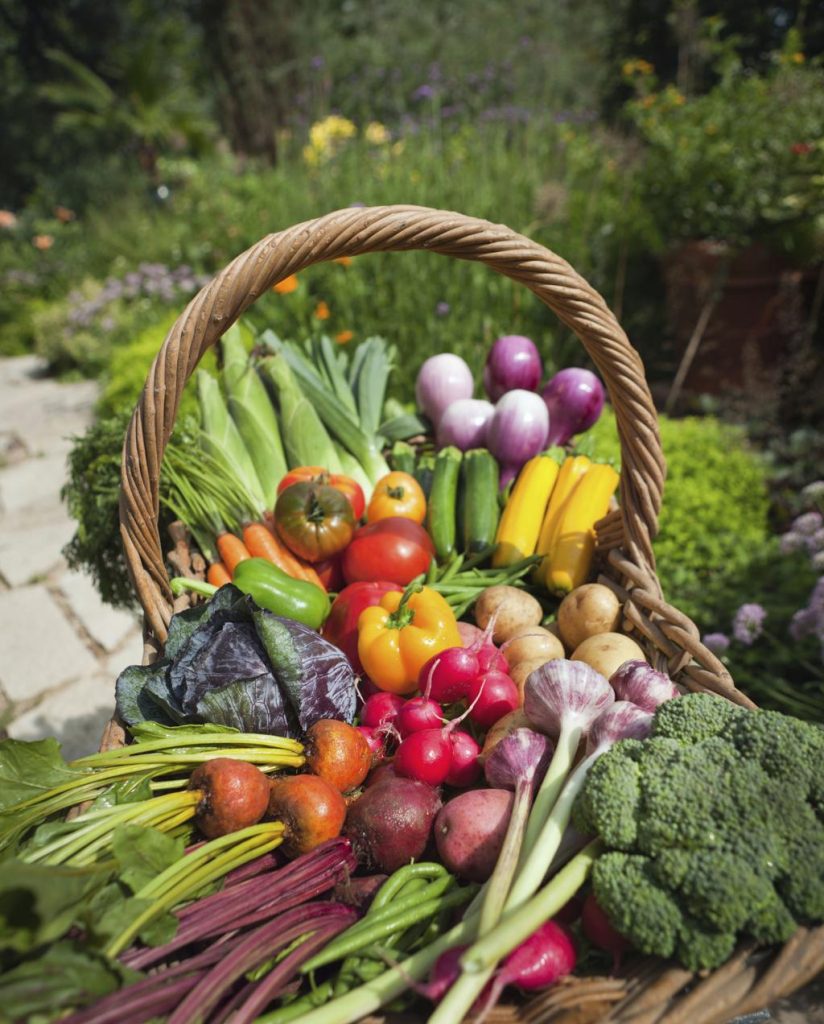
There is a particular kind of conversation that occurs regularly in neighbourhoods during the summer.
It usually begins with someone standing at the front door holding vegetables.
Now, this is already one of the great signs that Ordinary Time has fully arrived.
Because in winter, people appear at your door carrying things like snow shovels or casseroles.
But in summer?
It is tomatoes.
Or cucumbers.
Or beans.
Or zucchini of deeply concerning proportions.
And the exchange is always conducted with a kind of humble casualness.
“Oh, we just had extra.”
Now, everyone involved understands this is not entirely true.
No one accidentally grows twenty-seven tomatoes more than required.
What is actually happening is something much deeper and far more beautiful:
People are sharing abundance.
And perhaps that is one of the simplest and most profound expressions of loving our neighbour.
Now, I should confess that I have always loved these little summer exchanges.
There is something wonderfully human about them.
A knock at the door.
A conversation over the garden fence.
The offering of vegetables wrapped in absolutely no ceremony whatsoever.
No invoices.
No negotiations.
Just generosity.
Now, this sort of thing may seem small.
But Christian love has always been built largely out of small things.
Meals shared.
Doors held open.
Gardens tended.
People caring for one another in practical and deeply ordinary ways.
And perhaps the beauty of summer is that creation itself begins reminding us how naturally generosity belongs within life.
Because gardens are never truly private things.
Even when fenced.
The tomatoes grow too quickly.
The lettuce bolts unexpectedly.
The beans arrive all at once with startling enthusiasm.
And eventually abundance begins spilling outward toward neighbours whether we originally planned for this or not.
Creation itself seems wonderfully resistant to selfishness.
Now, I have often suspected that some of the strongest communities are built not through grand programs…
…but through repeated small acts of neighbourliness.
Borrowing tools.
Checking in after storms.
Quietly helping one another through ordinary life.
And over time, something sacred begins to emerge.
Trust.
Friendship.
Belonging.
A few weeks ago, one of my parishioners arrived at church carrying an enormous bundle of freshly cut rhubarb.
Now, this was already an act of extraordinary generosity because she knew two important things about me.
First, that I love rhubarb.
And second, that the rhubarb plants I had proudly planted the previous year had responded to my care with what can only be described as deep personal disappointment.
My gardening efforts had not exactly produced abundance.
In truth, for a man living alone, two healthy stalks of rhubarb already constitute a remarkable level of prosperity.
Particularly since, as a diabetic, I should probably not be enthusiastically consuming large quantities of rhubarb desserts in the first place.
But this parishioner arrived carrying enough rhubarb to sustain an entire small prairie settlement through difficult times.
It was magnificent.
Naturally, I went home and immediately stewed some rhubarb and served it over vanilla ice cream in celebration of this deeply theological moment.
Grace abounds.
But afterward, the whole experience reminded me of something Bishop Morse Robinson once said to me many years ago.
Morse and I had spent considerable time working together to restore catechumenal processes for preparing people for baptism, though our conversations regularly wandered into theology, ministry, parish life, and whatever else happened to arise along the way.
And I remember him once observing that modern society constantly teaches us there is never enough.
Not enough time.
Not enough money.
Not enough security.
Not enough resources.
As a result, he said, many people move through life with their hands tightly clenched, grasping and holding onto whatever they can for fear there may not be enough left tomorrow.
Then he paused and said:
“But when we go through life with our hands clenched, we are no longer able to receive the incredible abundance God wishes to give.”
I have never forgotten that.
Because the world so often teaches us a theology of scarcity.
Protect what is yours.
Hold tightly.
Trust no one.
There will never be enough.
But the Gospel tells a different story.
A story of abundance.
Loaves multiplied.
Tables shared.
Cups overflowing.
Gardens producing more tomatoes and zucchini than any reasonable household could possibly consume alone.
And perhaps that is why neighbourliness matters so deeply.
Because every small act of generosity quietly pushes back against the fear of scarcity.
A borrowed tomato.
A bag of cucumbers.
An overwhelming quantity of rhubarb.
Each one becomes a reminder that life is richer when shared.
And perhaps the Kingdom of God grows precisely there:
where human beings slowly learn to unclench their hands long enough both to give… and to receive.
The realization that we are not actually meant to live isolated lives.
Now, I realize modern culture often encourages the opposite.
Privacy.
Independence.
Self-sufficiency.
But the Gospel consistently points us back toward community.
Toward lives intertwined with kindness, generosity, and shared care.
And perhaps that is why Jesus spoke so often about seeds and vineyards and harvests.
Because creation itself teaches us that life grows best when it is shared.
Now, I should also admit there is a slightly humorous dimension to all this neighbourly generosity.
Because once someone gives you tomatoes, there emerges a subtle but very real internal pressure to eventually reciprocate somehow.
This creates challenges for those of us whose gardens primarily produce flowers and theological reflection.
There are limits to how many hydrangeas one can reasonably exchange for cucumbers.
Grace abounds.
But perhaps that too reveals something important.
Community is not transactional.
It is relational.
People care for one another not because balances must be maintained, but because love naturally overflows.
And in a world often shaped by loneliness and hurry, these ordinary acts of neighbourly kindness become deeply holy things.
A borrowed tomato.
A shared conversation.
A quiet reminder that someone nearby thought of you.
So perhaps this day, the invitation is beautifully simple.
Notice your neighbours.
Share something.
Offer kindness.
Receive generosity gratefully.
And remember that the Kingdom of God often grows very quietly indeed…
Somewhere between the garden gate and the front porch.
Alleluia.
Follow along on Instagram @renewablespiritual
Companion Prayer
Generous God,
Teach us to love our neighbours with open hearts.
Help us to share freely,
to receive gratefully,
and to build communities shaped by kindness and care.
Thank you for gardens, friendships,
and the ordinary moments
through which love quietly grows.
And in all the small acts of generosity
that fill our days,
may your grace continue to flourish.
Amen.