There is something deeply unsettling about the Third Sunday of Lent.
By now we are well into the season. The enthusiasm of early Lent has been replaced by something more realistic. Our noble intentions have either settled into habit or quietly negotiated new terms. (“I did mean to give up sweets, but I did not specify which sweets.”)
And then comes that Gospel image of the fig tree.
You remember the story. A fig tree that has not borne fruit. A gardener who asks for one more year. A little digging. A little manure. (The Church, you will notice, does not shy away from agricultural metaphors involving manure. Lent is nothing if not earthy.)
The question hovering over the scene is not subtle: what is growing in your life?
Now, before we all begin measuring ourselves like anxious horticulturalists, let us pause.
The fig tree is not cut down. Not yet.
There is patience in this parable. There is mercy in the soil. There is time given — not because fruit does not matter, but because growth cannot be rushed.
Monday after the Third Sunday of Lent feels like that extra year.
We are not finished. We are not condemned. We are not uprooted. We are simply invited to allow God to tend the soil again.
This is both comforting and mildly alarming.
Comforting, because we are not judged by one unproductive season. Alarming, because the gardener does not walk away. He digs. He fertilizes. He expects something to change.
Lent, by this point, has usually moved beyond dramatic gestures. It has become quieter. More interior. We are less concerned with what we have given up and more aware of what needs to grow.
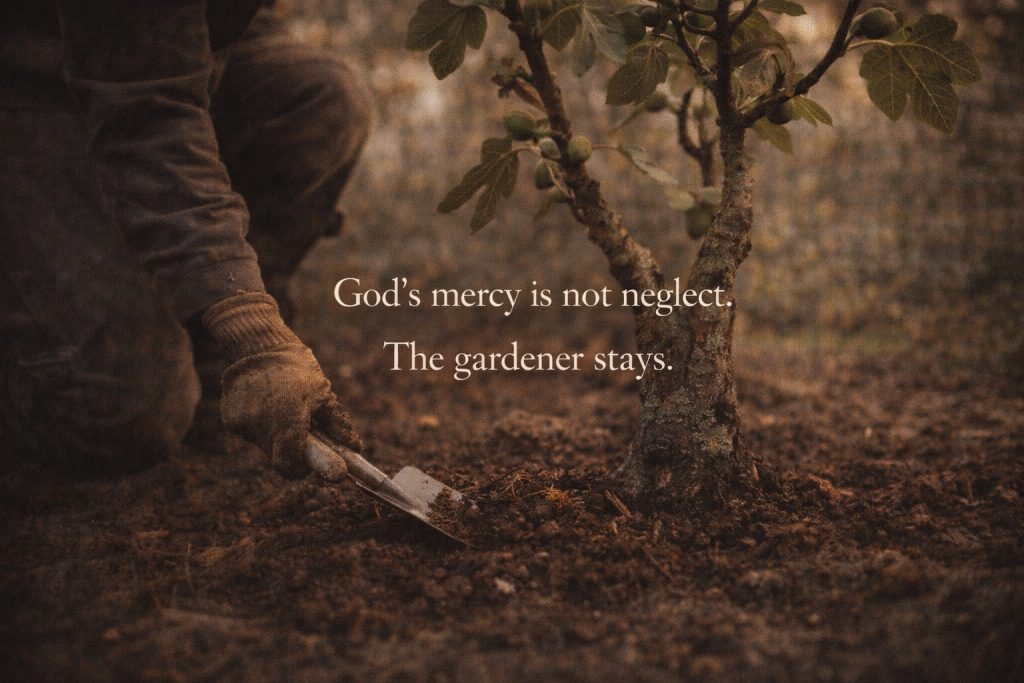
Patience is not indifference. God’s mercy is not neglect. The gardener stays.
Perhaps the most hopeful thing in the whole story is that the fig tree does not fix itself. It is tended.
The Christian life is not a self-improvement project conducted under divine supervision. It is a relationship in which God works the soil of our lives — loosening hardened places, enriching depleted ground, trusting that fruit will come.
Sometimes the digging is uncomfortable. Sometimes the fertilizer smells suspiciously like humility. But the intent is life.
If you are feeling less than fruitful this Lent, take heart. You have not been abandoned. The gardener is still at work.
And growth, as anyone who has ever tried to coax tomatoes out of a Canadian spring can attest, requires patience, persistence, and a certain tolerance for mud.
Companion Prayer
Patient Gardener,
You do not abandon what you plant.
When we feel barren or weary,
tend the soil of our hearts.
Loosen what has grown hard.
Nourish what has grown thin.
Give us time to grow,
grace to trust your work,
and courage to bear fruit
in due season.
Stay with us,
and make us fruitful in love.
Amen