The Church calendar has always struck me as quietly unimpressed by my sense of urgency.
While I am busy colour-coding my week, optimizing my to-do list, and congratulating myself for surviving on coffee and good intentions, the calendar simply turns the page and says, with great calm: Ordinary Time. Again. And then again. And then — just to make sure I’ve understood — green.
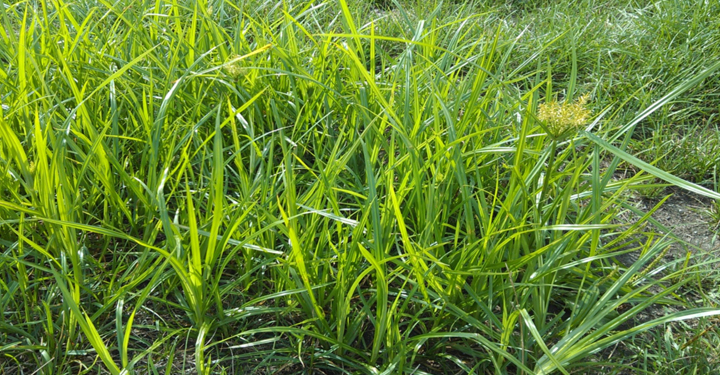
Green, of course, is the liturgical colour of not hurrying. It is the shade of grass growing at its own pace, of trees that stubbornly refuse to leaf on command, and of a Church that declines to be rushed even when the world is tapping its foot loudly.
The Church calendar knows something about burnout that we tend to forget:
not every season is meant to be intense.
The Theological Brilliance of “Nothing Special Today”
Modern life, bless its caffeinated heart, suggests that if something isn’t dramatic, productive, or Instagram-worthy, it may not be worth doing at all. The Church calendar politely disagrees.
After Christmas fireworks and Epiphany sparkle, after Lent’s earnest self-examination and Easter’s trumpet blasts, the calendar does something revolutionary: it settles down. It gives us long stretches with no plot twists, no special effects, and no urgent instructions other than keep going.
Ordinary Time is not an intermission.
It is formation.
This is where faith learns to breathe again. This is where prayer becomes less like a sprint and more like a daily walk that still counts even when no one is timing it. This is where God does most of the growing — quietly, patiently, and largely out of sight.
If the Church calendar were a person, it would be the sort who responds to your frantic monologue with a gentle nod and says, “Yes… but have you considered a nap?”
Holy Seasons as Divine Boundary-Setting
One of the calendar’s most under-appreciated spiritual gifts is that it simply won’t cooperate with our addiction to urgency.
You cannot extend Advent because you’re not ready for Christmas.
You cannot rush through Lent just because self-reflection is inconvenient.
You cannot skip to Easter without passing through Good Friday, no matter how efficient your planner is.
The calendar is, in this way, an act of divine resistance.
It insists that time belongs to God before it belongs to us. It reminds us that rest is not a reward for productivity but a rhythm woven into creation itself. It teaches us — over and over again — that life is not lived well at a perpetual gallop.
Burnout, it turns out, is often what happens when we ignore the seasons and demand harvest every week.
Green as a Spiritual Intervention
Green seasons are where the calendar stages its gentlest intervention.
Here, growth is slow. Faith deepens by repetition. Love matures through showing up. There are no spiritual fireworks scheduled, and no one is keeping score.
This is deeply inconvenient for a culture that prefers breakthroughs to faithfulness and highlights to habits. But it is also profoundly merciful.
Because burnout often arrives disguised as devotion.
And exhaustion frequently masquerades as commitment.
The Church calendar, wiser than we are, knows that holiness is not sustained by urgency but by rhythm. By work and rest. By feast and fast. By green seasons long enough for roots to go down.
What the Calendar Preaches Without Saying a Word
Every time the calendar turns and calmly announces another week of Ordinary Time, it preaches a quiet sermon:
• You are not behind.
• You do not have to be extraordinary today.
• God is still at work when nothing dramatic seems to be happening.
And perhaps most graciously of all:
You are allowed to live at a human pace.
Which, frankly, is very good news — for clergy, for caregivers, for parents, for over-achievers, and for anyone who has ever mistaken exhaustion for faithfulness.
The Church calendar will still be here tomorrow.
Still green.
Still patient.
Still gently teaching us how not to burn out in the presence of God.
Follow along on Instagram @renewablespiritual
A Prayer for Green Seasons and Gentle Pacing
Holy God,
you who made time itself
and called it good before we ever learned to rush,
Slow us down when we confuse urgency with faithfulness
and exhaustion with devotion.
Teach us again the wisdom of seasons—
of sowing and waiting,
of resting and rising,
of work that ends before we do.
When everything in us wants to hurry toward results,
remind us that roots grow in hidden places,
that love matures quietly,
and that most holiness happens without an audience.
Give us grace for the green days —
the ones without fireworks or footnotes,
when faith shows up, prays simply,
and keeps going without applause.
Deliver us from the lie that we must always be productive
to be pleasing in your sight.
Let your calendar shape our hearts,
your patience set our pace,
and your mercy teach us how to live at a human speed.
We offer you our days as they are—
unfinished, unhurried, and held by you—
through Jesus Christ,
who walked, rested, prayed, and trusted time to the Father.
Amen.