Still Carrying Candles Long After Christmas

What Candlemas teaches us about ordinary faith, patient hope, and showing up with what little light we have
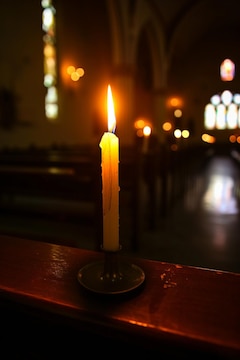
A single candle burning in a darkened church | Premium AI-generated image
Not a blaze. Just enough light to keep going.

Just when we think the Church calendar has finally moved on — when the tree is composted, the last stray bit of tinsel has been discovered in a drawer, and we have emotionally committed to February — along comes Candlemas.

Candlemas is the Church politely clearing its throat and saying, “One more thing, if you don’t mind.”

Forty days after Christmas, we arrive at the Feast of the Presentation of Our Lord, a feast that feels a bit like Christmas’ thoughtful but slightly delayed thank-you note. Mary and Joseph bring the child Jesus to the Temple, offer the modest gift of ordinary people, and meet two saints — Simeon and Anna — who have been waiting so long that “patient” hardly seems to cover it.

They have not been waiting for fireworks.
They have not been waiting for efficiency.
They have been waiting for faithfulness.

And then, at long last, they recognize him.

The light of the world does not arrive in a blaze. He arrives small enough to be carried, named, blessed, and handed back to his parents. Candlemas insists that the light that saves the world is, at first, candle-sized.

Which is helpful, because February is not a month that feels especially luminous.

By now winter has settled in with confidence. The novelty is long gone. The excitement is gone. Even the snow looks tired. Candlemas arrives precisely when we might be tempted to think that nothing much is happening — spiritually or otherwise.

And that is exactly the point.

Candlemas reminds us that much of faithful living consists of showing up with what little light we have. Not the bonfire version of faith. Not the dramatic conversion story. Just the small, steady flame that says, “I’m still here.”

It is also, if we are honest, one of the Church’s more charmingly impractical feasts. We bless candles — often in buildings famous for unpredictable drafts. One candle burns beautifully. Another flickers, sputters, and goes out as if making a theological argument of its own. Someone will inevitably drip wax at precisely the wrong moment. Someone else will wonder aloud why this is the candle that won’t cooperate.

This, too, is theology.

Because Candlemas tells the truth about faith: some days it burns clean and steady; some days it needs to be relit. The important thing is not that the flame never falters, but that we keep returning to the light.

Simeon sings because he has seen salvation — not because the work is finished, but because the promise is real. Anna speaks to anyone who will listen, not because everything is resolved, but because hope has shown up at last, quietly, after a very long wait.

And perhaps that is Candlemas’ greatest gift: permission to believe that waiting itself is holy. That recognition can come late. That God does some of God’s best work when nothing looks especially dramatic.

You don’t need to be radiant in February.
You don’t need to be impressive.
You don’t need to be fully sorted out.

A candle will do.

Carry it a little longer.
Let it warm your hands.
Trust that it is enough light for the next step.

Follow along on Instagram @renewablespiritual

A Candlemas Prayer

Holy God,
you meet us not only in glory,
but in waiting, patience, and small signs of hope.

Bless the light we carry —
when it burns brightly,
and when it flickers in the cold.

Teach us to trust your presence
even when it comes quietly,
even when it fits in our hands.

Help us to recognize Christ
in ordinary moments,
and to keep showing up
with the faith we have.

We ask this in the name of Jesus,
the light of the world.
Amen.

What the Church Teaches Us About Patience (Whether We Asked or Not): Slow prayers, slow change, faithful persistence.

With folded hands… we pray in stillness | Liturgical Encounters
Patience learned one pew, one prayer, and one slow Sunday at a time.

The Church, it must be said, is not particularly concerned with our preferred timelines.

This becomes apparent sometime between your first Vestry meeting and your fifth attempt to introduce a modest, entirely reasonable change that everyone agrees is a good idea — just not yet. Or perhaps ever. Or possibly after further consultation, prayer, discernment, sub-committee review, and a brief pause for tea.

The Church teaches patience not by offering a helpful seminar on the subject, but by arranging our lives so that impatience simply has nowhere to sit.

Prayers are slow.
Processes are slower.
Change moves at a pace best described as “biblical.”

We learn patience while waiting for the meeting to start because someone is still looking for the minutes from last month. We learn patience while the coffee brews — again — because the first pot was “a little weak.” We learn patience in liturgy itself: prayers repeated year after year, words worn smooth by faithful mouths, doing their quiet work long after novelty has given up and gone home.

The Church is very good at this sort of thing.

We pray for transformation, but the Church insists on formation. And formation, like bread dough and souls, refuses to be rushed. You cannot microwave holiness. You can only wait with it.

There is something profoundly countercultural about a community that believes God is not in a hurry. The Church teaches us — sometimes gently, sometimes with the subtlety of a folding chair — that faithfulness matters more than efficiency, and depth matters more than speed.

The Church also teaches patience by requiring us to love one another over time. Not in theory. In practice. With the same people. Again. And again. People who sing too loudly, speak too long, vote unexpectedly, and somehow always take your seat. There is no spiritual growth quite like staying put long enough for irritation to become affection and annoyance to become grace.

And here is the quiet miracle: patience, once learned, begins to change us. Not suddenly. Not dramatically. But steadily. Like water shaping stone. Like prayer shaping the heart.

The Church does not promise quick results. It promises deep ones.

So if you find yourself frustrated by slow prayers, slow decisions, slow change — take heart. You are being taught something holy. Whether you asked for it or not.

And God, who has all the time in the world, is very patiently at work.

Follow along on Instagram @renewablespiritual

A Companion Prayer

Gracious God,
you are never rushed, never flustered,
never anxious about the future.

Teach us patience when we would prefer progress,
faithfulness when we would prefer results,
and trust when we cannot yet see the outcome.

Slow our prayers until they sink deep.
Slow our hearts until they learn to listen.
Slow our lives until we notice what you are quietly growing.

Give us grace to stay,
courage to wait,
and love enough to endure one another
until your work in us is complete.

Amen.

The Holiness of Showing Up When You’d Rather Stay Home: Faith practiced in weather, weariness, and weekly routines

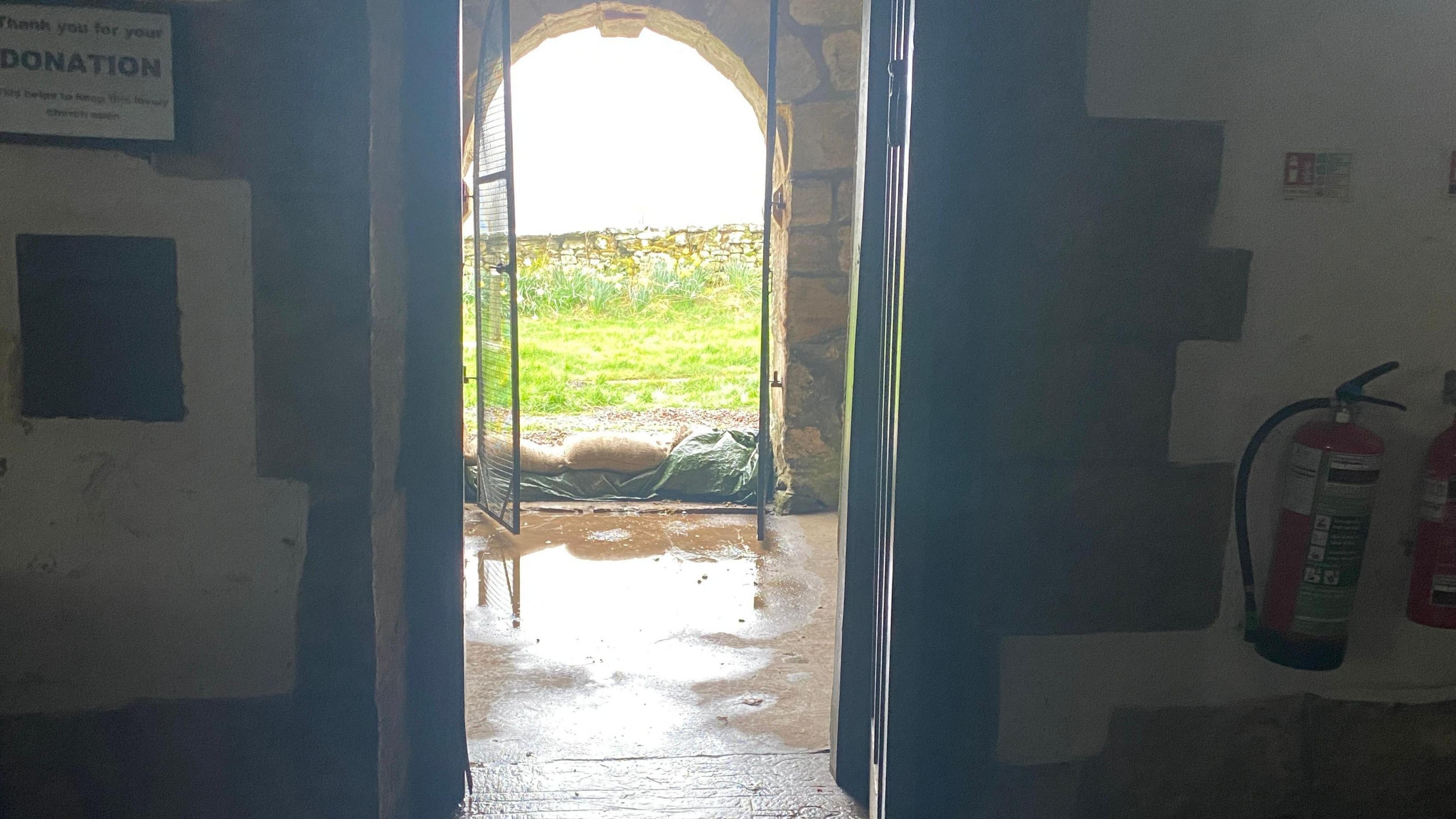
Heavy rain floods Grade I listed Northumberland church - BBC News
Holiness sometimes looks like just opening the door anyway.

There is a particular moment — usually involving weather — when holiness feels wildly overrated.

It happens on a grey morning when the rain has perfected its sideways technique, or when the temperature has sunk to the sort of cold that makes your bones file a formal complaint. It happens when the kettle has just boiled, the slippers are doing excellent pastoral work, and the couch is offering something that looks suspiciously like spiritual direction. And then comes the thought: Surely God will understand if I stay home.

God does understand. Which, irritatingly, is why God keeps inviting us out the door anyway.

Much of the Christian life is not lived in moments of blazing insight or thunderous revelation. It is lived in coats zipped against the wind, in cars scraping ice off windshields, in the slow walk up church steps while negotiating with oneself about how long one is morally required to stay. Holiness, it turns out, often looks like showing up — again — without enthusiasm, without energy, and without having ironed one’s best intentions.

Parish life is built almost entirely on this quiet courage. The courage of the choir member who comes despite a head cold and a hymn they do not like. The courage of the parishioner who arrives late because getting out the door was a minor miracle. The courage of the volunteer who sighs deeply, mutters something about commitment, and then shows up anyway.

This is not flashy faith. No one is handing out medals. There are no heavenly fireworks for “Attendance Despite Mild Exhaustion.” And yet — this is precisely where faith takes root. Not in our best moments, but in our most ordinary ones. Not when we are eager, but when we are faithful.

Jesus, after all, does not say, “Blessed are those who feel like it.” He simply keeps showing up — on roads, at tables, in boats, in towns that have already made up their minds. And then he invites us to do the same. Week after week. Season after season. In sunshine and snowbanks alike.

The holiness of showing up is not about grit or guilt. It is about love practiced in small, unspectacular ways. It is about trusting that God does good work even when we arrive tired, distracted, or secretly hoping the service will be short. It is about believing that grace has a habit of meeting us precisely where we would rather not have gone.

And so we come. With weathered patience. With lukewarm enthusiasm. With faith that sometimes arrives five minutes behind us.

And God, unfailingly, shows up too.

Follow along on Instagram @renewablespiritual

A Companion Prayer

Faithful God,
you meet us not only in moments of joy,
but in mornings when we are weary,
in days when the weather conspires against us,
and in routines that feel more dutiful than devout.

Bless our showing up—
when our hearts lag behind our feet,
when our faith feels thin,
and when staying home seems the wiser spiritual option.

Teach us that love is often practiced quietly,
that holiness grows in repetition,
and that your grace is already waiting
on the other side of the door.

Strengthen us for the long obedience of ordinary days,
and meet us again and again
as we come—just as we are.
Amen.

What Parish Life Teaches Us About Long Obedience in the Same Direction : Chairs stacked, minutes approved, grace slowly learned.

Stacking Classroom Chair ( Set of 6 )
THE QUIET SACRAMENT OF SETTING THINGS RIGHT FOR THE NEXT TIME.

Parish life, I have discovered, is not so much a sprint as it is a gentle, determined shuffle — often sideways — toward the Kingdom of God. It is a life measured less by dramatic conversions and more by the faithful reappearance of the same people, in the same chairs, arguing lovingly about the same budget lines, and then praying together as though none of that had happened.

We like spiritual stories with a clear arc: a beginning, a crisis, a breakthrough, and a triumphant conclusion by page three. Parish life, on the other hand, specializes in Chapter Seventeen: “Nothing Much Happens, Except Faithfulness.” It is the spirituality of coffee pots refilled, bulletins folded, and meetings that end with the hopeful sentence, “Let’s carry this forward to next month.”

And yet — this is precisely where long obedience is learned.

Parish life teaches us that discipleship is not about novelty. It is about showing up again. And again. And again. It is about discovering that sanctification often looks suspiciously like setting up chairs for people who may not thank you, or approving minutes that no one will ever read again, or singing the same hymn with the same slightly off-key enthusiasm you have offered for years.

There is a quiet heroism here. No headlines. No halos. Just a deepening patience with one another — and with ourselves.

Parish life also has a way of curing us of spiritual romanticism. If you stay long enough, you will be disappointed by the Church. You will also disappoint it in return. This mutual disillusionment, when handled with grace, turns out to be a gift. It teaches us to love real people instead of imaginary ones. It teaches us that faithfulness does not mean perpetual agreement, but persistent commitment.

You don’t learn long obedience in a single retreat or a particularly moving sermon. You learn it by sitting beside the same person whose opinions you do not share, praying the Lord’s Prayer together anyway, and discovering — slowly — that God is at work in both of you, often in ways neither of you can see yet.

And then there are the chairs.

Stacking chairs after coffee hour is one of the Church’s underrated spiritual disciplines. It is repetitive, unglamorous, and oddly satisfying. You can see progress, one stack at a time. You know when you’re finished. There is a beginning and an end, which is more than can be said for most ecclesiastical endeavours. Chairs remind us that the work of the Church is not to be impressive, but to be ready — ready for the next gathering, the next conversation, the next small unfolding of grace.

Long obedience in the same direction does not feel heroic while you are doing it. It feels ordinary. It feels like parish life. And that, I suspect, is exactly the point.

God does not seem to be in a hurry. The Church, at its best, learns to walk at the same pace.

Follow along on Instagram @renewablespiritual

Companion Prayer for the Host

Gracious God,
you meet us not only in great moments
but in folding tables, approved minutes,
and conversations that circle back again and again.

Bless those who host your people week by week:
those who unlock doors, brew coffee,
stack chairs, and keep showing up
long after the novelty has worn off.

Give us patience with one another,
humility in disagreement,
and joy in small faithfulness.

Teach us the grace of long obedience —
to walk steadily in love,
to trust slow growth,
and to believe that you are at work
even when progress is hard to see.

We ask this in the name of Jesus,
who stayed, loved, and walked with us all the way.
Amen.

Ordinary Time: God’s Favourite Colour Might Be Green: Growth you don’t notice until you suddenly do

Seed or a Weed? Identifying Garden Sprouts – Budding Homestead
Most growth happens underground — long before anything is viusiuble, or anyone is around to applaud.

If the Church calendar were a wardrobe, Ordinary Time would be the sensible green cardigan hanging quietly at the back of the closet. It doesn’t sparkle. It doesn’t shout. It doesn’t even get its own special playlist. And yet, it turns out to be the thing we wear most often.

Green is the colour of Ordinary Time, which already tells us something important: God seems remarkably fond of growth that happens slowly, politely, and without anyone stopping to take notes. Green is not the colour of epiphanies or revelations or divine fireworks. Green is the colour of things that just keep going when no one is watching.

This is good news, because most of life is green.

Ordinary Time is when there are no angels interrupting our sleep, no stars rearranging the sky, no voices booming from clouds. Instead, there are grocery lists, parish emails, dog walks, laundry that somehow reproduces overnight, and prayers that sound suspiciously like, “Well, here we are again, Lord.”

And God says, “Exactly.”

If we’re honest, we tend to assume God does God’s best work during purple seasons of penitence or white seasons of glory. But green suggests something else entirely. Green says God is deeply invested in repetition, in showing up, in faithfulness that looks boring from the outside and heroic only in retrospect.

It’s not flashy to water the same plant every day. It’s not thrilling to keep loving the same people, praying the same prayers, or doing the next small right thing when nothing much seems to be happening. But green reminds us that roots are forming underground long before anyone sees leaves.

Spiritual growth is like that. You don’t notice it on Tuesday afternoon. You don’t feel especially holy while unloading the dishwasher. You don’t suddenly glow during Morning Prayer because you remembered all the responses without peeking. And yet, one day you realize you’re a little more patient than you used to be. A little less afraid. A little quicker to forgive. A little slower to assume the worst.

And you think, “Huh. When did that happen?”

Green happened.

Ordinary Time is God’s long game. It’s where the Spirit quietly practices resurrection by means of habits, communities, and grace that arrives in work boots rather than wings. It’s where holiness looks suspiciously like consistency. It’s where love keeps its promises even when no one claps.

Which may be why green might just be God’s favourite colour. Not because it’s dramatic—but because it works.

So if your faith feels unremarkable right now, if your prayers feel plain, if nothing special seems to be happening — take heart. You may be standing in the middle of a field God is very carefully growing.

And one day, quite suddenly, you’ll notice.

Follow along on Instagram @renewablespiritual

A Companion Prayer

Gracious God,
you meet us not only in holy moments,
but in holy habits.
Teach us to trust the slow work of your Spirit,
the growth we cannot measure,
the faithfulness that feels ordinary until it bears fruit.

When we are tempted to rush,
remind us that you delight in patience.
When we doubt that anything is happening,
root us more deeply in your love.

Bless our green days, O God —
the days of steady walking, quiet praying,
and showing up again.
May we grow in ways we do not notice
until we suddenly do.

Amen.

When Nothing Special Is Happening, God Is Still Very Busy: A theological defence of uneventful weeks and unremarkable prayers

Free Stock Photo of Quiet residential street lined with trees, calm and  peaceful setting | Download Free Images and Free Illustrations
THE KINGDOM OF GOD ADVENCES ONE ORDINARY BLCOK AT A TIME.

There are weeks in the Christian life when nothing appears to be happening at all.
No epiphanies. No burning bushes. No thunderous revelations. Just laundry, emails, meetings, leftovers, and a prayer life that feels suspiciously like it’s running on polite small talk.

These are the weeks that worry us.

We begin to suspect that we’ve misplaced God somewhere between Tuesday and Thursday. Surely if God were really at work, there would be at least a mild sensation of uplift — perhaps a glow, a chord change, or a goosebump. Instead, there is only the steady hum of the furnace and the alarming realization that it’s already Wednesday again.

But here is the inconvenient theological truth: when nothing special is happening, God is often at work most deeply.

Scripture, inconveniently, is full of long stretches where nothing dramatic occurs. Israel wanders. The disciples fish. Paul makes tents. Jesus spends thirty years being astonishingly unremarkable. If this were a streaming series, someone would complain about the pacing.

And yet, this is precisely where formation happens.

God, it turns out, does not seem especially interested in our need for constant spiritual fireworks. God is far more committed to shaping patience, fidelity, kindness, courage, and love — virtues which, regrettably, develop best in conditions of repetition and mild boredom.

Uneventful weeks are where faith learns to walk without applause.

Unremarkable prayers — those honest, weary offerings of “Well, here I am again, Lord” — are not failures of devotion. They are signs of trust. They say, I will show up even when I have nothing impressive to report.

If we’re honest, many of our most dramatic prayers are really just cries for divine intervention into situations we would rather not endure. God answers those prayers too — but God also works quietly in the long obedience of ordinary days, reshaping us while we are distracted by groceries and calendars.

Stephen Leacock once suggested that life is mostly made up of things that happen while we’re waiting for something else to happen. Theology would add: this is not a problem to be solved, but a grace to be received.

God is not idle in uneventful weeks. God is building trust, deepening roots, and teaching us how to remain present without needing proof of progress. The Kingdom of God advances at a pace best measured by yeast, not fireworks.

So if this week feels spiritually unremarkable, take heart.
God is still very busy.

You may simply be doing holy work in plain clothes.

Follow along on Instagram @renewablespiritual.

A Companion Prayer

Faithful God,
when the days blur together
and nothing seems especially holy,
remind us that you are still at work.

Meet us in ordinary prayers,
in faithful routines,
in the quiet courage of showing up again.

Save us from believing that you only move
when we feel inspired or impressed.

Teach us to trust your hidden labour,
your patient shaping,
your steady presence in the unspectacular.

Bless the weeks without headlines,
the prayers without eloquence,
and the faith that keeps walking
even when nothing special is happening.

Amen.

The Gospel According to the Thermostat: Spiritual wisdom learned from never getting the temperature quite right

How To Calibrate A Thermostat In 6 Simple Steps
The silent theologian on the wall, steadfast and unimpressed.

There are few places where theology is tested more rigorously than in the nave of a church on a Sunday morning. The hymns may be glorious, the sermon inspired, the coffee valiantly brewed — but the thermostat will, without fail, be wrong.

Too hot. Too cold. Too warm in the back. Too drafty near the windows. One parishioner is discreetly fanning themselves with the bulletin, another has wrapped a scarf around their neck as if preparing for a North Atlantic crossing. The thermostat, meanwhile, sits on the wall like a silent prophet, blinking serenely, unmoved by our pleas.

And here we encounter our first spiritual lesson: control is largely an illusion.

We imagine that with the right setting — 68°F, 21°C, “Auto,” “Hold,” or the mysterious “Eco” mode — we can achieve communal comfort. But the thermostat has its own mysterious wisdom. It responds slowly. It resists urgency. It seems to suggest that human impatience is not its concern.

This, I suspect, is very close to how God feels about most of our prayers for immediate adjustment.

The Gospel according to the thermostat teaches us that community is messy. What feels just right to one person feels unbearable to another. The Kingdom of God, it turns out, is not climate-controlled. It is shared space. It requires layers — literal and spiritual — and a willingness to tolerate a bit of discomfort for the sake of being together.

There is also the matter of authority. Somewhere in every parish is a person who knows how the thermostat really works. They may not hold elected office, but they possess the sacred knowledge. They adjust quietly, often during hymns, leaving the rest of us wondering if anything has changed at all. This is not unlike the hidden saints of the church: unseen, misunderstood, occasionally blamed, and absolutely essential.

And then there is patience. The thermostat does not respond to panic. You can jab at the buttons with all the fervour of a revival preacher, but it will not be rushed. It warms and cools in its own good time, reminding us that transformation — spiritual or otherwise — rarely happens on demand.

In the end, the thermostat invites us into a deeper truth: faith is less about perfect conditions and more about faithful presence. We gather not because everything is just right, but because God meets us as we are — sweaters, fans, complaints, and all.

If you listen closely, you can almost hear the thermostat preaching: “Blessed are the adaptable, for they shall inherit the pew.”

Follow along on Instagram @renewablespiritual

Companion Prayer

Gracious God,
who meets us in overheated rooms and drafty corners,
teach us patience when things are not quite right.
Loosen our grip on comfort,
soften our insistence on control,
and warm our hearts even when our toes are cold.

Help us to love one another across differences of preference and perspective,
to laugh when things are imperfect,
and to trust that your Spirit is at work
even when the settings baffle us.

May we be a people more concerned with welcome than warmth,
more devoted to presence than precision,
and always ready to adjust ourselves
before adjusting others.

Amen.

Epiphanies Are Rare. Faithfulness Is Not. Why most discipleship happens without fireworks — and why that’s good news.

Barlow Common | YWT
In my experience, God often shows up without an audience — on ordinary roasd, in empty churches, through unremarkable light.

There is a persistent rumour in Christian circles that faith, if done properly, should involve regular epiphanies. Preferably with light effects. Ideally a choir. Possibly a tasteful fog machine.

We gather these stories the way anglers collect tales: Paul knocked flat on the road to Damascus, Moses with the burning bush, Peter blinking in the glow of the Transfiguration. These are the stories we remember, retell, and quietly hope might happen to us — perhaps while folding laundry or waiting in line at the bank.

But most discipleship, it turns out, does not happen like that at all.

Most of it happens without fireworks. Without choirs. Without anyone even noticing.

And thank God for that.

The Myth of the Constant Epiphany

Epiphany, as the Church wisely insists every year, is not a daily occurrence. It is a season, and even then, it arrives gently — wise travellers, a star that takes its time, a child who mostly looks like a child. After Epiphany, the decorations come down, the light lingers quietly, and life resumes its normal, slightly creaky rhythm.

If we insist that faith must always feel like revelation, we risk missing God altogether. We start mistaking volume for holiness and spectacle for presence. We assume that if nothing dramatic is happening, then nothing holy is happening either.

Which would come as a surprise to Jesus, who spent most of his ministry walking, listening, eating, and occasionally napping.

Faithfulness: The Long Obedience in the Same Direction

Faithfulness is not flashy. It does not announce itself. It rarely trends.

Faithfulness looks like praying when the prayer feels thin. Like showing up when you’d rather not. Like loving people who are occasionally hard to love, including yourself. It looks like keeping promises, tending relationships, returning again and again to the small disciplines that slowly, quietly shape a life.

Epiphanies change us in a moment. Faithfulness changes us over time. And time, inconvenient though it is, turns out to be God’s preferred medium.

Most saints are not remembered for their visions. They are remembered for their steadiness. Their stubborn hope. Their refusal to stop loving when it would have been easier — and far more dramatic — to quit.

The Quiet Good News

Here is the good news for those of us whose spiritual lives feel more like simmering than sparking: God is not disappointed.

God does not require constant insight, perfect clarity, or frequent mountaintop moments. God delights in faithfulness precisely because it happens in the ordinary, in the middle of real lives, with all their interruptions and imperfections.

Epiphanies are gifts. We receive them with gratitude when they come. But faithfulness is the soil in which those gifts take root — and that soil is available to everyone, every day.

Which means that if today feels unremarkable, unspectacular, or spiritually beige, you may be closer to the heart of God than you think.

Follow along on Instagram @renewablespiritual

A Companion Prayer

Faithful God,
we thank you for the bright moments
when the way is clear and the light is strong.

But today we thank you especially
for the quieter grace —
for steady days, ordinary faith,
and love that keeps showing up
without applause.

When we long for certainty,
teach us trust.
When we crave fireworks,
give us patience.
When we feel unnoticed,
remind us that you see.

Help us to walk faithfully,
step by ordinary step,
until one day we discover
that you have been with us all along.

Amen.

Why the Church Calendar Knows More About Burnout Than We Do: Green seasons, holy pacing, and divine resistance to constant urgency

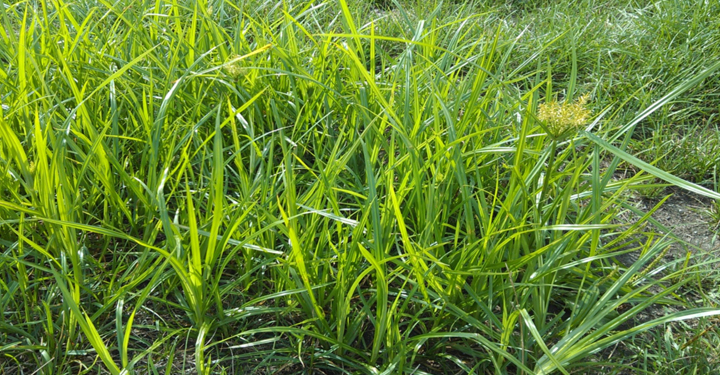
What is that Light Green Grass in my Lawn? - Purelawn Organic Lawncare
Green Seasons: Proof that God is not in a hurry — and neither should we be.

The Church calendar has always struck me as quietly unimpressed by my sense of urgency.

While I am busy colour-coding my week, optimizing my to-do list, and congratulating myself for surviving on coffee and good intentions, the calendar simply turns the page and says, with great calm: Ordinary Time. Again. And then again. And then — just to make sure I’ve understood — green.

Green, of course, is the liturgical colour of not hurrying. It is the shade of grass growing at its own pace, of trees that stubbornly refuse to leaf on command, and of a Church that declines to be rushed even when the world is tapping its foot loudly.

The Church calendar knows something about burnout that we tend to forget:
not every season is meant to be intense.

The Theological Brilliance of “Nothing Special Today”

Modern life, bless its caffeinated heart, suggests that if something isn’t dramatic, productive, or Instagram-worthy, it may not be worth doing at all. The Church calendar politely disagrees.

After Christmas fireworks and Epiphany sparkle, after Lent’s earnest self-examination and Easter’s trumpet blasts, the calendar does something revolutionary: it settles down. It gives us long stretches with no plot twists, no special effects, and no urgent instructions other than keep going.

Ordinary Time is not an intermission.
It is formation.

This is where faith learns to breathe again. This is where prayer becomes less like a sprint and more like a daily walk that still counts even when no one is timing it. This is where God does most of the growing — quietly, patiently, and largely out of sight.

If the Church calendar were a person, it would be the sort who responds to your frantic monologue with a gentle nod and says, “Yes… but have you considered a nap?”

Holy Seasons as Divine Boundary-Setting

One of the calendar’s most under-appreciated spiritual gifts is that it simply won’t cooperate with our addiction to urgency.

You cannot extend Advent because you’re not ready for Christmas.
You cannot rush through Lent just because self-reflection is inconvenient.
You cannot skip to Easter without passing through Good Friday, no matter how efficient your planner is.

The calendar is, in this way, an act of divine resistance.

It insists that time belongs to God before it belongs to us. It reminds us that rest is not a reward for productivity but a rhythm woven into creation itself. It teaches us — over and over again — that life is not lived well at a perpetual gallop.

Burnout, it turns out, is often what happens when we ignore the seasons and demand harvest every week.

Green as a Spiritual Intervention

Green seasons are where the calendar stages its gentlest intervention.

Here, growth is slow. Faith deepens by repetition. Love matures through showing up. There are no spiritual fireworks scheduled, and no one is keeping score.

This is deeply inconvenient for a culture that prefers breakthroughs to faithfulness and highlights to habits. But it is also profoundly merciful.

Because burnout often arrives disguised as devotion.
And exhaustion frequently masquerades as commitment.

The Church calendar, wiser than we are, knows that holiness is not sustained by urgency but by rhythm. By work and rest. By feast and fast. By green seasons long enough for roots to go down.

What the Calendar Preaches Without Saying a Word

Every time the calendar turns and calmly announces another week of Ordinary Time, it preaches a quiet sermon:
    •    You are not behind.
    •    You do not have to be extraordinary today.
    •    God is still at work when nothing dramatic seems to be happening.

And perhaps most graciously of all:
You are allowed to live at a human pace.

Which, frankly, is very good news — for clergy, for caregivers, for parents, for over-achievers, and for anyone who has ever mistaken exhaustion for faithfulness.

The Church calendar will still be here tomorrow.
Still green.
Still patient.
Still gently teaching us how not to burn out in the presence of God.

Follow along on Instagram @renewablespiritual

A Prayer for Green Seasons and Gentle Pacing

Holy God,
you who made time itself
and called it good before we ever learned to rush,

Slow us down when we confuse urgency with faithfulness
and exhaustion with devotion.
Teach us again the wisdom of seasons—
of sowing and waiting,
of resting and rising,
of work that ends before we do.

When everything in us wants to hurry toward results,
remind us that roots grow in hidden places,
that love matures quietly,
and that most holiness happens without an audience.

Give us grace for the green days —
the ones without fireworks or footnotes,
when faith shows up, prays simply,
and keeps going without applause.

Deliver us from the lie that we must always be productive
to be pleasing in your sight.
Let your calendar shape our hearts,
your patience set our pace,
and your mercy teach us how to live at a human speed.

We offer you our days as they are—
unfinished, unhurried, and held by you—
through Jesus Christ,
who walked, rested, prayed, and trusted time to the Father.

Amen.

Ordinary Time Is When God Stops Waving and Starts Walking: The quiet companionship of Christ once the big moments pass

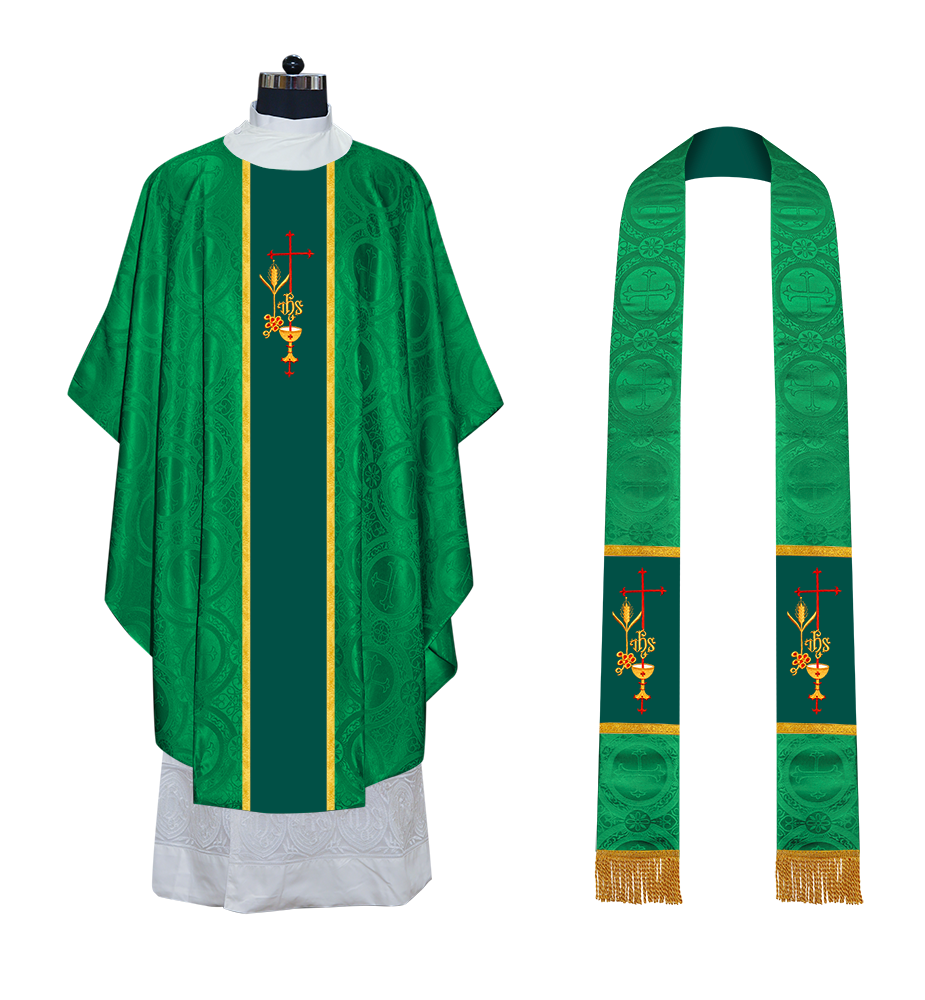
Gothic chasuble vestment - Eucharistic IHS – JOHA VESTMENTS
The Green of Ordinary Time — growth without hurry, faith without spectacle.

There is a particular kind of disappointment that comes after a feast day.
The banners come down. The trumpets go back into their cases. The casserole dishes are returned to their rightful cupboards, which immediately forget having ever been tidy.

And then — green.

Not the dramatic purple of penitence, nor the jubilant white of angels doing overtime, but green. The colour of lawns that need mowing and vestments that rarely get their own Instagram post. Ordinary Time. The season when God, having waved enthusiastically from the mountaintop, slips his hands into his pockets and says, “Shall we walk?”

It is tempting to assume that when the great moments pass — the star, the voice from heaven, the water turned wine-coloured, the dramatic ta-da! — God must have stepped out for a coffee. Surely holiness thrives best on spectacle. Surely faith needs fireworks.

But Ordinary Time suggests something else entirely.

This is the season when Christ stops waving and starts walking.
Not striding ahead with a flag, not hovering above us with a glow and a soundtrack, but matching our pace. Ordinary pace. The speed of errands and conversations and second cups of tea. The pace of people who are figuring things out as they go.

This is the Jesus who walks the long way around. Who lingers. Who tells stories that take a while to land. Who seems in no particular hurry to wrap things up neatly. A Jesus who, rather inconveniently, appears to believe that transformation happens less in moments of astonishment and more in stretches of companionship.

Which may explain why Ordinary Time is so long.

We like our spiritual lives punctuated: big events, clear markers, unmistakable signs that something important has happened. God, on the other hand, appears to favour accumulation. A word here. A meal there. A habit slowly formed. A mercy practised so often it begins to feel normal — and then, only later, holy.

Ordinary Time insists that faith is not sustained by constant urgency. It grows the way gardens do: quietly, daily, and occasionally in ways we don’t notice until someone else points it out. Green is not boring. Green is resilient.

I’m sure we are all familiar with the statement that life is lived while we are making other plans. Ordinary Time gently corrects us: God is met there too. In the in-between. In the middle chapters. In the chapters without titles.

Christ walks with us when there is nothing left to celebrate, no crisis demanding prayer, no milestone requiring cake. He walks with us when the dishes still need doing, the emails still need answering, and holiness looks suspiciously like faithfulness.

And perhaps that is the point.

Ordinary Time is not the absence of God.
It is the presence of God without the need for announcement.  

Follow along on Instagram @renewablespiritual

A Companion Prayer

Gracious God,
When the banners come down and the songs quiet,
teach us to recognize you in the steady steps beside us.

When there is no crowd, no voice from heaven,
and nothing particularly impressive to report,
remind us that you are still here.

Give us patience for green seasons,
eyes to see slow growth,
and hearts willing to walk without needing to rush.

Stay with us in the middle chapters of our lives,
where faith is practised more than proclaimed,
and love is learned by repetition.

Walk with us today, O Christ—
not ahead of us, not above us,
but beside us,
until even the ordinary becomes a place of grace.

Amen.