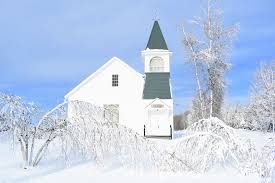
From Light to Ashes: The Long Goodbye the Church Gives Us How the journey from Candlemas to Ash Wednesday mirrors the Christian life — gradual, honest, and deeply humane.

The Wrong Snuff - Richie Davis
The candles are not snuffed out all at once. The Church teaches us how to say goodbye slowly — until even the ashes speak of grace.

The Church, in her quiet wisdom, is very bad at abrupt endings.

If this were a more efficient institution — say, a corporation or a committee with a hard stop — we would go straight from Candlemas to Ash Wednesday in a single administrative motion. One minute we are holding candles and singing about light for revelation; the next we are being smudged with ash and reminded, in unmistakably earthy terms, that we are dust. Agenda item closed. Moving on.

But the Church does not do that.
Instead, she lingers.

Candlemas comes on February 2, all brightness and blessing, Simeon’s song still ringing in our ears. The candles are lifted high, the light proclaimed as something given to the world, not hoarded, not rushed, not yet extinguished. And then — nothing dramatic happens. The candles are put away carefully. The banners come down. The Gospel readings keep walking. We drift, almost imperceptibly, toward Lent.

This stretch of days — those ordinary, unremarkable weeks between Candlemas and Ash Wednesday — are the Church’s long goodbye to the light. Not a denial of it. Not a betrayal of it. Just a gentle letting-go.

And that, I think, is deeply humane.

Because most of Christian life does not move by sudden spiritual whiplash. We rarely leap from glory to repentance overnight. We ease our way there. We need time to notice what the light has shown us. We need space to discover what still clings to us when the candles are no longer in our hands. We need a season in which the Church says, quietly, “You don’t have to be ready for ashes yet — but you might start noticing the dust.”

These weeks are where honesty grows. We are no longer sustained by feast-day brightness, but we are not yet being asked to kneel in penitence. We simply walk. We listen to Jesus teaching, healing, calling, sometimes confusing, sometimes unsettling. We begin to sense that following him is not all radiance and reassurance. Shadows lengthen. The cross is somewhere ahead — not yet visible, but no longer avoidable.

This is why the Church refuses to rush us. She knows how brittle we are. She knows that abrupt spiritual gear-shifts tend to produce either denial or despair. So instead, she gives us time. Time to say goodbye to the light without pretending it never mattered. Time to let Epiphany’s brightness settle into our bones before Lent asks us what we are willing to carry — and what we are ready to lay down.

In that sense, Ash Wednesday does not arrive as a shock. It arrives as a truth we have slowly learned to tell ourselves.

And this, too, mirrors real life. Loss rarely announces itself with a trumpet. Change usually comes quietly, through accumulating realizations. Faith matures not when we cling desperately to yesterday’s candles, but when we trust that the same God who once gave us light is still present when all we can manage is honesty.

The Church’s long goodbye — from light to ashes — is not a failure of nerve. It is an act of pastoral care. It acknowledges that we are not creatures of instant transformation, but pilgrims who need time to walk between revelation and repentance.

God, it seems, is very patient with our transitions.

And thanks be to God for that.

Follow along on Instagram @renewablespiritual

Companion Prayer

Gracious God,
you do not snatch light from our hands
nor rush us into repentance
before we are ready to be truthful.

Thank you for seasons that linger,
for time to notice what your light has revealed,
for space to loosen our grip
before we are asked to let go.

As we walk from candlelight toward ashes,
teach us to trust your presence
in the in-between places of faith.
Make us gentle with ourselves,
honest before you,
and unafraid of the dust from which you raise new life.

We ask this through Jesus Christ,
who walks with us in every season.
Amen.
Why the Church Gives Us Time to Breathe Before Asking Us to Repent: A pastoral reflection on God’s mercy baked right into the calendar

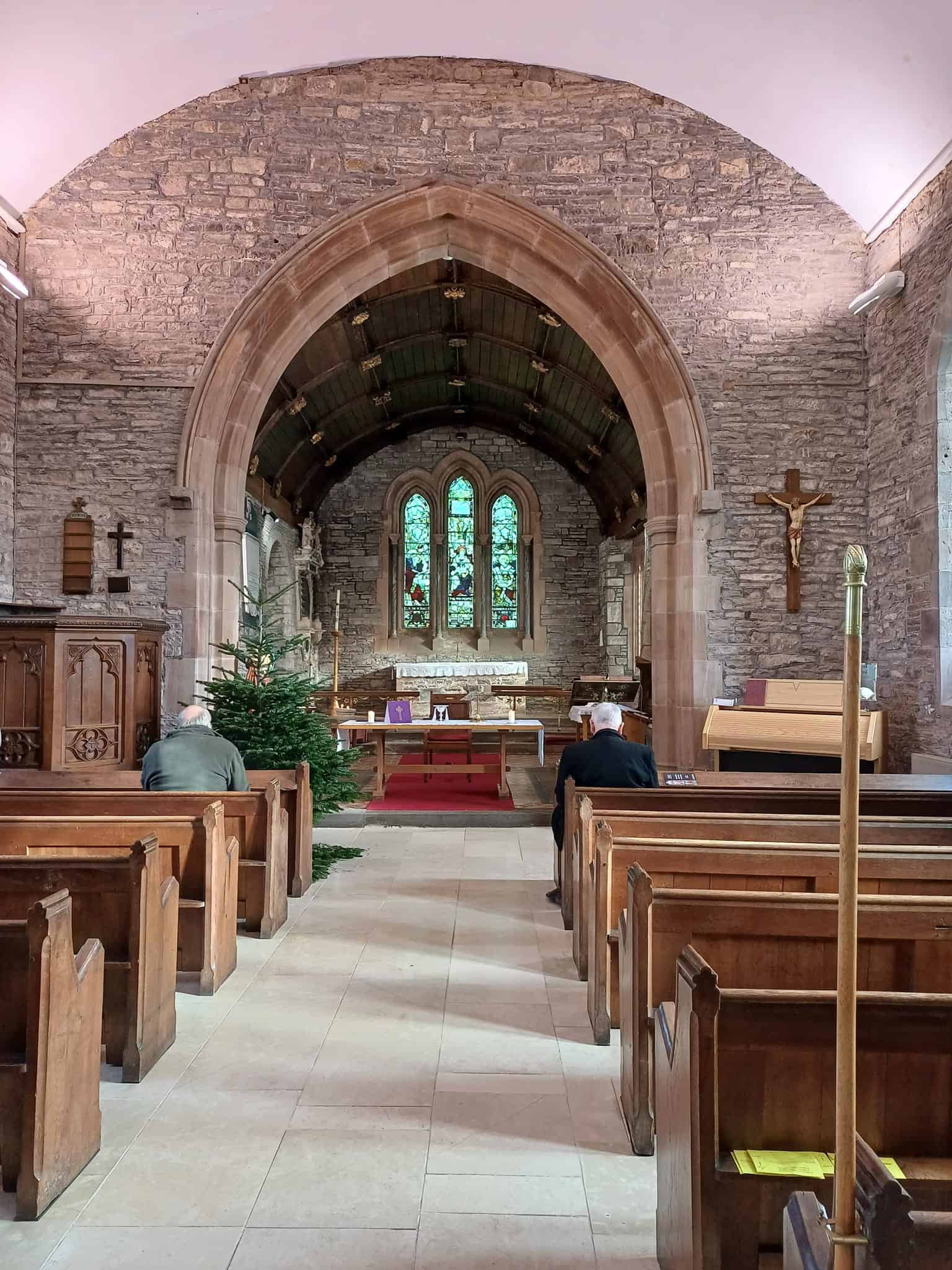
Advent Quiet Day – North Monmouthshire Ministry Area
Before repentence, the Church gives us room to breathe — and God is already there, waiting patiently

The Church, in her quiet wisdom, knows something important about us: if she asked us to repent immediately upon our arrival, many of us would still be fumbling with our coats, trying to remember where we put our gloves, and wondering whether repentance comes before or after coffee.

So she doesn’t.

Instead, she gives us time.
Time to arrive.
Time to settle.
Time to notice where we actually are before being asked where we need to go.

The liturgical calendar — bless its stubborn, unhurried heart — never rushes us straight from fireworks to fasting. There is always a pause. A breath. A stretch of Ordinary Time where nothing much is demanded except that we keep showing up. It is as though God, having revealed something magnificent, then leans back gently and says, “Take a moment. Let this land.”

This is not spiritual procrastination. It is mercy.

We modern Christians are very efficient. We like our growth measurable, our repentance productive, and our spiritual disciplines neatly colour-coded. The Church, however, remains unimpressed. She insists that before we examine ourselves, we should first live with ourselves for a bit. Before we confess, we should notice. Before ashes are imposed, coats are removed, casseroles are eaten, and the ordinary rhythms of faith resume.

And thank God for that.

Because repentance that arrives too quickly tends to be thin. It is often borrowed from someone else’s expectations rather than born of our own honest attention. The Church seems to know that real repentance requires more than urgency; it requires truth. And truth, inconveniently, takes time.

These breathing spaces — those weeks when the calendar appears to be doing very little at all — are not empty. They are diagnostic. They show us what we reach for when nothing dramatic is happening. They reveal what we cling to when no one is asking us to give anything up yet. They let us discover, often to our mild surprise, what is already heavy in our hands.

Only then does the Church gently clear her throat and say, “Now. Let’s talk.”

By the time Lent arrives, we are not startled awake by repentance. We are ready for it. We have lived long enough in the light to notice the shadows. We have had time to recognize what no longer serves love. And so when the call finally comes — return, repent, remember — it feels less like an accusation and more like an invitation we were already expecting.

This, too, is grace.

God does not ambush us with holiness. God courts us. Slowly. Patiently. With pauses built in.

The Church gives us time to breathe before asking us to repent because God knows that breath itself is a gift — and that repentance, when it finally comes, should feel like exhaling what we were never meant to carry in the first place.

Follow along on Instagram @renewablespiritual

Companion Prayer

Gracious God,
you do not hurry us into holiness,
nor shout repentance from the doorway.
You give us time to arrive,
time to notice,
time to breathe.

In these quiet spaces,
teach us to attend to our lives with honesty and gentleness.
Help us see what we are already holding,
what weighs us down,
and what love is asking us to release.

When the call to repentance comes,
may we hear it not as judgment but as mercy—
an invitation to lay down what no longer gives life
and walk more freely in your grace.

We ask this in trust,
through Jesus Christ,
who always meets us at the right pace.
Amen.

Practising Lent Before lent: Small acts of Kindness, Quiet Acts of Prayer

Free Candlelit Reading Time Image - Candle, Reading, Smoke | Download at  StockCake
Practising Lent before Lent: small light, quiet prayer, nothing heroic — just enough to begin.

There is a particular sort of spiritual optimism that blooms in late January or early February. It is the season when we are absolutely convinced that this Lent will be different. This year, we tell ourselves, we will rise at dawn for prayer, fast heroically, read three theologians at once, and emerge by Easter glowing faintly and speaking almost entirely in wisdom.

Historically speaking, this plan lasts until about the First Sunday in Lent, or until someone offers us a cookie.

The Church, in her wisdom, has never suggested that Lent should be impressive. She suggests only that it should be faithful. Which is not at all the same thing. Faithfulness, unlike impressiveness, does not photograph well and rarely inspires applause. It looks suspiciously like doing small things, repeatedly, without announcing them.

So here is a modest proposal: what if we practised Lent before Lent?

Not the full-throated, sackcloth-and-ashes version — just a gentle rehearsal. A few quiet disciplines slipped into ordinary days. Small acts of kindness. Modest moments of prayer. Nothing heroic. Nothing that requires a spreadsheet.

Think of it as spiritual stretching. You don’t run a marathon by leaping off the couch and sprinting into the street. You begin by walking to the mailbox without injury. The Christian life works much the same way.

Perhaps it means pausing for thirty seconds of prayer before checking the news. Perhaps it means choosing one person each day to treat with deliberate kindness — especially the ones who make that difficult. Perhaps it means lighting a candle in the evening, saying the Lord’s Prayer, and stopping there, while everyone still feels emotionally intact.

These practices will not make for dramatic Lenten testimonies. No one will ask you to write a book. But they have a far better chance of lasting. And lasting is where transformation actually happens.

Jesus, after all, seemed remarkably uninterested in spiritual fireworks. He prayed quietly. He ate with people. He noticed the overlooked. He spoke often about seeds — small things placed in the ground, doing their work slowly, almost invisibly.

Lent, at its best, is not about proving our seriousness to God. It is about making room — gently, honestly, sustainably — for God to be at work in us. And God, being merciful, seems quite content to begin with whatever we can actually manage.

So practise Lent before Lent. Try on the disciplines lightly. Let kindness become a habit. Let prayer feel less like a performance and more like breathing. When Ash Wednesday arrives, you may find that you have already begun — not with fanfare, but with faithfulness.

And that, happily, is how most holy things begin.

Follow along on Instagram @renewablespiritual

A Companion Prayer

Gracious and patient God,
you know how eager we are to begin boldly
and how quickly we grow weary.

Teach us the holiness of small beginnings:
a moment of prayer,
a quiet kindness,
a gentle turning of the heart toward you.

Save us from heroic promises we cannot keep,
and give us instead the grace of steady faithfulness.
Let our practices be simple,
our intentions honest,
and our love enduring.

As we approach the season of Lent,
prepare us not for spectacle,
but for truth;
not for display,
but for devotion.

We ask this through Jesus Christ,
who meets us in ordinary days
and walks with us, step by patient step.
Amen.

The Holiness of Routine: Why God Shows Up To Committee Meetings Too

StartCHURCH Blog - Is Your Church Board Balanced?
God’s Kingdom, one Committee Meeting at a Time.

There is a particular kind of holiness that rarely gets a hymn tune.

It lives not in soaring anthems or candlelit processions, but in agendas printed in 12-point font, coffee that has been reheated at least once, and minutes that solemnly record that “discussion ensued.”

Committee meetings are not generally regarded as a primary site of divine revelation. Burning bushes are scarce. Angels seldom take minutes. No one has ever gasped, “Surely the Lord is in this place — and also we need a motion to adjourn.”

And yet.

Much of the Church’s actual faithfulness happens in rooms like these: folding tables slightly too small, chairs that remember previous decades, and a faithful handful of people who keep showing up because someone has to decide about the roof, the budget, the liturgical colour of the new bulletin cover, or whether the coffee urn is, in fact, beyond redemption.

We tend to imagine God as particularly interested in the dramatic moments: conversions, vocations, great sermons, glorious Easter mornings. But Scripture has a stubborn affection for the ordinary. God meets Moses while he’s doing his job. Jesus calls disciples in the middle of a workday. The early church grows not through spectacle, but through steady gathering, shared meals, and an alarming number of discussions.

Routine, it turns out, is one of God’s favourite hiding places.

Committee meetings are where patience is practised, not preached. Where listening becomes an act of love. Where people discover — often to their surprise — that consensus requires humility, prayer, and occasionally a willingness to let one’s favourite idea die quietly so the community can live.

This is where faith becomes incarnational. Not lofty and abstract, but grounded in budgets, policies, timelines, and the slow work of caring for a shared life together. It is here that we learn that the Church is not sustained by brilliance alone, but by perseverance.

And God shows up for this.

Not necessarily with thunder or clarity or immediate agreement — but with grace sufficient for the hour. With a gentle nudge toward kindness. With a reminder that the person across the table is not an obstacle to the Kingdom, but part of it.

There is holiness in showing up again. In saying, “I’ll serve.” In trusting that God is at work even when the agenda item feels small, repetitive, or deeply unglamorous.

So yes — God shows up to committee meetings. God listens patiently to long explanations. God sighs kindly over circular discussions. God delights in quiet faithfulness more than we imagine.

And when the meeting ends, the chairs are stacked, the lights turned off, and someone remembers — too late — that they were supposed to bring cookies, heaven nods and says, “Well done, good and faithful servants. Same time next month?”

Follow along on Instagram @renewablespiritual

A Companion Prayer

Gracious God,
you who dwell not only in sanctuaries but in meeting rooms and basements,
be present with us in the routines we are tempted to dismiss.

Bless the work done quietly, patiently, and faithfully.
Give us grace to listen well,
humility to disagree kindly,
and wisdom to seek the good of the whole body.

When the work feels tedious, remind us it is still holy.
When progress feels slow, remind us that love takes time.
And when we grow weary,
renew us with the assurance that you are already at the table.

We offer you our meetings, our minutes, our motions,
and our imperfect attempts to serve your Church.
Receive them, and us, with joy.

Amen.

Before We Give Things Up: Noticing What We’re Carrying

A Pre-Ash Wednesday reflection on attention, accumulation, and Spiritual Clutter

5 Steps for Space Clearing and Management - Nature's Sunshine Products of  Australia
Before anything is given up, much is quietly carried. Lent begins with noticing the weight we’ve grown used to carrying.

There is a particular moment in the Church year — usually sometime between Candlemas and Ash Wednesday — when Lent begins quietly clearing its throat in the next room. Nothing has been announced yet. No ashes have appeared. No one has asked what you’re giving up. And yet, something in the air feels… preparatory. Like tidying the house because company might be coming, though you’re not entirely sure when or whether they’ll notice the dust.

This is that moment.

Before we talk about giving things up, the Church invites us — very gently — to notice what we’re already carrying. And this turns out to be rather more complicated than expected.

Most of us, if we’re honest, are already hauling a considerable amount of invisible luggage. We carry expectations (some of them our own, many of them borrowed). We carry conversations that ended badly, or never properly ended at all. We carry good intentions that somehow fossilized into obligations. We carry half-finished spiritual projects, unopened devotional books, unanswered emails, and the faint but persistent sense that we are behind on something important.

None of this is wicked. It’s just… crowded.

Stephen Leacock once observed that modern life has a way of adding things without subtracting anything. The same can be said of the spiritual life. We accumulate prayers, practices, causes, committees, concerns, and convictions — many of them good — until the soul begins to resemble the parish hall cupboard: useful items stacked in front of other useful items, all of them theoretically needed, and none of them immediately accessible.

And so, before Lent asks us what we will give up, this quieter season asks a better question: What am I carrying that I no longer need to be carrying?

Notice this is not a question of discipline yet. No sackcloth. No ashes. No dramatic vows. Just attention.

Because attention, it turns out, is the first spiritual practice. Before repentance comes noticing. Before fasting comes inventory. Before we let go of anything, we have to admit what’s actually in our hands.

Some of what we carry has genuine weight: grief, responsibility, love. These are not things to be dropped lightly. But mixed in among them are other items — habits of worry, reflexive self-criticism, accumulated resentments, old fears that have long since outlived their usefulness. We keep them not because they help, but because we’ve gotten used to the weight.

This pre-Lenten moment gives us permission to set nothing down yet, but to look carefully at what we’re holding. To feel the strain in our shoulders. To admit that some of this load was never meant to be permanent. To recognize that God’s grace does not usually arrive by piling on one more thing.

Ash Wednesday will come soon enough. It will speak clearly and bracingly about mortality, repentance, and the mercy that meets us in dust. But for now, the invitation is quieter and kinder.

Simply notice.

Notice what fills your days. Notice what drains your joy. Notice what clutters your prayer. Notice what you keep meaning to lay down “once things settle a bit” — a moment that, experience suggests, rarely arrives on its own.

Lent, when it comes, is not about heroic subtraction. It is about making room. And room is only made by first seeing what’s already there.

So before we give things up, let us pay attention. God is already present in that noticing — patient, observant, and entirely unhurried.

Follow along on Instagram @renewablespiritual

Companion Prayer

Gracious God,
before we speak of giving things up,
help us to notice what we are already carrying.

Slow us down enough to feel the weight
of habits we’ve outgrown,
worries we’ve rehearsed too often,
and expectations we never meant to keep forever.

Give us honest eyes and unhurried hearts.
Teach us to pay attention without judgment,
to take inventory without shame,
and to trust that your mercy does not require
immediate improvement.

Where our lives feel cluttered,
grant us clarity.
Where our spirits feel crowded,
make room for breath.
Where we are weary from holding too much,
remind us that you are already holding us.

As Lent approaches,
prepare us not with urgency but with wisdom,
not with fear but with attentiveness,
so that when the time comes to lay things down,
we may do so freely—and in hope.

We ask this through Jesus,
who never rushed repentance
and never mistook heaviness for faithfulness.
Amen.

Faith When the Snowbanks are higher than your Expectaions

A seasonal meditation on resilience, humour, and grace in Canadian parish life

Appalachian mountains winter snow view
When the snowbanks are higher than our expectations — but grace still finds a way in .

There comes a moment every winter — usually in late January, sometimes disguised as early February — when a reasonable Canadian Christian looks out the window and says, with admirable theological restraint, “This is getting a bit much.”

The snowbanks have achieved architectural status. They have edges. They have shadows. They may soon require municipal zoning. And they are unquestionably higher than our expectations, which were already modest to begin with.

At church, this presents a number of familiar realities. The parking lot resembles an archaeological dig. The steps are technically present but only by faith. Attendance is “faithful” in the way that only the truly devoted — or the deeply confused — can manage. Someone will ask, “Are we cancelling?” Someone else will reply, “We never cancel,” with the quiet heroism of a people who have survived worse and kept minutes about it.

And yet — this is precisely where faith learns its winter vocabulary.

Because winter does not so much challenge faith as it reveals it. Not the heroic, Instagrammable faith with golden light and meaningful scarves. No, winter faith is the faith that shows up anyway. Faith that wears boots. Faith that arrives ten minutes late because the sidewalk was optimistic at best. Faith that knows where the extra salt is kept and brings a shovel without being asked.

There is a particular Canadian sacrament in this: the offering of one’s own discomfort for the sake of community. We worship together not because it is easy, but because it matters. The Gospel still needs proclaiming, even when the microphone cable is frozen into a question mark. The prayers of the people still rise, even if the people themselves rise slowly.

Winter also has a way of stripping away our illusions of control. Schedules bend. Plans are revised. Expectations are lowered to a height more in keeping with human frailty and municipal snow removal budgets. And in that lowering — grace has room to work.

Grace looks like laughter when the snowbank wins. Grace sounds like patience when the choir arrives in stages. Grace feels like relief when someone makes the coffee strong enough to qualify as pastoral care.

Most of all, grace teaches us that faith is not measured by ideal conditions. Faith is measured by persistence. By humour. By resilience. By the quiet decision to keep going when the path is unclear, the weather is uncooperative, and the snowbanks refuse to budge.

In a Canadian parish, winter faith does not ask, “Is this comfortable?”
It asks, “Who needs help?”
It asks, “Shall we keep walking?”
It asks, “Where is God meeting us here — in this cold, in this waiting, in this stubborn love?”

And the answer, as it turns out, is simple.

God is already there. Wearing boots. Holding a shovel. Smiling kindly at our expectations, which were never meant to be higher than the snowbanks anyway.

Follow along on Instagram @renewablespiritual

Companion Prayer

Gracious God,
when the days are cold and the paths are buried,
teach us the faith that knows how to wait,
how to laugh,
and how to keep showing up.

When our expectations are overtaken
by weather, fatigue, or discouragement,
lower our pride without lowering our hope.

Give us sturdy faith for slippery days,
kindness that carries one another,
and grace enough to trust
that You are with us—
even here,
especially here.

Amen.

The Gospel According to the Midweek Eucharist

Small congregations, familiar faces, and why Jesus seems particularly fond of Wednesdays at noon

Holy steeple! Tiny chapel on U.S. 2 a sacred stop since 1962 | HeraldNet.com
Where two or three gather… and it happens to be Wednesday at noon.

There is a particular kind of holiness that settles over a church on a Wednesday at noon.

It is quieter than Sunday holiness. Less ambitious. It does not require parking marshals, name tags, or an emergency search for the missing acolyte. It arrives gently, carrying a purse, a cane, a folded bulletin from three weeks ago, and a deep familiarity with where the light switches are.

The Midweek Eucharist is the Church at its most unpretentious. No one is trying to impress anyone. No one is livestreaming. No one is wondering whether the sermon will go viral. If the congregation numbers seven, that feels almost unbelieveable. Eight would be suspicious. Twelve would be cause for theological reflection and possibly coffee.

And yet — this small, faithful gathering has a peculiar weight to it.

Jesus, it seems, is particularly fond of Wednesdays at noon.

Here the faces are known. Not “name-tag known,” but life known. These are people who have prayed each other through surgeries, widowhoods, moves to smaller apartments, and the slow letting go of what once was. They know where the creaks are in the floor and in one another. They know who will sit where. They know who needs the large-print bulletin without being asked.

This is not a crowd. It is a circle.

The prayers are not aspirational; they are practical. Knees, scans, grandsons, memory, patience. The General Confession is spoken without theatrical guilt but with seasoned honesty. The Peace is exchanged carefully, reverently, sometimes with instructions about balance.

The sermon, too, behaves differently on Wednesdays. It does not need to convince anyone of anything. It simply accompanies the readings, like a friend walking alongside, pointing out what is already there. There is space for silence. Space for the Spirit. Space for the priest to realize mid-sentence that this is not the place for cleverness.

And then there is the table.

Bread is broken. Wine is poured. The Body of Christ is received with hands that have done a lot of living. Some hands tremble. Some are strong. All are open.

This is not a rehearsal for the Kingdom of God. It is a quiet enactment of it.

The Midweek Eucharist teaches us that church does not have to be impressive to be faithful. That Christ does not measure success by attendance charts. That grace is not diminished by small numbers — indeed, it may be concentrated there.

If Sunday is the Church in full voice, Wednesday at noon is the Church whispering, “Still here, Lord.” And the Lord, faithful as ever, answers, “I know.”

A Companion Prayer

Gracious Christ,
you meet us not only in crowded sanctuaries
but in quiet rooms and ordinary hours.

Bless the small gatherings,
the familiar faces,
the faithful ones who come with little fanfare
and much love.

Be present in the prayers spoken aloud
and in those held silently in tired hearts.
Feed us at your table
with grace enough for today,
and send us out strengthened
for lives that keep unfolding.

We thank you for Wednesdays at noon,
for bread and wine,
for showing us once again
that you are always glad when we show up.

Amen.

When Jesus Stops Being a Baby but Hasn’t Started Flipping Tables Yet Life in the Gospel’s “middle chapters”—and why most of Christian living happens right there

The Bible's Greatest Vanishing Act - by Rabbi Evan Moffic
Between the cradle and the cross: The quiet light where faith learns how to walk.

There is a curious stretch of the Gospel story that doesn’t get nearly the attention it deserves.

At one end we have Baby Jesus — angels, stars, shepherds, choirs that appear unannounced and sing better than most parish choirs on Christmas Eve (and without rehearsal). At the other end we have Adult Jesus, overturning tables, challenging authorities, riding into Jerusalem on a donkey with revolutionary restraint, and generally keeping everyone on their theological toes.

But in between?

Between the crib and the confrontation lies a great, spacious, under-decorated territory: the middle chapters. Jesus is no longer a baby. He is not yet a headline. There are no fireworks. There are no riots. There is very little merchandising.

And this, inconveniently, is where most of Christian life actually happens.

The Gospels themselves are oddly economical here. Jesus grows. Jesus learns. Jesus asks questions. Jesus works with his hands. Jesus goes home for supper. He attends synagogue. He listens. He waits. He does not, as far as we know, flip a single table for years.

Which is both comforting and mildly disappointing.

Because many of us would prefer a faith that is either all Christmas magic or all holy disruption. We like our spirituality either warmly sentimental or thrillingly heroic. We want halos or hammers. We want moments we can frame.

What we get instead is the long obedience of ordinary days.

This middle chapter faith looks suspiciously like routine. It involves showing up. It involves learning slowly. It includes awkward silences, unanswered questions, and the gradual discovery that God seems far more interested in shaping our character than in accelerating our timeline.

This is the season where Jesus is faithful before he is famous. Where obedience comes before clarity. Where love is practiced long before it is tested publicly.

It is also, rather inconveniently, where most parish life takes place.

The middle chapters are where you stack chairs without applause. Where prayers feel repetitive but still necessary. Where the Gospel sounds familiar enough to risk being ignored, yet deep enough to keep working on you when you’re not looking. It is where grace does its most subversive work—quietly, persistently, without asking for permission.

One might observe, dear reader, that if the Christian life were a novel, these chapters would be the ones many readers skim — right up until they realize that the plot depends entirely on them.

Because without the long faithfulness of the middle, the birth is sentiment and the cross is spectacle.

The truth is, Jesus does his deepest forming work before anyone thinks to write it down. And God seems perfectly content to do the same with us.

If you find yourself in a season where nothing dramatic is happening — no stars overhead, no tables overturned — take heart. You are likely standing precisely where God does some of God’s finest work.

The middle chapters are not a delay.
They are the way.

Follow along on Instagram @renewablespiritual

A Companion Prayer

Faithful God,
You meet us not only in beginnings and endings,
but in the long middle of becoming.

When our days feel ordinary,
our prayers repetitive,
and our faith less photogenic than we hoped,
remind us that this is where you are at work.

Teach us patience when nothing seems urgent,
trust when nothing feels dramatic,
and love that grows quietly,
like wisdom learned one day at a time.

Give us grace to live faithfully
when we are neither newborn nor heroic,
but simply your children,
learning to walk with you in the middle chapters.

Amen.

The Church Calendar’s Awkward Pause — and Why God Loves It

Quiet Quitting” Comes to Church — Congregational Consulting Group
Ordinary Time: when the banners are down, the pews are quiet, and God is still very much at work.

There is a peculiar stretch of time in the Church calendar that no one makes banners for.

No one buys vestments for it.
No one plans a potluck.
No one prints a bulletin insert explaining it carefully in italics.

It is the awkward pause.

Christmas is over. Epiphany has finished flashing its last sparkle. Lent has not yet cleared its throat meaningfully. There is no star, no ashes, no palm branch, no alleluia, no solemn introit announcing that something very important is about to happen.

Instead, the calendar says something like, “The th Sunday after ,” which is liturgical language for carry on.

This is the Church’s equivalent of standing in the kitchen wondering whether it’s too early for lunch but definitely too late for breakfast.

And it turns out, God loves this part.

We, on the other hand, are less enthusiastic. We like our faith marked with headings and bullet points. We enjoy a good theological highlighter moment. We want the spiritual life to move forward with a clear sense of progress, ideally accompanied by incense or at least a dramatic key change in the hymn tune.

But the Church calendar — wise, ancient, and occasionally passive-aggressive — insists on these weeks when nothing much happens.

No big reveal.
No new chapter.
No emotional crescendo.

Just… walking.

And it is here, precisely here, that most of our spiritual growth actually occurs.

Because these are the weeks when prayer becomes less interesting and more faithful. The prayers still happen, but without the emotional reinforcement. You pray not because it feels luminous, but because it is Tuesday, and Tuesday has prayers.

These are the weeks when worship is less thrilling and more honest. The hymns are sung. The sermon is preached. The Eucharist is shared. No one is transported bodily to heaven, but everyone is quietly fed.

These are the weeks when discipleship stops feeling like a special project and starts feeling like a way of life.

The Church calendar knows something we are slow to learn: growth does not usually arrive with fanfare. It arrives quietly, like muscle memory, or like wisdom you only recognize later when you realize you didn’t react the way you once would have.

Nothing much happened.
And yet something changed.

God seems remarkably content with this arrangement.

Scripture, after all, is full of long stretches where people walk, wait, repeat themselves, misunderstand God, try again, and keep going. The dramatic moments get the chapter headings, but most of the faithful life happens in the uncaptioned space between them.

The Church calendar refuses to rush us past these pauses. It will not manufacture urgency for our entertainment. It simply places us in ordinary time and says, gently but firmly, Stay here. This counts.

And perhaps that is the quiet mercy of it all.

Because in the awkward pause, we are freed from performing faith and invited instead to practice it. We learn to trust that God is at work even when the week feels spiritually unremarkable and the sanctuary smells faintly of leftover candle wax.

These “nothing much happens” weeks teach us that faithfulness does not need a headline to be holy.

Sometimes the most important thing you can do is show up, pray the prayer, sing the hymn, take the bread, and go home having been shaped in ways you will only understand later.

The Church calendar calls this ordinary.

God calls it beloved.

Follow along on Instagram @renewablespiritual

Companion Prayer

Faithful God,
you meet us not only in holy days and high moments,
but in the quiet stretches where nothing seems to change.

Teach us to trust your work in ordinary time,
to remain faithful when the calendar offers no spectacle,
and to believe that you are shaping us
even when we cannot see the progress.

Give us patience for the pause,
gratitude for the routine,
and hope that grows slowly and deeply.

We ask this in the name of Jesus,
who walked steadily, faithfully, and without hurry.
Amen.

After the Candles Are Put Away: Learning to Walk by Residual Light

Unlit Candles Stock Illustrations – 813 Unlit Candles Stock Illustrations,  Vectors & Clipart - Dreamstime
The candles get put away, but the light remains — enough for the next faithful step.

There is a very particular moment in parish life that rarely makes it into hymnody.

It happens after Candlemas.

The candles have been blessed, processed, and triumphantly deployed. Simeon has sung. Anna has prophesied. Someone has carefully tried not to drip wax on the carpet (and failed). The sanctuary glowed like a divine IKEA showroom for one glorious feast day.

And then — quietly, efficiently, and with great Anglican restraint — the candles are put away.

Not extinguished in drama. Not flung into the void. Simply returned to cupboards, drawers, and boxes labelled things like “Candles — various — do not discard.” The sanctuary smells faintly of wax and hymnals and something that might be lemon oil. The feast is over. The fireworks are done.

And faith, inconveniently, continues.

This is the season of residual light.

Residual light is what remains when God has stopped being obvious.

It is the glow that lingers when the liturgy has gone back to green, when the readings no longer come with angels, when prayer feels less like a revelation and more like a routine. It is faith practiced without fresh spectacles — no new visions, no sudden clarity, no booming voice from heaven saying, “Yes, yes, you’re doing it right.”

Which is deeply annoying, if we’re honest.

We prefer a God who provides regular confirmations. A steady stream of divine receipts. We would like our prayers answered promptly, our discernment accompanied by fireworks, and our faith illuminated like a well-lit chancel on Candlemas morning.

But God, it turns out, seems perfectly content to let us walk by the light already given.

Simeon, after all, doesn’t get a sequel. He sees the child once, blesses him, sings his song, and then — presumably — goes home to finish whatever elderly, faithful people do in the afternoon. Anna doesn’t start a podcast. Mary and Joseph don’t linger for a divine encore. The light is revealed, and then it is trusted.

Which suggests that much of the Christian life is not about receiving new light, but about learning to walk by remembered light.

By the glow that still warms the wax-scented air.

By the prayers once answered and not yet repeated.

By the moments when God felt near enough to touch, and now feels content to remain just close enough to trust.

This is not lesser faith. It is grown-up faith.

It is faith that shows up on ordinary Sundays, sings familiar hymns, prays familiar prayers, and keeps walking even when nothing particularly luminous is happening. It is faith that knows God does not need to perform continuously to remain present.

Residual light is the mercy that says: You have seen enough to keep going.

It is the gentle confidence that God is not absent simply because God is quiet.

It is the grace of a church that still smells faintly of candle wax long after the flames are gone.

And so we walk on — not dazzled, not abandoned, but lit just enough for the next step.

Which, as it turns out, is exactly how God seems to prefer it.

Follow along on Instagram @renewablespiritual

A Prayer for Walking by Residual Light

Gracious God,
when the candles are put away
and the sanctuary grows quieter,
teach us to trust the light that lingers.

When the feast is over
and our hearts long for fresh signs,
remind us that you have already given
what we need for this next step.

Help us to walk by remembered mercies,
by prayers once answered,
by love once revealed and never withdrawn—
even when you choose not to dazzle us again.

Give us faith enough for ordinary days,
for steady steps,
for trust without spectacle,
and obedience without applause.

May the faint scent of wax,
the echo of ancient hymns,
and the glow of past encounters
become courage for the road ahead.

Keep us walking, O God —
not in darkness,
but in the quiet confidence
that your light has not gone out,
only learned to travel with us.

Through Jesus Christ,
the light of the world,
who walks ahead of us
and beside us,
now and always.

Amen.