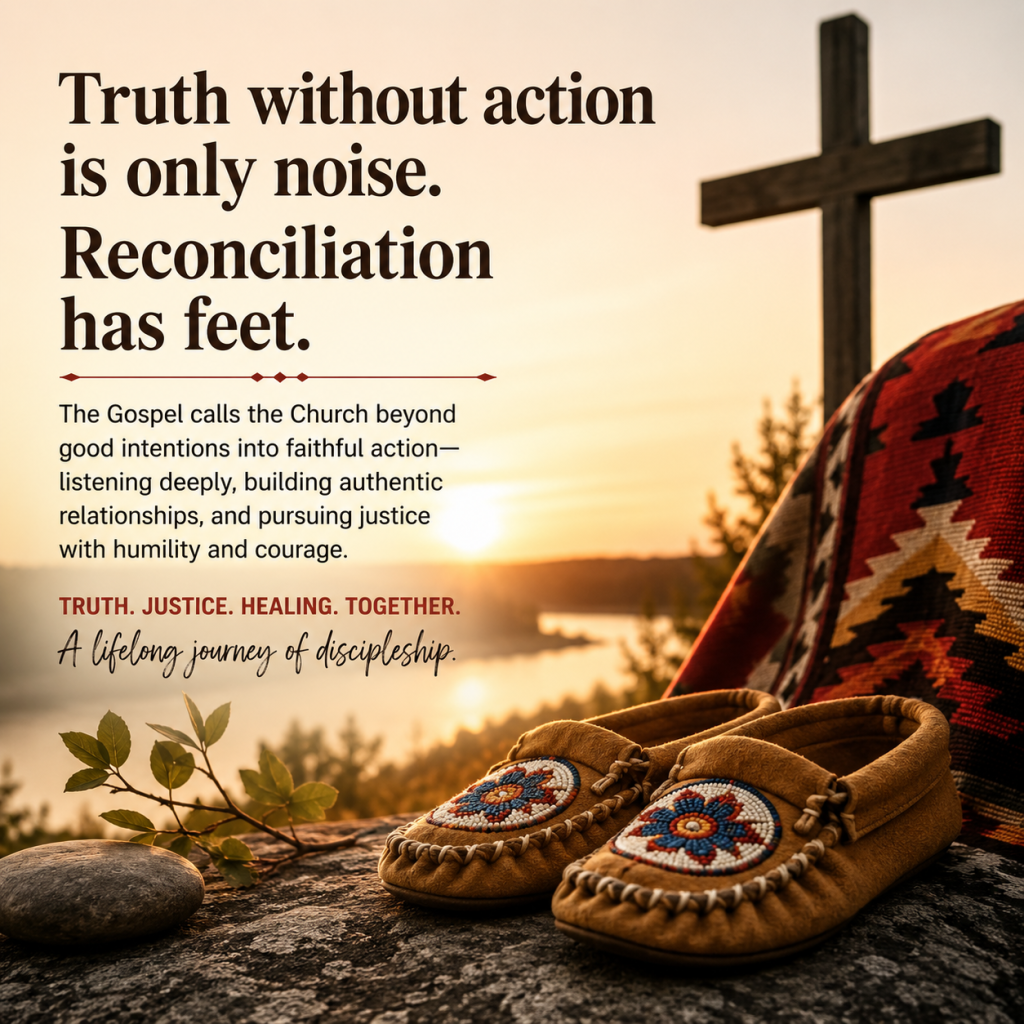
There is a temptation, particularly within the Church, to imagine that reconciliation is primarily an attitude. We convince ourselves that if we have the right feelings, say the right prayers, or display the right symbols, we have somehow arrived. But Scripture has never been content with good intentions alone. Biblical faith always has feet.
The prophet Micah reminds us that God requires us “to do justice, to love kindness, and to walk humbly with your God” (Micah 6:8). Notice that justice comes before comfort. Walking humbly is not standing still. Love moves. Grace acts. Reconciliation is never completed simply because we have begun speaking about it.
The work of truth and reconciliation with Indigenous peoples is not a project with a finish line. It is a lifelong conversion of heart that reshapes how we listen, how we learn, how we share power, and how we tell the story of this land we call home.
For generations, Indigenous voices were dismissed, ignored, or deliberately silenced by institutions that often claimed to speak in the name of Christ. That history cannot be undone. Neither can it be softened by well-meaning words. The Gospel calls us instead to become people who tell the truth without defensiveness, receive difficult stories without rushing to explain them away, and remain present even when the conversation becomes uncomfortable.
That is not easy work.
It requires churches to move beyond occasional observances into sustained relationships. It means supporting Indigenous ministries, learning local Indigenous history, honouring treaties, advocating for justice where inequities remain, and allowing Indigenous Christians to shape the Church rather than simply participate in it. Reconciliation ceases to be symbolic when it begins to change our priorities, our budgets, our partnerships, and our calendars.
Jesus never reconciled people by asking them to forget the past. He reconciled by exposing wounds, speaking truth, extending forgiveness, and creating a new community built on justice and peace. The scars remained after the Resurrection. They became signs of healing rather than evidence of defeat.
Perhaps the Church must also learn not to hide its scars.
The Calls to Action of the Truth and Reconciliation Commission were never intended to become a historical document sitting quietly on a shelf. They remain an invitation to discipleship. Every parish, every diocese, and every Christian can still ask a simple but searching question: What concrete step will we take next?
Because reconciliation is not measured by the sincerity of our apologies. It is measured by the faithfulness of our response.
May we become people whose commitment to truth is matched by courage, whose prayers become partnerships, and whose faith becomes visible in the patient work of justice. Only then will the Church begin to reflect more fully the reconciling love of Christ.
Follow along on Instagram @renewablespiritual for more daily reflections on faith, life, and the surprising places where God still loves to meet us.
Companion Prayer
God of truth and mercy,
give us the courage to listen with humility, the grace to learn with open hearts, and the resolve to act with justice. May our words of reconciliation become lives of reconciliation, so that your healing love may be seen in us and through us. We ask this in the name of Jesus Christ, the Prince of Peace.
Amen.