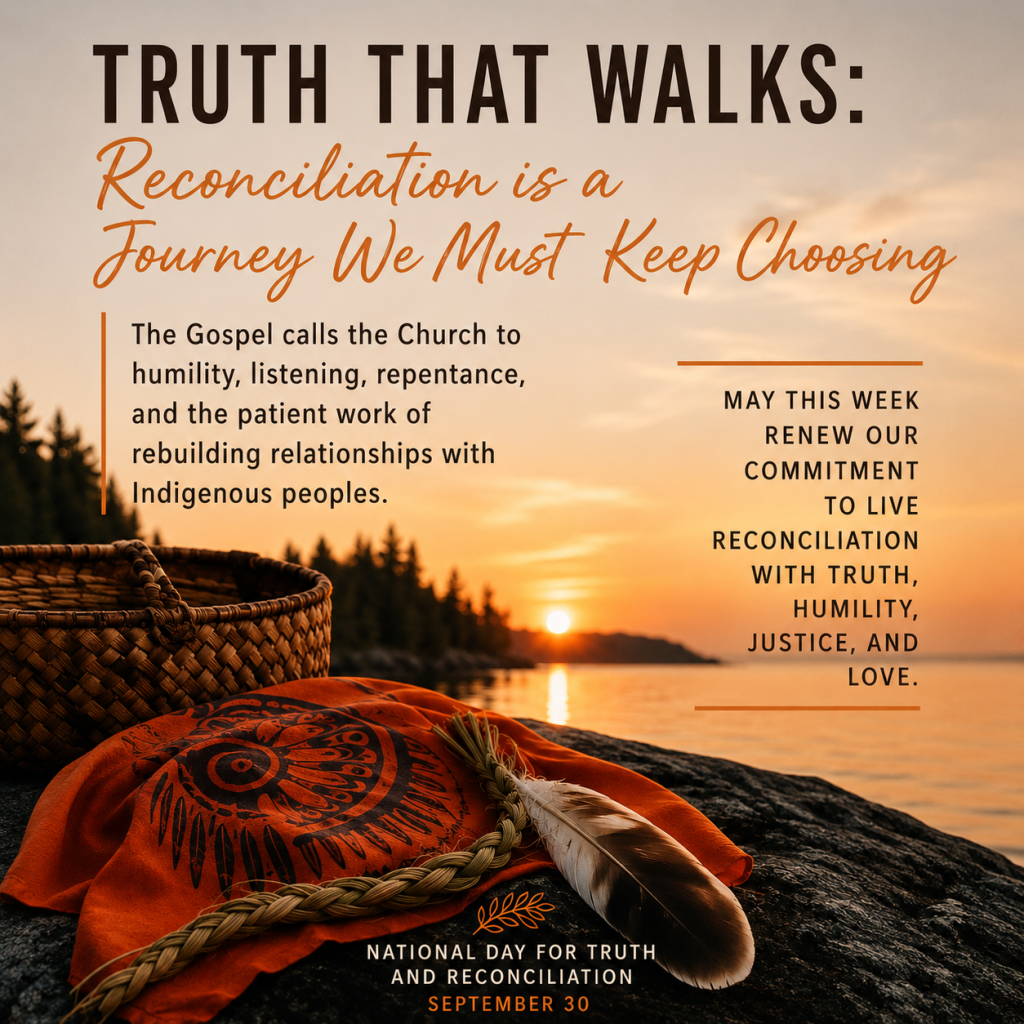
One of the great temptations facing the Church is believing that reconciliation is something we have already talked about enough.
We have held services. We have worn orange shirts. We have issued apologies. We have acknowledged the land beneath our feet before worship. These things matter. They are not insignificant. But if they become substitutes for transformed relationships, then they risk becoming little more than liturgy without incarnation.
The Gospel has never permitted us to confuse words with discipleship.
When Jesus called people to repentance, he was not inviting them merely to think differently. He was inviting them to live differently. Zacchaeus did not simply apologize for his injustice; he changed how he used his wealth. Peter did not simply regret denying Christ; he spent the rest of his life feeding Christ’s sheep. Biblical repentance always leaves footprints.
This week, as we prepare for the National Day for Truth and Reconciliation, the Church is called once again to examine those footprints.
The painful truth is that the Church has often been part of the suffering endured by Indigenous peoples in this land. Residential Schools did not arise despite Christian institutions. Many of them were operated by them. The wounds left behind cannot be healed by pretending they belong only to history. Trauma echoes through generations. Broken trust is rarely repaired quickly.
Followers of Jesus must be among the first to resist the temptation to grow weary of hearing these truths. Love never asks suffering people to hurry their healing so that others can feel more comfortable.
Scripture reminds us that confession is not the end of reconciliation. It is only the doorway.
Saint Paul writes that “God… has given us the ministry of reconciliation” (2 Corinthians 5:18). Notice that he does not call it the ministry of explanation, defence, or self-justification. Reconciliation asks something more demanding. It asks us to listen before speaking. To learn before teaching. To stand alongside rather than stand above.
That work is neither fashionable nor quick.
Healthy relationships are built through thousands of ordinary acts of faithfulness. They grow through conversations that are sometimes uncomfortable. They deepen through genuine friendships rather than occasional public gestures. They require humility enough to admit what we do not know and courage enough to keep learning.
For many churches, the next faithful step may simply be to know the Indigenous communities closest to them—not as symbols or projects, but as neighbours. It may mean listening to Elders, supporting Indigenous-led ministries, learning the history of the land on which we worship, or asking how we might become better partners in the ongoing work of healing.
Reconciliation is not an annual event on the calendar.
It is a Christian vocation.
The Cross itself teaches us that love does not run from painful truth. Jesus does not redeem the world by avoiding suffering but by entering fully into it. Likewise, the Church cannot become an instrument of healing by avoiding difficult conversations. We become agents of Christ’s peace only when we are willing to walk patiently with those whose stories have too often been ignored.
There remains much work to do.
There remain relationships to rebuild.
There remains trust to earn.
And there remains hope.
Hope not because the journey is easy, but because the Holy Spirit has never stopped creating new life where people are willing to choose truth, humility, justice, and love.
May this week not simply remind us of reconciliation.
May it renew our commitment to live it.
Follow along on Instagram @renewablespiritual for more daily reflections on faith, life, and the surprising places where God still loves to meet us.
Companion Prayer
Gracious and Merciful God,
You are the God of truth who never asks us to hide from the past, and the God of grace who never abandons us because of it.
As we remember the painful history between the Church and the Indigenous peoples of this land, grant us the humility to listen with open hearts and the courage to hear stories that may challenge us. Save us from the temptation to mistake good intentions for faithful discipleship, or words of apology for lives of repentance.
Teach us to become builders of trust where trust has been broken, companions in healing where wounds remain, and servants of justice wherever dignity has been denied.
Bless Indigenous communities with strength, hope, and peace. Honour the wisdom of Elders, the resilience of families, and the richness of cultures that continue to bear witness to your goodness. May your healing Spirit bring comfort to all who carry the grief and trauma of generations.
Renew your Church, O Lord. May we never grow weary of the work of truth and reconciliation, but instead become people whose actions reflect the reconciling love of Christ. Let our worship shape our living, our prayers shape our compassion, and our faith shape our relationships.
Lead us forward together in humility, honesty, and hope, trusting that the One who began this work of reconciliation among us will continue to guide us until justice and peace embrace.
Through Jesus Christ, the Prince of Peace, who has broken down every dividing wall and made us one.
Amen.