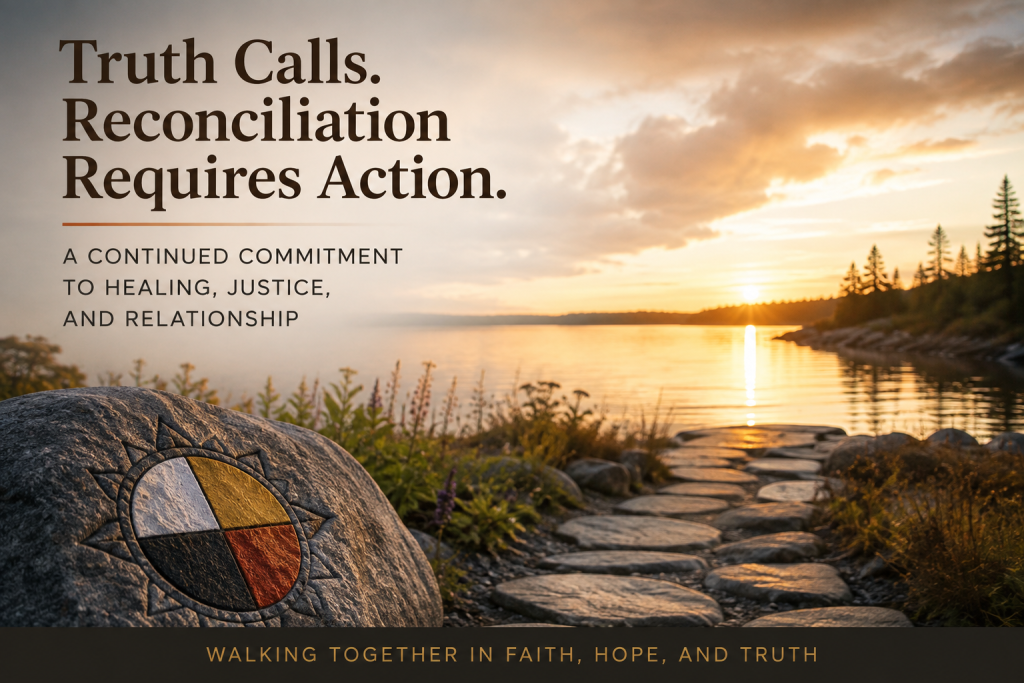
There is a temptation within the Church to believe that reconciliation is measured by the number of statements we issue, the prayers we offer, or the orange shirts we wear each September. Those things have their place. Public witness matters. Prayer matters. Symbols matter. But they are only the beginning.
Scripture consistently reminds us that genuine repentance changes behaviour.
When Zacchaeus encountered Jesus, he did not simply apologize for the ways he had enriched himself at the expense of others. He restored what had been taken and gave generously to those in need. His encounter with grace became visible in the choices he made afterwards.
Perhaps that is one of the questions facing the Church today.
What are we prepared to change?
The work of truth and reconciliation with Indigenous peoples cannot remain something we observe from a respectful distance. It asks us to examine our budgets, our priorities, our partnerships, our preaching, our education, and even our willingness to surrender comfort for the sake of justice. It asks whether reconciliation has become part of our identity or remains merely one item on our annual calendar.
Relationships are built through consistency.
Trust grows when promises are kept.
Healing deepens when people discover that today’s commitments have not quietly disappeared by next September.
Many Indigenous leaders have said that they do not need churches to speak for them. They need churches to listen carefully, learn honestly, stand faithfully beside them, and continue showing up long after public attention has shifted elsewhere. That kind of faithfulness rarely makes headlines, but it reflects the patient love of Christ.
The Gospel never allows us to confuse good intentions with faithful discipleship.
Jesus repeatedly called his followers not only to hear his words but to put them into practice. The Church is healthiest when our public witness is matched by our daily conduct. Every congregation can ask difficult questions. Every parish can deepen relationships with local Indigenous communities. Every Christian can continue learning truths that may be uncomfortable to hear. None of us is too small to participate in God’s work of healing.
Reconciliation is not a project with a completion date. It is a way of walking together that requires humility, courage, honesty, and perseverance. It asks us to keep choosing relationship even when progress feels slow and the road ahead remains unfinished.
The risen Christ still bears the scars of his suffering. They were not erased by resurrection. Instead, they became signs of healing and hope. Perhaps that is also the calling of the Church: not to pretend the wounds of our history never existed, but to allow God’s grace to transform them into places where truth is spoken, justice is pursued, and new relationships are patiently nurtured.
May we become known not for the promises we make each September, but for the faithfulness with which we keep them throughout the year.
Follow along on Instagram @renewablespiritual for more daily reflections on faith, life, and the surprising places where God still loves to meet us.
Companion Prayer
God of truth and mercy,
give us the courage to listen with humility,
the wisdom to act with integrity,
and the perseverance to walk faithfully in the work of reconciliation.
May our words be matched by our actions,
and our promises become lasting relationships.
Through Christ our Lord.
Amen.