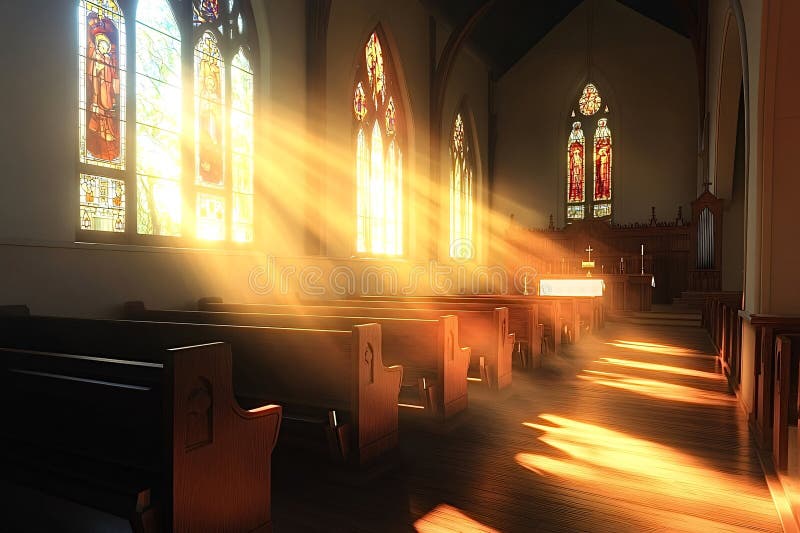
There are certain smells that are so sacred, so deeply woven into the fabric of our spiritual memory, that they should probably be bottled and sold in the vestibule under the name “Eau de Diocese.” Alas, the Anglican Church of Canada has yet to approve such a liturgical fragrance line — though I suspect General Synod would send it straight to committee, where it would sit until 2037 beside the report on “Innovations in Pew Cushions.”
Step into any parish church on a Sunday morning, and if you pause long enough, you’ll notice three scents quietly telling the story of who we are.
First, Chrism oil — that glorious blend of olive oil and balsam that wafts through baptisms, confirmations, and ordinations. It’s the aroma of belonging, the fragrance of being chosen and sent. If heaven has a signature scent, I strongly suspect it’s Chrism. It lingers in the wood grain of the font, in the sleeves of cassocks, and once, memorably, on the rector’s hands during coffee hour, leading to a parishioner politely asking whether I’d switched to a new “spicy cologne.”
Then there’s lemon oil, the unsung hero of every sacristy cupboard. It keeps the pews gleaming, the pulpit dignified, and the altar rails smelling faintly like a well-behaved orchard. When the vergers get enthusiastic with it, the sanctuary positively sparkles. Lemon oil whispers, “We prepared a place for you,” even if the pew you settle into wobbles ever so slightly because someone removed a kneeler bolt in 1984 and no one remembers why.
And finally, the one scent we never manufacture, never apply, never polish: the aroma of prayer.
It’s subtle — quieter than Chrism, softer than lemon oil — but unmistakable. It rises from whispered hopes in the back pew, from the tremble in the voice of someone lighting a candle for a child or a diagnosis or a future uncertain. It gathers in the rafters, woven into the dust motes that dance in the sunlight. It lives in the silence after the Peace, when for a brief moment we remember that God actually meant it when He promised to dwell among us.
If you inhale deeply enough, you might just catch hints of old hymnals, winter coats thawing after a snowy walk, and the coffee percolating in the parish hall — proof, perhaps, that sanctity is not separate from daily life but stitched right through it, like the symbols stitched onto a chasuble.
And so the sanctuary becomes a kind of holy recipe:
• one part sacramental Chrism,
• one part lemon-oiled elbow grease,
• and one part the gathered prayers of God’s people, simmering quietly in the heart of the parish.
The result? A fragrance far richer than any scented candle shop could bottle. A scent that says, “Here, you are at home. Here, you belong.”
May we carry that aroma with us—on our coats, in our spirits, in our conversations long after we’ve stepped back into the world God calls us to love.
Companion Prayer
Holy One, breathe upon us the fragrance of Your presence.
Let the scents of sacrament and service, of polished wood and whispered prayer,
remind us that You are near—
in the ordinary, the beautiful, and the deeply human places of our lives.
Make us living sanctuaries of grace,
bearing the aroma of Christ into every corner of the world.
Amen